
Stiff joints can make even simple movements feel like a chore. Whether it's reaching for something on a high shelf or getting up from a chair, mobility and strength go hand in hand. The good news is, you don't need a complicated routine or heavy equipment to start seeing improvements. The following six exercises are designed for beginners, focusing on gentle, controlled movements that help lubricate the joints, increase your range of motion, and build foundational strength—all while staying safe and sustainable.
Before you begin, listen to your body. A mild stretch or a feeling of gentle effort is normal, but sharp pain is a signal to stop. Move slowly through each exercise, and focus on your breath. Consistency matters more than intensity here.
1. Cat-Cow Stretch
This classic spinal mobility drill is ideal for warming up the spine, shoulders, and hips. Start on your hands and knees in a tabletop position, with your wrists directly under your shoulders and your knees under your hips. As you inhale, gently drop your belly toward the floor, lift your chin and tailbone upward (the cow phase). As you exhale, round your spine toward the ceiling, tucking your chin to your chest and drawing your navel inward (the cat phase). Move slowly with your breath, repeating the cycle 6 to 8 times. This exercise improves flexibility in the thoracic spine and helps relieve lower back tension.
2. Glute Bridge
Strong glutes and core muscles stabilize your pelvis and reduce stress on your knees and lower back. Lie on your back with your knees bent and feet flat on the floor, hip-width apart. Place your arms at your sides, palms down. Press through your heels and squeeze your glutes as you lift your hips toward the ceiling, creating a straight line from your shoulders to your knees. Hold for a second at the top, then slowly lower back down. Aim for 10 to 12 repetitions. This movement strengthens the posterior chain without jarring the joints.
3. Hip Circles (Standing or Seated)
Hip mobility is crucial for walking, squatting, and everyday balance. Stand with your feet shoulder-width apart, hands on your hips. Slowly rotate your hips in a wide circle as if you are drawing a large oval with your pelvis. Perform 5 circles in one direction, then 5 in the opposite direction. If standing is difficult, you can do this seated on the edge of a sturdy chair. The motion gently lubricates the hip joint and improves range of motion in the pelvis and lower back.
4. Wall Angel
This exercise opens the chest and improves shoulder mobility. Stand with your back against a wall, feet a few inches from the baseboard. Press your lower back, upper back, and head gently into the wall. With your elbows bent at 90 degrees and the backs of your hands touching the wall, slowly slide your arms upward into a wide “goal post” position as far as is comfortable, then slide them back down. Keep your contact with the wall as steady as possible. Repeat 8 to 10 times. Wall Angels help counteract the effects of slouching and rounded shoulders.
5. Ankle Pumps and Circles
Your ankles absorb shock and help with balance, but they're often overlooked. While sitting in a chair with your feet flat, lift one foot slightly off the floor. Point your toe away from you, then flex it back toward your shin. Repeat 10 times per foot. Next, rotate your foot in slow circles clockwise, then counterclockwise, 5 times each. These simple movements improve circulation and maintain ankle joint health, especially if you have been sedentary or wear restrictive footwear.
6. Partial Squat (Chair Squat)
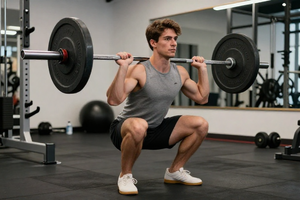
Squatting is a fundamental movement pattern, but a full squat can be challenging for beginners. Stand in front of a sturdy chair with your feet hip-width apart. Extend your arms forward for balance. Slowly push your hips back and bend your knees as if you are about to sit down, lowering yourself a few inches before rising back up. Keep your weight in your heels and your chest lifted. Perform 8 to 10 controlled repetitions. This builds quadriceps, glutes, and core stability while teaching proper squat mechanics and protecting the knees.
Tip: Perform these exercises 3–4 times per week, on non-consecutive days. Start with one set each and gradually increase to two or three sets as you feel stronger.
Consistency is the key to improvement. By integrating these movements into your weekly routine, you can enhance your joint health, reduce stiffness, and build a stable foundation for more active pursuits. As always, consult with a healthcare provider or physical therapist before starting any new exercise program, especially if you have existing joint issues or injuries.