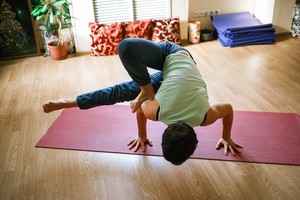
You have been showing up on your mat. You flow through sun salutations, hold your warrior poses, and even tried that challenging arm balance. Yet the scale has stopped moving. Hitting a weight loss plateau during a dedicated yoga practice is a common frustration, not a sign of failure. Often, the missing piece is not a more intense pose or a longer session; it is how you are breathing.
Yoga is unique among fitness disciplines because it explicitly links breath and movement. When you hit a plateau, subtly shifting your respiratory patterns can reignite metabolic efficiency, calm a stressed nervous system that hoards fat, and deepen the mind-body connection that drives real change. Here are five expert-backed adjustments to your breath that can help move past the stall.
1. Lengthen your exhale to activate the parasympathetic brake
Many yogis focus on strong, deep inhales, but the exhale holds a secret key to weight loss. An extended exhale signals the vagus nerve to activate the parasympathetic nervous system—your 'rest and digest' mode. When your body feels safe, it is less likely to hold onto visceral fat as a protective buffer against stress.
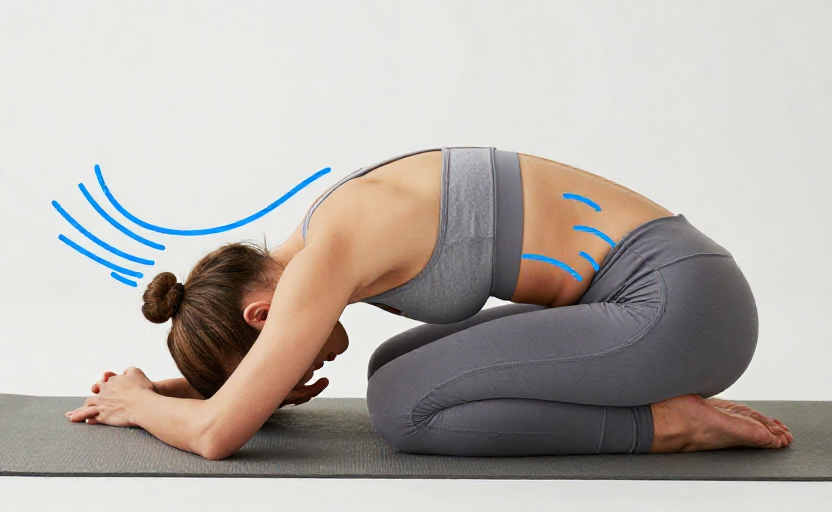
Try this: In your next seated forward fold or child’s pose, inhale for a count of four, then exhale for a count of six or eight. Do not force the breath; let the exhale be soft and complete. Apply this during your cool-down or in any restorative pose to lower cortisol, a hormone that can stall fat loss.
Tip: If counting distracts you, simply try to make the exhale twice the length of the inhale. Over a few weeks, your resting heart rate may lower, aiding recovery.
2. Add a gentle breath retention (Kumbhaka) after the inhale
Retaining the breath after a full inhalation—known as antara kumbhaka—can increase carbon dioxide tolerance and improve the efficiency of oxygen delivery to your muscles. This is less about a dramatic hold and more about a brief, conscious pause that builds internal heat (tapas).
Try this: In a steady pose like Warrior II or Chair, inhale deeply. At the top of the inhale, pause for one or two seconds (no strain, no shaking). Then exhale slowly. Over time, this brief retention can elevate your metabolic rate during practice by forcing your cells to work more efficiently. It also trains mental discipline—a key factor in making consistent food and lifestyle choices.
3. Shift from chest breathing to full diaphragmatic (belly) breathing
Chronic shallow chest breathing is a hallmark of a stressed, fight-or-flight state. It limits oxygen exchange and can contribute to a sluggish metabolism. Diaphragmatic breathing—where your belly expands on the inhale—uses the full capacity of your lungs and massages the abdominal organs.
Try this: Lie in Savasana. Place one hand on your chest and one on your belly. Inhale so that the belly hand rises first, followed by minimal movement in the chest hand. Exhale fully, letting the belly fall. Practice this for five minutes before you start your asana sequence. Once you master it, take this breath into every standing pose to deliver more oxygen to working muscles and stimulate the digestive fire (agni).
- Why it helps: Better oxygenation supports fat oxidation. A calm nervous system reduces stress eating and cravings.
- How to know it is working: You will feel your lower ribs expand sideways, not just your chest rising up toward your chin.
4. Use Ujjayi (victorious breath) with precise rhythmic pacing
Ujjayi breathing—the soft ocean sound created by lightly constricting the back of the throat—is not just for focus. When used with a consistent, rhythmic pace (about one breath for every three to five seconds), it creates a mild resistance that works like a diaphragm-strengthening exercise. A stronger diaphragm and better respiratory control can increase your overall energy expenditure during a vinyasa class by 10–15 percent.
Try this: Seal your lips and breathe in and out through your nose with a gentle constriction in your throat. Make the inhale and exhale equal in length. Sync each movement in your flow to this rhythm. The key is the resistance—it turns your breath into a low-grade, constant workout for your core and lungs. Use this during Sun Salutation B or any longer sequence to build internal heat without adding extra push-ups or lunges.
5. End your practice with cooling and calming breaths (Sheetali or Brahmari)
Weight loss plateaus often involve elevated evening cortisol or poor sleep quality. How you end your practice matters as much as how you begin. Cooling breaths like Sheetali (curled tongue inhale) or Brahmari (humming bee breath) rapidly lower body temperature and calm the mind. This can improve sleep quality and reduce nighttime snacking urges.
Try this: After your final asana and before Savasana, sit comfortably. Inhale through a curled tongue (or pursed lips if you cannot curl it) and exhale through the nose. Do three to five rounds. Alternatively, hum deeply on the exhale with your eyes closed. The vibration stimulates the vagus nerve, easing the transition into restful sleep. Better sleep directly supports hormonal balance for weight management.
These adjustments are not magic switches—they require consistent practice. But by adding even one or two of these breath modifications into your weekly yoga routine, you are addressing the root causes of a plateau: stress, poor oxygen delivery, and a lack of metabolic challenge beyond pure movement. Breathe with intention, and the plateau will likely turn into a new phase of progress.