You roll up your mat after a good yoga session, feeling the stretch in your hips and the openness in your shoulders. For many desk workers, that post-yoga window is the only moment of true physical release in an otherwise static day. But what you drink in the next hour can either amplify that relief or quietly undo some of its benefits.
Inflammation is a quiet companion for people who sit eight, nine, ten hours a day. It shows up as stiff joints in the morning, a low ache in the lower back by mid-afternoon, or the kind of brain fog that makes you reach for a third coffee. Movement helps—yoga especially—but nutrition plays a supporting role that is easy to overlook. The right drink after practice can help manage that inflammatory load without adding sugar, caffeine jitters, or artificial ingredients.
Here are five practical, science-backed drinks designed for the desk-bound yogi. They are simple to prepare, gentle on digestion, and built for a body that spends most of its waking hours in a chair.
1. Tart cherry and ginger tonic
Tart cherry juice is one of the most researched natural aids for exercise recovery. It contains anthocyanins, the pigments that give cherries their deep red color, which have been shown to reduce markers of inflammation like C-reactive protein. Ginger adds its own anti-inflammatory punch via gingerols and shogaols, compounds that can help quiet muscle soreness and joint stiffness.
Mix two tablespoons of unsweetened tart cherry concentrate with a thumb-sized piece of fresh grated ginger in a tall glass of sparkling or still water. The tartness cuts the sweetness, and the ginger provides a clean warmth. Sip this within thirty minutes of finishing your practice, especially on days when your seated work session follows immediately after.
Pro tip: Tart cherry juice can stain clothing and countertops, so rinse your glass right away.
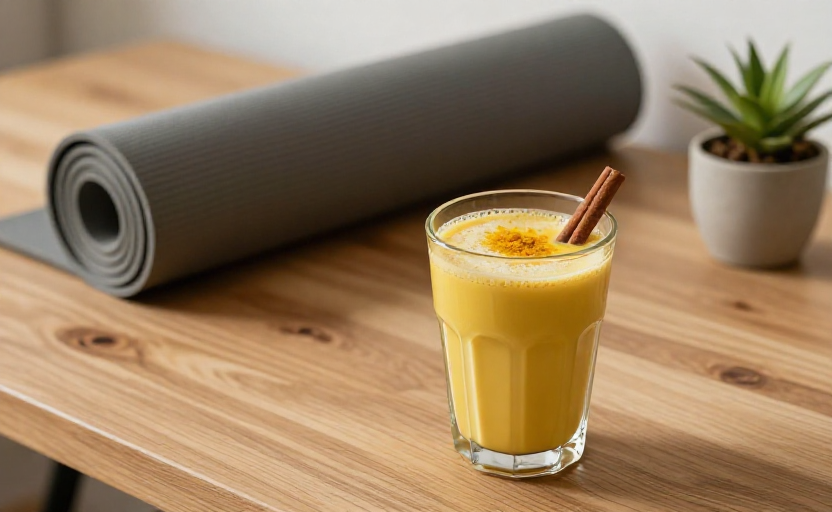
2. Golden milk (turmeric latte) with black pepper
Turmeric has become a kitchen-cabinet staple for inflammation, but its star compound, curcumin, has notoriously poor absorption on its own. The trick is to pair it with both a fat (like coconut milk or whole dairy) and piperine from black pepper, which can increase curcumin absorption by up to 2,000 percent.
Warm one cup of unsweetened oat milk or coconut milk. Whisk in half a teaspoon of turmeric powder, a pinch of black pepper, a small knob of grated ginger, and a touch of cinnamon. Avoid commercial golden milk powders that add sugar and anti-caking agents. This drink is especially good for days when your joints feel creaky after a long sitting session, and it works well as a mid-afternoon replacement for coffee—it provides a mild warmth without the adrenal spike.
3. Green tea with lemon and mint
Green tea deserves its reputation. Its catechins, particularly epigallocatechin gallate (EGCG), have been studied for their ability to reduce inflammation and oxidative stress. The addition of lemon does more than improve taste—vitamin C can help stabilize the catechins for better absorption, and the citrus acidity may enhance their availability.
Brew a cup of loose-leaf green tea (Japanese sencha or Chinese jasmine work well), let it cool slightly, then add a generous squeeze of fresh lemon and a handful of torn mint leaves. Serve it over ice if you prefer a cold drink after a heated practice. Avoid bottled green teas, which often contain added sugars or preservatives that counteract the anti-inflammatory effect. This is a solid everyday option for desk workers because it provides a modest caffeine lift without the jitters, and it keeps you hydrated between meetings.
4. Warm lemon and turmeric water with a dash of cayenne
Sometimes you want something simpler than a full latte. Warm lemon water with turmeric and cayenne is a minimalist recipe that supports circulation and helps flush the lymphatic system—a system that gets sluggish when you sit for long hours. The cayenne pepper contains capsaicin, which has its own pain-modulating and anti-inflammatory properties, and it can help stimulate blood flow to areas that feel stagnant after typing all day.
Squeeze half a lemon into a mug of warm (not boiling) water. Stir in a quarter teaspoon of turmeric and a pinch of cayenne. Add a tiny drizzle of honey if you need sweetness, but the goal here is a clean, almost medicinal beverage. Drink this before or after morning yoga, especially if you practice on an empty stomach. It is hydrating, warming, and easy to make ahead in a thermos for sipping at your desk.
5. Watermelon and cucumber cooler with basil
Hydration is an anti-inflammatory act in itself. Chronic mild dehydration can raise cortisol levels and contribute to systemic inflammation. Watermelon is rich in lycopene (another antioxidant anti-inflammatory) and contains a high water content plus natural electrolytes like potassium. Cucumber adds silica and yet more water, while basil provides eugenol, a compound with known anti-inflammatory activity.
Blend a cup of cubed watermelon (with the white rind, which contains the amino acid citrulline) with half a cucumber, a few basil leaves, and a squeeze of lime. You can strain it for a smoother texture or leave the pulp for fiber. Avoid adding sugar or simple syrups—the watermelon should provide enough natural sweetness. This is a particularly good post-yoga drink for hot days or for evenings when you want something refreshing without any stimulants.
How to make these drinks fit your desk lifestyle
The biggest obstacle for desk workers is not knowledge—it is execution. You are not likely to whip up a turmeric latte between spreadsheets. The solution is batch preparation. Make the tart cherry concentrate mixture in a mason jar and keep it in the office fridge. Brew a large batch of green tea in the morning, chill it, and pour it over ice at your desk. The watermelon cooler can be made in a blender at home and taken with you in an insulated bottle.
One more logistical point: timing matters. The best time to sip these drinks is within thirty to sixty minutes after your yoga session, when your body is still in a recovery state and most receptive to the anti-inflammatory compounds. If you practice at home before heading to the office, have your drink ready to go in a thermos so you can drink it during your commute or first few minutes at work.
None of these drinks is a magic bullet. They work best as part of a consistent routine that includes regular movement (yoga, walking, stretching), adequate sleep, and a varied diet. But for the desk worker who practices yoga, they are a simple lever to pull—one that costs little time, tastes good, and gives your body a better chance of bouncing back from the subtle wear and tear of sitting all day.