You step onto your mat, ready to flow. But somewhere between a low lunge and a standing forward fold, something feels… off. It’s not pain exactly—more like a wall. A tightness, a wobble, a sense that the pose you’re aiming for is just out of reach. If this sounds familiar, the culprit might be hiding in your hip joints.
Hip mobility is the unsung hero of a strong yoga practice. It dictates how deeply you can settle into a squat, how steady you feel in a balance, and whether that half-pigeon feels like a sweet release or a fight. When your hips lack range of motion, your body has to compensate. That compensation often shows up as subtle yet distinct warning signs. Here are four specific signals that your hip mobility is holding your practice back, and what to do about them.
1. Your Lower Back Throbs in Forward Folds
When you fold forward from the hips, the movement should come from the joint where your femur meets your pelvis. If your hips are stiff, your lumbar spine often takes over the job. Over time, this creates a familiar ache: a dull, central low-back pain that appears a few minutes into your practice or lingers after class.
Think of it like a lever. A flexible hip joint creates a long, smooth lever. A locked hip creates a short, sharp one. When the spine is forced to bend beyond its natural range, the small muscles and ligaments around the vertebrae get strained. You might not notice it at first, but the cumulative effect is a low back that protests every forward fold. The fix isn’t to bend further. It is to create space in the hip capsule first.
Try this: Before your next forward fold, bend your knees deeply and place your hands on your thighs. Gently rock your pelvis forward and back, feeling the ball of the femur move in the socket. Only then, keep a microbend in your knees as you fold.
2. Your Pigeon Pose Feels Like a Fight, Not a Release
Pigeon pose (Eka Pada Rajakapotasana) is beloved for its deep hip opening. But for many yogis, it’s a pose that never feels good. Instead of a soft stretch in the glutes and outer hip, they feel a sharp pinch in the front of the hip or a complete inability to square the hips to the front of the mat.
This is often a sign of limited internal rotation in the standing-leg hip. When you bring the shin forward in pigeon, the front hip needs to externally rotate. If that rotation is blocked, the joint jams. You might try to force it by rounding your spine or leaning sideways, but that only transfers the stress elsewhere. A healthy practice adapts the pose to the mobility you have today.
What to do instead: Slide the heel of your bent front leg closer to your opposite hip. This changes the angle of rotation. Or, stay in a reclined figure-four pose (Supta Kapotasana) on your back, where gravity does the work and you control the depth without strain.
3. You Cannot Stay Steady in Half-Moon or Tree Pose
Balance poses like Ardha Chandrasana (Half Moon) and Vrksasana (Tree Pose) seem like a test of focus and core strength. But the foundation of balance is a stable, mobile hip. In Tree Pose, the standing leg’s hip must allow the pelvis to stay level while the thigh rotates outward. If that rotation is limited, your pelvis tilts, your torso lists, and you wobble.
In Half Moon, the hip of the standing leg acts as a counterweight. If it can’t extend and open fully, your body folds forward instead of opening to the side. You end up fighting gravity every second. Improving external rotation in the hip can, for many people, transform their balance more than any core exercise ever could.
4. Your Squats Collapse or Your Knees Ache
A deep squat—often called Malasana or Garland Pose—is a primal resting position. But if your hip sockets lack the depth or flexibility to accommodate the femoral heads, you will compensate. The most common compensation is a posterior pelvic tuck, where your tailbone tucks under and your lower back rounds into a C-curve. From there, your knees may splay outward or cave inward, creating strain on the medial and lateral ligaments.
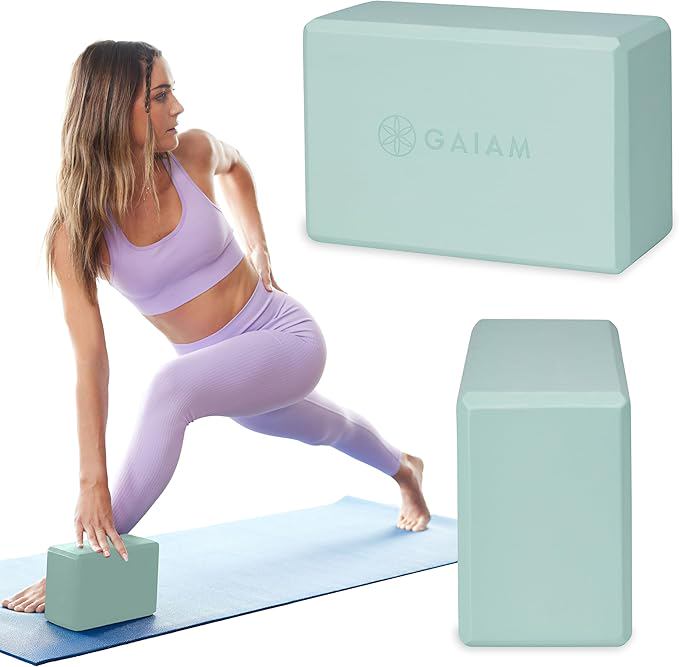
This is not a flexibility problem in your knees. It is a clearance problem in your hips. When the hips won’t open, the knees become the hinge. Over time, this can lead to a nagging ache around the kneecap or the inside of the knee. The solution is to elevate your heels. Place a folded blanket or a yoga block under your heels. This small lift changes the angle of your shin, allowing your hips to sink deeper without forcing your knees into a dangerous position.
How to Start Improving Hip Mobility
Recognizing these signs is the first step. The next step is consistent, gentle work. Hip mobility improves slowly because the joint capsule is dense with connective tissue. A daily five-minute practice is far more effective than a one-hour weekend stretch session. Focus on movements that explore the full range of motion: circles, figure-fours, deep squats with support, and languid leg swings. Stay with your breath; the moment you force a stretch, the nervous system tightens the muscle to protect the joint. Release the idea of a “deep” stretch and aim for a “free” movement instead.
Your yoga practice is a conversation with your body. When your hips speak up with tightness, compensation, or a lack of stability, listen. The warning signs above are not failures—they are feedback. With time, patience, and the right approach, you can create space where there was none, and find the ease that has always been waiting on the other side of the resistance.



![Tumaz Yoga Strap/Stretch Bands [15+ Colors, 6/8/10 Feet Options] with Extra Safe Adjustable D-Ring Buckle, Durable and Comfy Delicate Texture - Best for Daily Stretching, Physical Therapy, Fitness](https://www.glowtheorylab.com/uploads/ad202604/d62cf3b7330d7d4a.webp)