You are doing everything right—eating salads, logging steps, skipping dessert. Yet the scale barely moves, or worse, you feel drained and start gaining weight back after a few weeks. If that sounds familiar, the problem might not be your willpower. It might be your metabolic rate.
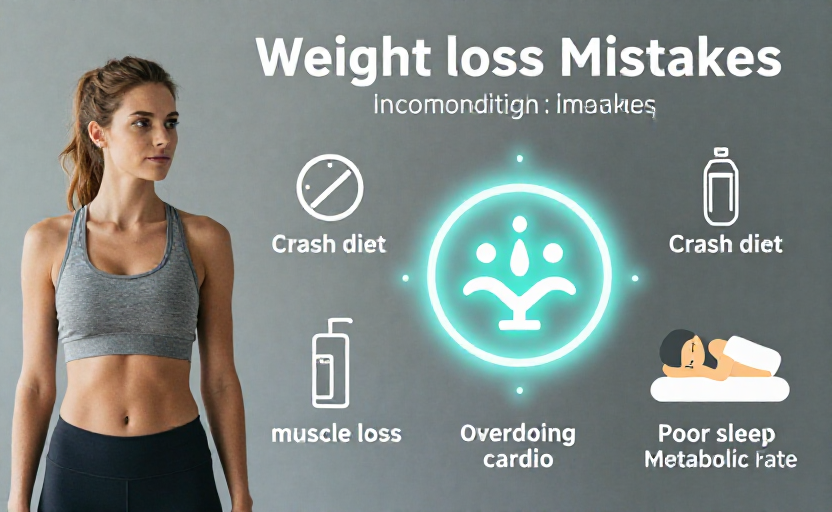
Your metabolism isn't a fixed engine size you are born with. It adapts to what you do, especially during weight loss. Unfortunately, several well-intentioned habits can accidentally signal your body to slow down calorie burning. Here are four common weight loss mistakes that are undermining your metabolism, and what to do instead.
1. Drastically slashing calories for too long
It seems logical: eat less, lose more. But when you suddenly drop to 1,200 calories or below—especially if you are active—your body perceives a starvation threat. It responds by lowering your resting metabolic rate (RMR), the number of calories you burn at rest, to conserve energy. This is often called adaptive thermogenesis.
The result? You lose weight initially, but then plateau. Meanwhile, your energy levels crash, your hair thins, and you feel cold. Worse, when you resume normal eating, your slowed metabolism can cause rapid regain.
A better approach: Reduce calories moderately—say 300 to 500 below maintenance—and prioritize protein and fiber to preserve muscle and satiety.
2. Losing muscle instead of fat
When people lose weight rapidly, up to 25 percent of that loss can come from lean muscle tissue, not just fat. Muscle is metabolically active: each pound burns about six calories per day at rest, while fat burns roughly two. Losing muscle directly lowers your BMR.
Crash diets and skipping strength training are the primary culprits. Without resistance exercise, your body breaks down muscle for fuel, especially when caloric intake is too low.
What protects your metabolism: Incorporate full-body strength workouts at least two to three times per week. Even bodyweight circuits like squats, lunges, and push-ups help. Adequate protein intake—around 0.7 to 1 gram per pound of body weight—gives your muscles the building blocks to repair and stay strong.
3. Overdoing chronic cardio
Running for an hour every day sounds like a sure way to burn calories. But high-volume steady-state cardio can raise cortisol levels and increase muscle breakdown over time, especially if you are also under-eating. This combination can blunt your metabolic rate rather than boost it.
Additionally, prolonged cardio sessions don't elevate your afterburn effect (EPOC) as much as shorter, intense intervals. The body adapts by becoming more efficient at that activity, burning fewer calories for the same effort as weeks go by.
Instead of marathon treadmill sessions, try mixing moderate cardio with high-intensity interval training (HIIT), such as 30-second sprints followed by 90 seconds of walking, repeated for 15 minutes. This approach preserves muscle and supports a higher metabolic afterburn effect.
4. Skimping on sleep—and ignoring stress
Sleep and stress are not separate from your metabolism—they are central to it. Chronic sleep deprivation reduces levels of leptin (the satiety hormone) and increases ghrelin (the hunger hormone). It also lowers your resting metabolic rate by roughly 5 to 8 percent according to some studies, because your body shifts into a conservation mode.
High cortisol from daily stress also promotes fat storage, especially around the abdomen, and encourages muscle breakdown. Together, poor sleep and high stress can sabotage even the best diet plan.
A metabolism-friendly routine: Prioritize seven to nine hours of quality sleep. Manage stress with short breaks, meditation, or gentle walking—not by adding more intense workouts to your schedule.
Weight loss is not just about eating less and moving more. The quality of your calories, the type of exercise, and your recovery matter just as much. By avoiding these four mistakes, you can preserve your metabolic rate, lose more fat, and keep the weight off long term.
If you are unsure where to start, consider consulting a registered dietitian or a certified personal trainer who can help you design a plan tailored to your body's needs—without grinding your metabolism to a halt.