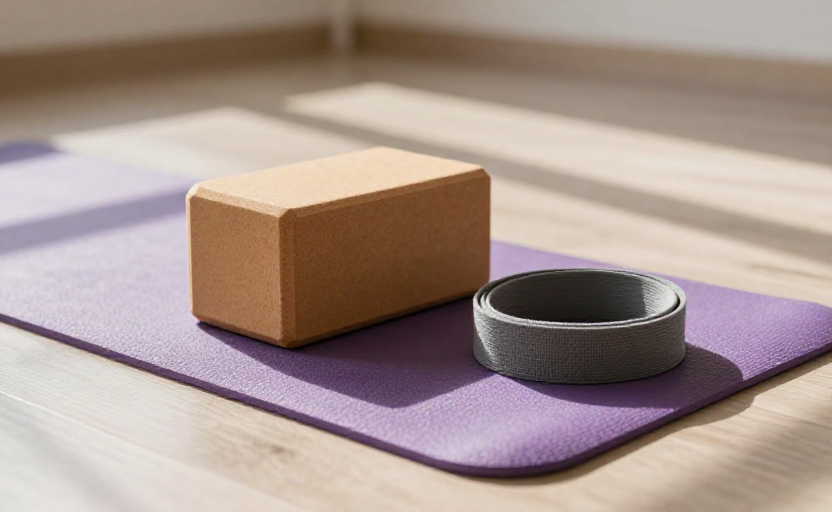
Yoga blocks and straps are among the most helpful props in a modern practice. They are designed to bridge the gap between where your body is today and where a pose asks you to go. However, simply owning these tools doesn't guarantee a better practice. I see students every week making the same small errors that actually undermine the support these props are meant to provide.
Whether you are a beginner trying to find your footing in Triangle Pose or an experienced practitioner working on deeper binds, using blocks and straps with intention makes a significant difference. Let's walk through the four most common mistakes I observe, and how to correct them so your props become true allies on the mat.
1. Using the block as a crutch instead of a lift
One of the first things I notice in class is when a student places a block under their hand in a standing forward fold, but rests all their weight onto it. The block should be a lift that brings the ground closer, not a table for you to lean on. When you dump your full body weight into a block, you disengage the core and leg muscles that are supposed to be doing the work.
Instead, think of the block as a temporary floor. In poses like Half Moon or Triangle, press firmly into the block with your fingertips, but keep your shoulders drawing away from your ears and your core active. The goal is to feel support without collapsing. If you feel your ribs sinking toward the block, you have likely given too much weight away.
2. Strapping too tightly or too loosely
Many newer students either cinch a strap so tight it restricts movement, or leave it so loose it slides around and provides no feedback. Both extremes defeat the purpose. In a Reclined Big Toe Pose, a strap wrapped around the foot should create a gentle, steady anchor. If the strap is too tight, you will feel a sharp pull in the hamstring rather than a gradual release. If it is too loose, you lose the connection entirely and your foot drifts away.
A good rule of thumb: when you loop a strap around your foot or hand, adjust it so there is a slight tension before you begin the movement. As you extend your leg or reach for a bind, the strap should meet you with resistance, not give you slack. Think of it like a partner holding your limb—you want a firm but kind grip that lets you explore your edge safely.
How to check your strap tension
Before you settle into a pose, hold the strap with both hands and give a gentle tug. If the strap immediately goes taut, loosen it a few inches. If you can pull your hand several inches before feeling any stop, tighten it. It takes a few tries to get the feel, but your hamstrings and shoulders will thank you.
3. Placing blocks in the wrong orientation
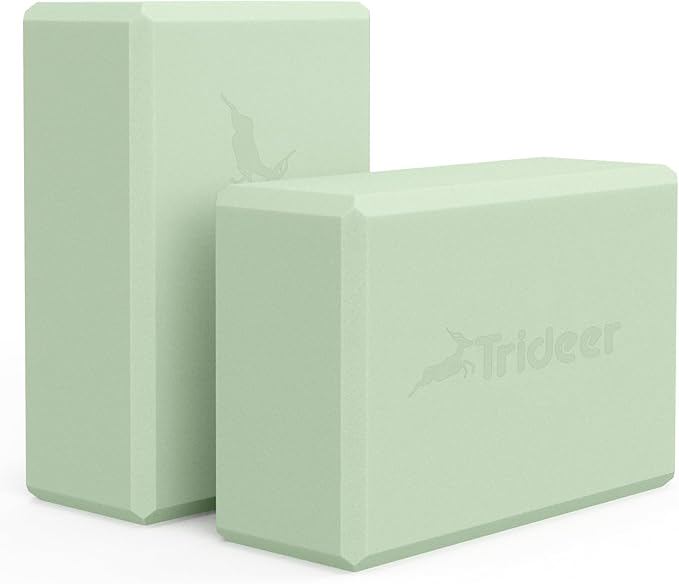
Yoga blocks have three heights for a reason, but I often see students defaulting to the tallest setting because they think it is the safest. The tallest setting is not always the best choice. For example, in a supported bridge pose, using the block on its highest side under your sacrum can create too much of an arch, straining the lower back. In that pose, the middle width is often more appropriate.
Similarly, for a seated forward fold like Paschimottanasana, sitting on a block placed on its lowest (flattest) side lifts the pelvis just enough to tilt it forward, making the forward bend accessible. Placing it on the tallest side in a forward fold can over-lift the pelvis and actually flatten the natural curve of your lower back.
Quick tip: Place the block under your sit bones in seated poses. If you feel your lower back rounding, lower the block height. If your knees are higher than your hips, raise the block height.
4. Forgetting the strap is for leverage, not force
A strap is an extension of your reach, not a tool to yank yourself deeper into a pose. I see this most often in seated forward folds and shoulder openers. Someone loops a strap around their feet, grabs both ends, and then pulls hard to bring their chest toward their thighs. This creates a tug-of-war with your own body and often leads to a pulled hamstring or shoulder spasm.
Instead, use the strap to create length. In a standard forward fold, hold the strap with both hands and extend your spine upward first. Only then, on an exhale, gently hinge forward from the hips. The strap helps you keep your arms long so the fold comes from the hip crease, not from collapsing your shoulders. If you feel a sharp or stinging sensation, ease off immediately.
The best way to integrate these corrections is to practice with a curious mind. Next time you roll out your mat, pick up a block and a strap and challenge yourself to use them as active partners rather than passive supports. Your body will respond with greater freedom and stability in every pose.


![Tumaz Yoga Strap/Stretch Bands [15+ Colors, 6/8/10 Feet Options] with Extra Safe Adjustable D-Ring Buckle, Durable and Comfy Delicate Texture - Best for Daily Stretching, Physical Therapy, Fitness](https://www.glowtheorylab.com/uploads/ad202604/d62cf3b7330d7d4a.webp)