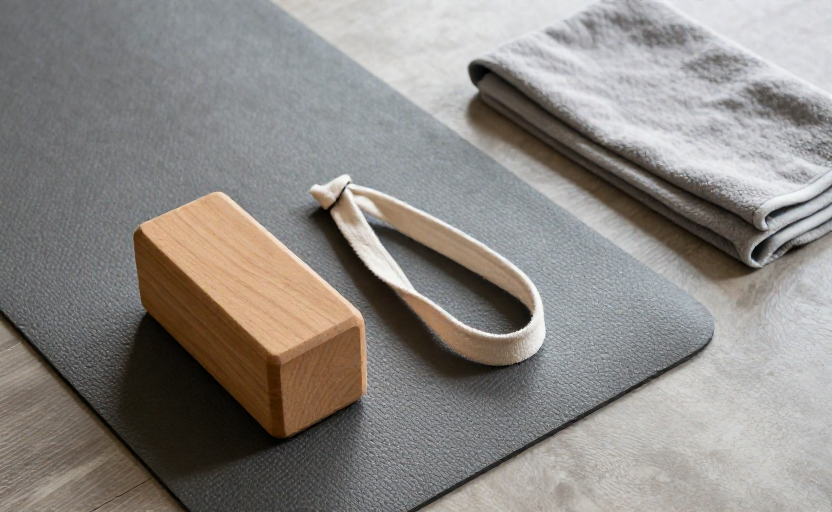
Yoga props—blocks, straps, bolsters, blankets—are supposed to make the practice more accessible, not more complicated. When used with awareness, they can help you find length in a tight hamstring or support a restorative pose for ten minutes without shaking. But props can also become a crutch or, worse, a source of strain. It is entirely possible for a well-intentioned block or strap to pull your alignment off, mask a muscle imbalance, or even cause joint discomfort over time.
The problem is rarely the prop itself. It is how we use it, or how long we have been using it without checking in. If something in your practice has started to feel off—achy, wobbly, or just not right—it is worth looking at the gear between you and the mat. Here are three clear signs that your props are working against you, not for you.
1. You feel a sharp or pinching sensation where the prop meets your body
Props are meant to distribute pressure, not concentrate it. If you place a block under your sacrum in a supported bridge pose and feel a digging, sharp point of pressure, that is a red flag. The same goes for a strap that digs into the soft tissue behind your knee when you try to extend your leg in a supine hamstring stretch, or a bolster that feels too firm under your ribs in a restorative twist.
A general, diffuse pressure is normal. A specific, stabbing, or pinching feeling is not. This usually means one of three things:
- The prop is the wrong density or shape for your body in that pose.
- You are placing the prop on a bony prominence rather than on supportive muscle or soft tissue.
- Your alignment in the pose is forcing the prop into an unnatural angle.
When this happens, remove the prop and see if the sensation disappears. If it does, try a different height, a softer material, or reposition the prop by an inch or two. Never push through sharp pain expecting the prop to eventually "fix" the pose.
2. You rely on the prop so heavily that your muscles stop engaging
This is the classic "props as crutch" scenario, and it is more subtle than you might think. A strap around the feet in a seated forward fold, for instance, can be wonderfully helpful for someone with tight hamstrings. But if you habitually pull the strap so hard that your spine rounds completely and your core goes slack—all while your hamstrings remain passive—then the strap is no longer assisting your stretch. It is bypassing the very muscles that need to learn to release.
Similarly, placing a block under your hand in Triangle Pose is intended to bring the floor up to you. If your top arm drifts backward, your side body collapses, and you lean most of your weight into the block, you are likely using the prop to compensate for a lack of core and leg engagement.
A simple check: Try the pose without the prop for one breath. Do you feel lost or unstable? Good—that tells you the prop was doing work your body should be learning to do. Keep the prop in the pose, but back off its height or thickness by one notch and see if you can still maintain healthy engagement.
Props should challenge your stability just enough to find new range of motion, not replace the need for muscular effort altogether.
3. Your joints feel unstable, hyperextended, or strained after using the prop
This sign often shows up in the elbows and knees. A common example is using a block under your hand in a side plank variation. If you place the block too far forward or your shoulder is not stacked directly over your wrist, the elbow joint can end up in a compromised, hyperextended position. Over a few sessions, you might notice a dull ache or a sense of "looseness" in that elbow.
Another frequent culprit is the strap in a reclined big-toe pose (Supta Padangusthasana). If you loop the strap around the ball of your foot and pull your leg toward your head without first grounding the opposite thigh, the hip of the lifted leg can rotate externally, sending the knee into a twist. The joint, not the muscle, takes the load. The result can be hip or knee soreness that you feel after class, not during it.
Joints are not designed to bear the directional pressure a prop can create when the surrounding muscles are not doing their share. If you notice any of the following after a practice that involves props, something needs to change:
- A popping or clicking sensation that was not there before
- A feeling of "giving out" in a joint during or after the pose
- Soreness concentrated directly in a joint (elbow, knee, wrist) rather than in the surrounding muscle belly
When joints complain, stop using the problematic prop for that specific pose until you can be evaluated by a qualified teacher or physical therapist.
How to reset your relationship with props
If any of these warning signs sound familiar, you do not need to throw your props away. You just need to use them more thoughtfully. Here is a quick reset:
- Audit one pose at a time. Pick a pose you use props for regularly. Remove the prop and try the pose for two slow breaths. What changes? Write it down or record a short video.
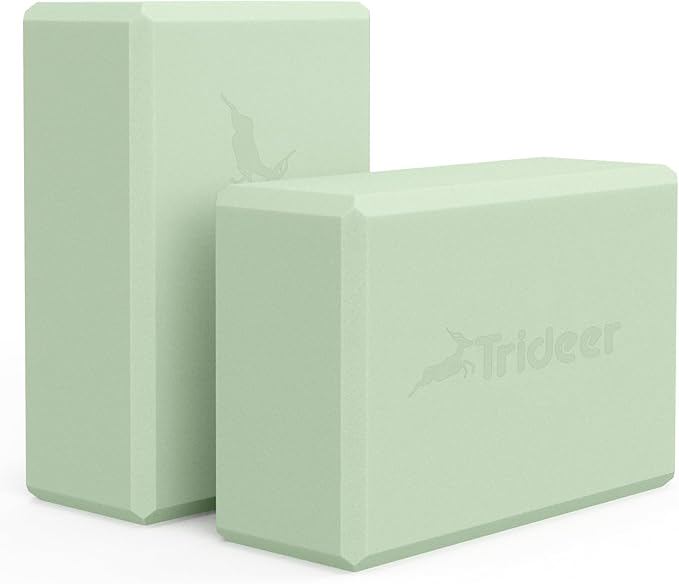
- Change the height or firmness. A block that is too tall for your frame in a standing pose can torque your spine. Swap a firm block for a softer one, or try a folded blanket instead of a block under your seat bones.
- Ask a simple question: Is this prop helping me feel more space in my body, or is it just helping me get into a shape that looks like the pose? If the answer is the latter, the prop is not working for you.
The best prop is the one you forget you are using because your body feels supported, aligned, and free. If you are actively aware of discomfort, disengagement, or joint strain, listen to that feedback. Your props are supposed to serve your practice, not dictate it.


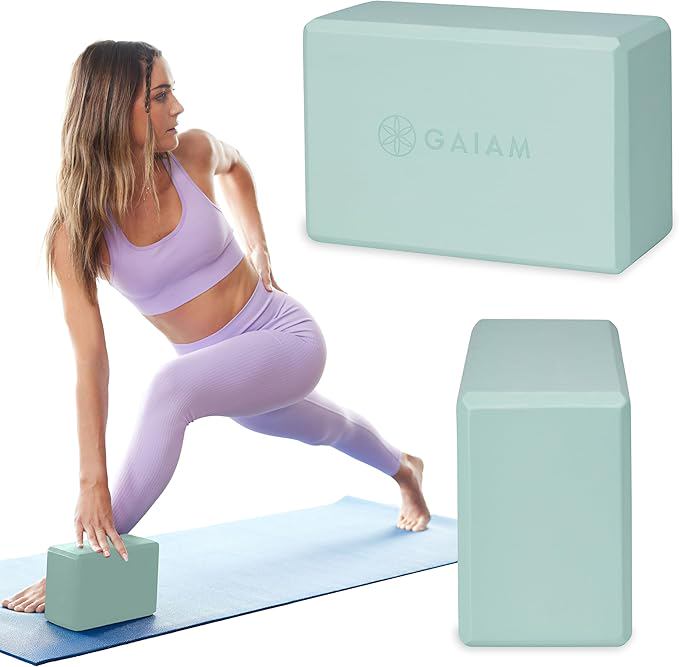

![Tumaz Yoga Strap/Stretch Bands [15+ Colors, 6/8/10 Feet Options] with Extra Safe Adjustable D-Ring Buckle, Durable and Comfy Delicate Texture - Best for Daily Stretching, Physical Therapy, Fitness](https://www.glowtheorylab.com/uploads/ad202604/d62cf3b7330d7d4a.webp)