You roll out your mat after eight hours hunched over a keyboard, hoping to undo the damage. But what if your yoga practice, the very thing meant to counteract sitting, is actually locking those poor posture patterns deeper into your body? It is a frustrating paradox, but a common one. The problem is not yoga itself—it is how we approach it after a sedentary day.
Many modern yoga classes, especially fast-paced or strength-focused ones, can inadvertently mimic the same front-body dominance we use at a desk. The chest caves, the shoulders round, and the neck juts forward. If you leave class feeling tighter in the upper back or more compressed in the low back, your practice might be reinforcing the problem. Here are three specific warning signs to look for.
1. You Feel More Compression, Not Length, in Your Low Back
Desk posture typically shortens the hip flexors (the psoas and rectus femoris) and flattens the natural lumbar curve. If your yoga practice involves a lot of deep, repetitive forward folding—think seated forward folds, standing forward bends, or even certain vinyasa transitions—without engaging the core and lengthening the spine, you are likely compressing the lumbar discs further.
A healthy forward fold comes from the hips, with a long spine. A desk-posture forward fold, by contrast, comes from the lower back, with the spine already flexed. If you cannot extend your spine fully before folding, or if your hamstrings feel like they are yanking your pelvis into a posterior tilt, you are reinforcing the very compression you feel after a long sit.
What to check: The moment you fold, do you feel a pinching sensation in your lower back? That is a sign to back off, bend your knees dramatically, or skip the forward fold entirely and work on hip flexor opening and spinal extension instead.
2. Your Shoulders and Neck Feel Tighter After Practice
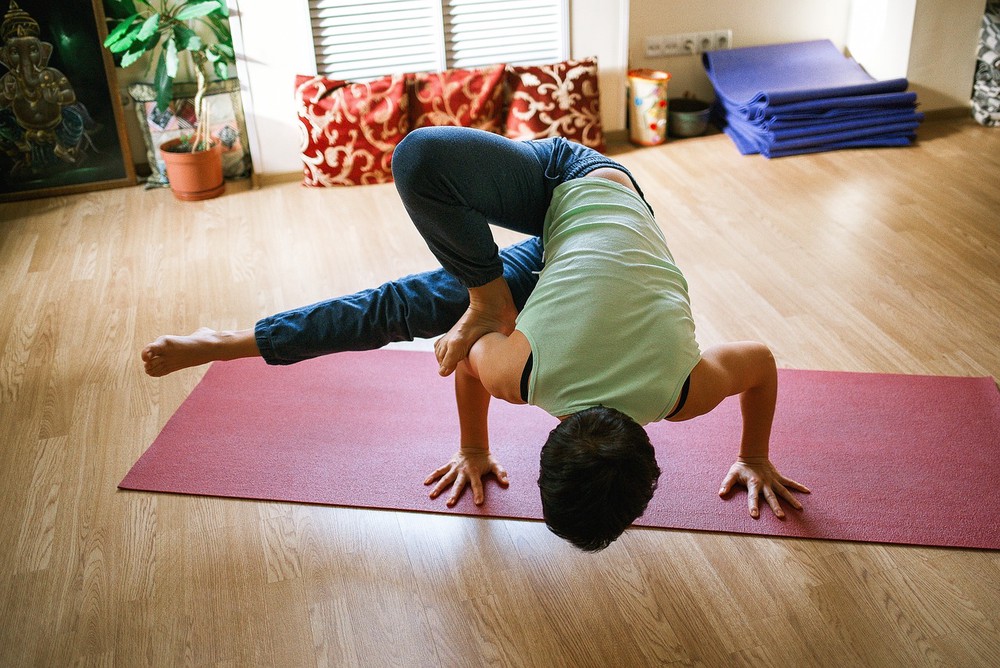
The classic desk slump collapses the chest and internally rotates the shoulders. Many popular yoga poses—Chaturanga, Plank, Downward-Facing Dog, and arm balances—demand significant shoulder strength and stability, but they often require a contracted, somewhat rounded upper back to generate leverage. If you are already tight through the pectorals and weak through the mid-back (the rhomboids and lower traps), these poses can exacerbate the imbalance.
It is not that these poses are bad. The issue is how you do them after sitting. If your shoulders creep up toward your ears in Down Dog, if your shoulder blades wing out in Plank, or if your neck feels strained after a series of Chaturangas, you are likely compensating with your upper traps and overworking the front of the shoulders. This reinforces the rounded-shoulder, forward-head posture you are trying to undo.
Better approach: Focus on poses that externally rotate the shoulders and strengthen the upper back. Think of poses like Setu Bandha (Bridge), Salabhasana (Locust), or even just standing with your arms in a cactus shape. In weight-bearing poses, consciously draw your shoulder blades down your back and broaden your collarbones—even if it means taking a modified version of the pose.
3. You Cannot Breathe Deeply in Resting Poses
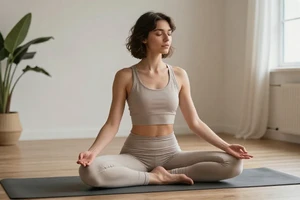
This is a subtle but powerful sign. When you lie in Savasana (Corpse Pose) or sit in a comfortable cross-legged position, check your breath. If your chest barely rises and you feel a tight band around your ribs, you are likely breathing into your upper chest only. That shallow, thoracic breathing is a hallmark of prolonged desk sitting, which restricts the diaphragm and ribs.
Yoga should restore diaphragmatic breathing. If your practice—even the restorative parts—leaves you feeling like your ribs are locked and your breath is short, the sequence likely favored chest-opening poses that actually pushed the ribs forward without mobilizing the spine or the attachments of the diaphragm. Poses like extreme backbends (Urdhva Dhanurasana, Wheel) without proper preparation can also compress the low back and restrict breath rather than freeing it.
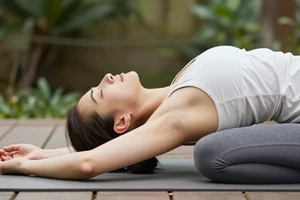
What helps: Incorporate gentle side-bending, spinal twists (seated or supine), and poses that encourage lateral rib expansion. A simple supine twist with your knees to one side will often unlock the diaphragm far more effectively than a deep backbend. Pay attention to whether your exhalation lengthens—a long exhale signals that your nervous system is calming and your posture is releasing.
How to Shift Your Yoga Practice for Better Posture
If you recognize any of these signs, you do not need to quit yoga. You simply need to recalibrate. The goal is not more flexibility in the chest or hamstrings—it is stability and mobility in the spine and shoulders.
- Prioritize spinal extension and rotation. Poses like Bhujangasana (Cobra), Matsyasana (Fish) with support, and gentle backbends over a bolster can help restore the natural curve of your upper back.
- Strengthen the posterior chain. Locust, Bow, and even simple prone arm lifts (arms in a W shape, squeezing shoulder blades together) directly target the muscles that keep your shoulders back and your head aligned.
- Open the hips laterally—not just in flexion. Desk posture narrows the front of the hips. Pigeon pose, lateral lunges, and supine figure-four stretches are more beneficial than repetitive forward folds.
- Incorporate standing balance poses. Vrksasana (Tree) and Garudasana (Eagle) require you to stack your ears, shoulders, and hips in a vertical line—exactly what desk posture undermines.
The best yoga for a desk worker is not the most vigorous or the most flexible. It is the practice that leaves you feeling longer, more open across the front of your chest and hips, and capable of breathing deeply. If your current practice leaves you feeling compressed, tight in the neck, or short of breath, it might be time to change your sequence—and your relationship with the mat.