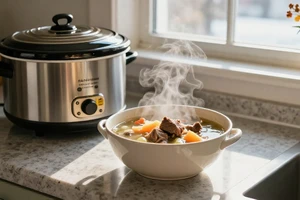
Meatless Monday doesn’t have to mean complicated prep or a sink full of pans. The slow cooker can do the heavy lifting while you go about your day. With just a little planning, you can set yourself up for a week of satisfying, vegetable-forward dinners that practically cook themselves.
Below are three strategies that save time without sacrificing flavor. Each approach leans on the slow cooker’s gentle heat to develop deep taste from pantry staples and fresh produce.
Strategy 1: Prep a Flavor Base the Night Before
Most slow-cooker recipes start with sautéed onions, garlic, and spices — the aromatic foundation that gives the dish depth. Instead of doing this step in the morning, do it the night before.
Take ten minutes after dinner to dice an onion, mince a few garlic cloves, and measure out your spices. Sweat the onion and garlic in a little oil until softened, then stir in your spices (think cumin, smoked paprika, chili powder) and cook for one more minute. Let the mixture cool, then transfer it to a sealed container in the fridge.
The payoff: In the morning, dump that base into the slow cooker along with your beans, lentils, or diced vegetables, add liquid (broth, coconut milk, or tomato purée), and turn it on. The flavors have already bloomed, and your morning routine stays quick.
Try it with: black beans, diced sweet potatoes, fire-roasted tomatoes, and a splash of lime juice for a smoky vegan chili that needs only a garnish when you get home.
Strategy 2: Use the “Set and Forfeit” Method with Hearty Vegetables
Many people avoid slow-cooking vegetables because they worry about mushiness. The trick is choosing the right vegetables and cutting them into large, uniform pieces.
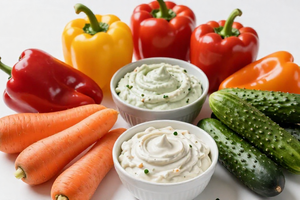
For Meatless Monday, focus on vegetables that hold up to long, moist heat: carrots, parsnips, butternut squash, celery root, potatoes, and mushrooms. Cut them into 1½- to 2-inch chunks — too small, and they break down. Add them raw to the slow cooker in the morning with your liquid, seasonings, and a source of umami like tamari, miso paste, or a spoonful of tomato paste.
Why it works: Slow cooking at low heat (not high) for 6 to 8 hours tenderizes these vegetables while keeping their structure. The natural sugars caramelize slightly, and the liquid reduces into a savory broth. You come home to a stew-like dish that needs only a quick check for salt and pepper.
- Best vegetables for this method: winter squash, turnips, parsnips, carrots, potatoes, mushrooms, and cauliflower (add cauliflower during the last hour).
- Umami boosters: white miso, soy sauce, nutritional yeast, dried shiitake mushrooms.
Strategy 3: Build a Meal Around Cooked Beans or Lentils (No Pre-Soaking Needed)
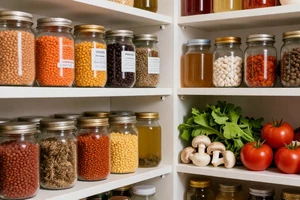
Dried beans and lentils are the most cost-effective protein for Meatless Monday, and the slow cooker handles them beautifully — as long as you know a few rules.
First, skip the pre-soak for lentils and split peas; they cook fast enough on their own. For larger beans like chickpeas, black beans, or kidney beans, you can use the “quick soak” method right in the slow cooker: cover the beans with water, bring to a simmer on the stovetop for five minutes, then drain and add fresh water before slow-cooking. Or simply soak them overnight and rinse in the morning.
The real time-saver: Cook a whole bag of beans or lentils over the weekend, then refrigerate or freeze them in portion-sized containers. On Monday morning, you just grab a container of cooked beans, add them to a flavor base (see Strategy 1), and let the slow cooker meld everything together. Dinner is essentially done before you leave for the day.
One-pot idea: Combine cooked brown lentils, a jar of crushed tomatoes, diced carrots, celery, and a bay leaf. Cook on low for 4 to 5 hours. Stir in a handful of spinach right before serving. Serve with crusty bread or over rice.
These three strategies share a common thread: they shift hands-on work to a calmer moment — either the night before or the weekend — so your Meatless Monday becomes a truly effortless evening. A little upfront prep, the right vegetable choices, and a batch of cooked beans are all you need to make the slow cooker your best meatless ally.