If you've ever rolled out your mat after a day of screen time and felt like your legs were filled with sand, you're not alone. Many desk workers hit a wall right before their evening yoga session. The slump feels physical, but the root cause often starts with what—or when—you ate last.
Your body needs steady fuel, not a sugar spike followed by a crash. The wrong choices lead to a heavy, sluggish feeling in standing poses and a mind that wanders instead of focusing on the breath. The right ones, however, can bridge the gap between a busy workday and a grounded practice. Here are three specific foods that can help sustain your energy without weighing you down.
Why Afternoon Energy Drains Differently for Desk Workers
Spending hours seated, staring at a screen, creates a unique kind of fatigue. Your physical body hasn't moved much, but your brain has been processing information constantly. This mental drain depletes glycogen stores, and the postural strain of sitting can tighten your hips and lower back before you even start a sun salutation.
To counter this, you need fuel that stabilizes blood sugar and provides slow-release energy. You also need foods that support muscle function without causing digestive discomfort in twists or forward folds.
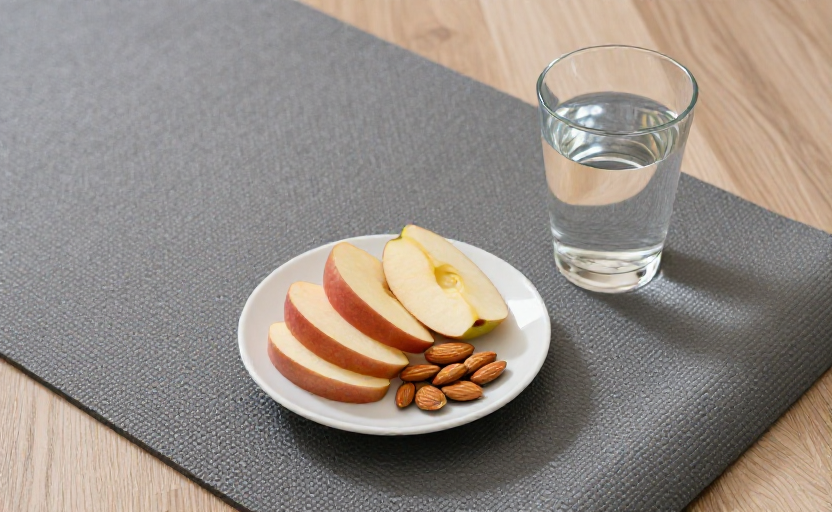
1. A Handful of Almonds and an Apple
This classic combo is a powerhouse for a reason. The natural sugars in an apple provide a quick lift without the dramatic crash associated with processed sweets. The fiber in the fruit helps moderate the sugar release.
The real anchor here is the almonds. They are a solid source of magnesium, a mineral that plays a critical role in muscle relaxation and nerve function. A magnesium deficit can show up as muscle tightness, cramps, or that feeling of residual tension that makes it hard to release into a pose. Almonds also provide healthy fats and a bit of protein to keep your energy curve stable through an hour-long practice.
How to eat the pairing. Aim to eat this snack about 30 to 45 minutes before your session. This gives your body enough time to begin digestion without food sitting heavily in your stomach during cat-cow stretches or forward bends.
2. A Small Bowl of Oatmeal with Berries
Oatmeal might seem like a breakfast food, but a small, early afternoon portion can be ideal for evening yoga. Steel-cut or rolled oats are a low-glycemic carbohydrate. They release glucose into your bloodstream at a steady pace, providing the sustained energy you need for a sequence that demands both strength and endurance.
The key is to keep the portion small—think half a cup of cooked oats. Berries add antioxidants which help combat the cellular stress that builds up from hours of screen time and mental focus. This combination gives your muscles a steady supply of glycogen without a heavy feeling.
A pro tip: Prepare your oats at lunch and let them cool. You can eat them cold or quickly reheat them. Adding a sprinkle of cinnamon may help with steady blood sugar levels.
3. A Piece of Salmon or a Can of Sardines
This option is less common but surprisingly effective if you can stomach it an hour or so before practice. Fatty fish like salmon or sardines are rich in omega-3 fatty acids. These fats are known for their anti-inflammatory properties. For desk workers, inflammation typically builds in the shoulders, neck, and lower back from poor posture. Reducing that background inflammation can make the gentle opening movements of yoga feel less restrictive and more fluid.
The high-quality protein in fish also provides a steady source of amino acids. Your muscles use these to repair and function efficiently during practice. You don't need a large portion—three to four ounces is sufficient. Pair it with some steamed vegetables or a small salad for a light, energizing meal that won't sit heavy.
What to Avoid Before Your Mat
Knowing what to eat is only half the equation. Equally important is knowing what not to eat in the two hours before practice.
- Heavy, fatty meals. A greasy lunch or a large cheeseburger will sit in your stomach and divert blood flow away from your muscles, leaving you feeling lethargic.
- Large amounts of caffeine. A small amount of green tea is fine, but a large coffee can overstimulate your nervous system, leading to jitters and a racing heart in savasana.
- Simple sugars and refined carbs. Cookies, candy, or a soda will cause a rapid spike in blood sugar followed by a crash that hits mid-session.
Hydration Matters More Than You Think
Fatigue is often dehydration in disguise. Desk workers frequently forget to drink water over the course of a morning and afternoon. Even mild dehydration can cause a noticeable drop in energy and an increase in muscle soreness.
Start your afternoon by drinking a glass of water. Then, sip water steadily but stop about 30 minutes before your practice begins. Too much fluid in your stomach during yoga can lead to sloshing and discomfort, especially in inversions or core work. Replenish after your session to support recovery.
Finding the right pre-yoga fuel takes a little experimentation. Your body is your best guide. Try one of these options for a week and notice how you feel in standing poses, balances, and your final relaxation. You might just find your practice feels a little lighter and a lot more focused.