You’ve rolled out your mat, set your intention, and committed to a yoga session that’s going to fire up your core. But there's one thing that can make or break that practice: what you ate (or didn’t eat) in the last hour. Fueling your body properly—especially when you're targeting deep abdominal work—isn't about eating a big meal. It's about choosing the right snack at the right time.
Eating 30 minutes before yoga gives your body a quick, digestible energy source without leaving you feeling heavy or crampy. The goal is to support steady blood sugar, muscle endurance, and mental focus—all of which help you hold a plank longer and find more depth in your twists. Here are three snacks that hit that sweet spot, specifically chosen to support core strength and stability.
Why the 30-minute window matters for core work
Your core isn't just your six-pack muscles; it's the entire girdle of muscles that stabilize your pelvis, spine, and ribcage. When you practice poses like boat, side plank, or warrior III, your body pulls energy from readily available glycogen. A snack eaten about half an hour prior digests quickly enough to top off those stores without competing with your muscles for blood flow during digestion. Think of it as a quick-charge, not a full battery swap.
1. A small banana with a teaspoon of almond butter
Bananas are practically nature’s energy gel. They’re rich in fast-acting carbohydrates (about 27 grams in a medium fruit) and packed with potassium, an electrolyte that helps prevent muscle cramps during sustained holds. The teaspoon of almond butter adds a tiny bit of fat and protein (around 2–3 grams) to slow the sugar release just enough to avoid an energy spike-crash. This combo is especially kind to your stomach during forward folds and inversions—it sits light but keeps your engine humming.
How to eat it: Slice the banana, spread the almond butter on top, and eat slowly while you prepare your space. No need to chug water; just sip as usual.
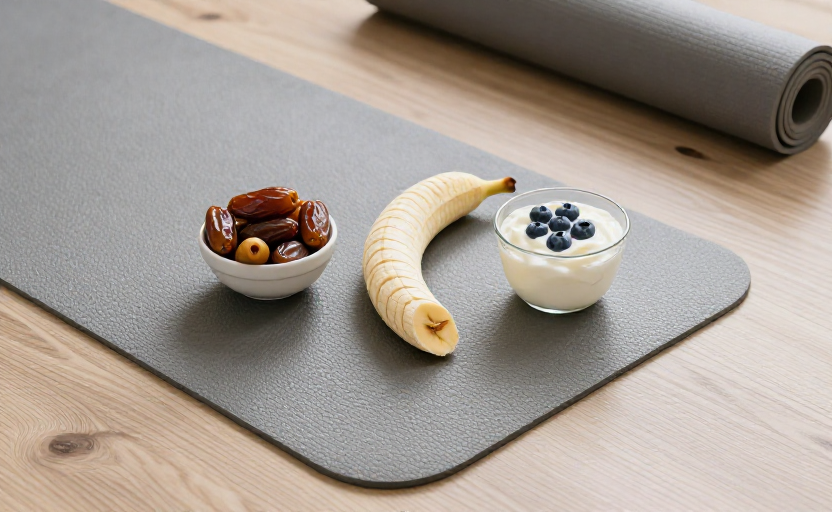
2. A handful of dates (2–3) with a pinch of sea salt
Dates are a powerhouse for core-intensive yoga. They are essentially pure glucose and fructose, which your muscles can use almost immediately. But what makes them special for core work is their magnesium content. Magnesium helps regulate muscle contraction and relaxation—something you’ll rely on when you’re engaging your transverse abdominis in a hollow hold or releasing your hips in a pigeon pose. The pinch of sea salt provides sodium, which supports fluid balance and nerve signaling, keeping your mind-to-muscle connection sharp.
Pro tip: Medjool dates are softer and easier to chew. If you’re prone to dry mouth during practice, take just one bite at a time and let it dissolve slightly before swallowing.
A quick word of caution: if you have a history of blood sugar issues or are following a very low-carb protocol, test a smaller portion (1 date) first. The rapid carb absorption can sometimes overreact in sensitive individuals.
3. A half-cup of plain Greek yogurt with a few blueberries
Greek yogurt offers a balanced trio: protein (about 10–12 grams per half-cup), calcium (for muscle contraction), and a little fat. The protein here isn’t about building muscle on the spot—it’s about providing amino acids that help prevent muscle breakdown during longer holds. Blueberries contribute a small dose of antioxidants (which reduce inflammation) and natural sweetness without a sugar flood. This snack is particularly good for an early morning practice or a late afternoon session when you need a gentle lift without feeling full.
Eating tip: Stir the blueberries into the yogurt and let it sit for a minute so they soften slightly. Avoid any flavored yogurts with added sugar syrups—they can cause an energy drop halfway through your vinyasa.
What to avoid before core-focused yoga
Just as important as what you eat is what you skip. High-fiber vegetables (broccoli, cauliflower, beans), greasy or fried foods, and large amounts of nuts or seeds can cause bloating or sluggishness during twists and deep abdominal engagement. Also steer clear of carbonated drinks; the gas can create uncomfortable pressure when you’re contracting your core. Stick with plain water up to 30 minutes before you start.
How to pair your snack with hydration
Water intake matters a lot here. If you’re snacking 30 minutes out, aim to finish your last big gulp of water about 15 minutes before you hit the mat. That gives your kidneys time to process it, so you’re not sloshing during a seated fold. Sip water during practice only if you feel dry-mouthed—many yoga sequences include rest poses where you can hydrate mindfully.
What if I need more energy for a longer practice?
If your session runs 75 minutes or includes intense core circuits, you might want a slightly larger snack—say, a small apple with a thin layer of peanut butter, or half a rice cake with avocado. The same 30-minute timing applies. Listen to your body: if you feel hungry right before practice, eat a little something. Yoga is about attunement, not endurance on empty.
The bottom line on core-strengthening snacks
Eating 30 minutes before yoga is a strategic act of self-care. The right snack—like banana with almond butter, salted dates, or Greek yogurt with blueberries—can elevate your practice by stabilizing your energy, supporting your muscles, and preventing the distraction of a rumbling stomach. Choose one that fits your body’s signals, and notice how much deeper you can settle into that next plank hold.