You feel it in your back. That twinge. That tightness that never quite loosens up, no matter how many crunches you grind out or how many planks you hold until your arms shake. You assume your core is weak, so you push harder. But what if the real problem isn't strength? What if the very exercises you are doing to build a stable core are actually working against you?
Core stability isn't about brute force or washboard abs. It is a sophisticated system of coordination between your deep abdominal muscles, pelvic floor, diaphragm, and spine. When this system is disrupted by habitual movement patterns, stability deactivates. Below are the three most common, stealthy errors that undermine your core from the inside out.
Mistake #1: Holding your breath during exertion
This is the number one human reflex when things get hard, and it is a core-killer. When you hold your breath, your diaphragm locks down. Your intra-abdominal pressure spikes uncontrollably, and your deep stabilizers—the transverse abdominis and multifidus—cannot engage properly. Instead of a stable, pressurized cylinder, your torso becomes a rigid, over pressurized balloon that pushes your pelvic floor down and arches your lower back.
The fix: Exhale on the effort. If you are lifting, twisting, or rolling up, breathe out. Practice finding three seconds of exhale on the hardest part of a movement.
Without breath, the core is literally disconnected from the nervous system. Reestablishing exhalation during load is the single fastest way to reignite deep stability. Try it during your next Dead Bug or Bird Dog—if you are holding your breath, you are cheating.
Mistake #2: Overpowering with your rectus abdominis (the outer six-pack)
Your body is efficient, but not always wise. It will recruit the biggest, strongest muscles first to get the job done. For the core, that means the rectus abdominis—the superficial 'six-pack' muscle—and the hip flexors take over, while the deep internal stabilizers remain asleep. This creates a visual crunch motion, but zero spinal control.
When you crunch or sit up, you are training shortening of the front body, not stabilization. Meanwhile, your lower back arches, your ribs flare, and your pelvic floor drops. Over time, this imbalance leads to anterior pelvic tilt, poor posture, and chronic lower back tension. True core stability requires lengthening and bracing, not curling into a ball.
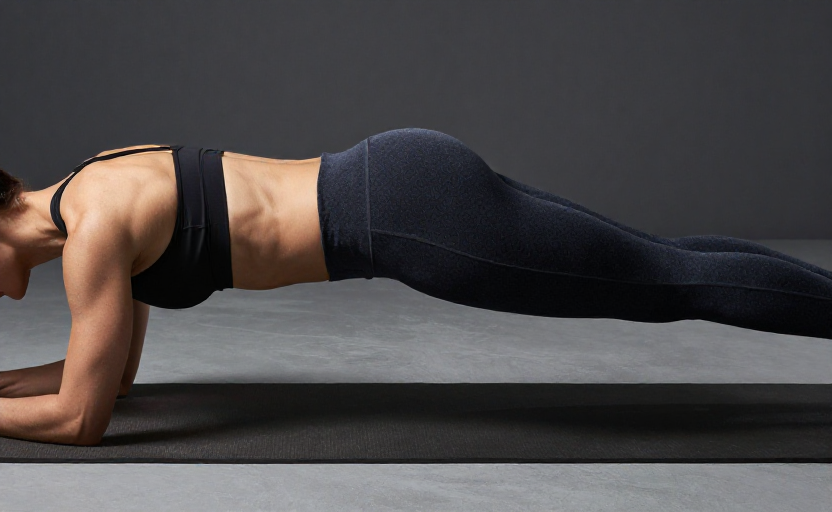
- The hallmark of this mistake: a visible 'doming' or bulging of the abdominals during a plank or curl.
- The real target: internal oblique and transverse abdominis activation that does not create visible movement but creates deep tension.
How to tell if you are doing it
Lie on your back, knees bent, feet flat. Place one hand on your lower belly, one on your rib cage. Inhale normally. Exhale and try to draw your lower belly down toward the floor without moving your ribs or lifting your head. If your ribs flare up or your belly pushes out hard, you are overusing the outer layer.
Mistake #3: Ignoring your posterior chain and pelvic floor
Core stability is not a front-of-body project. Your spine is held upright by the deep back muscles, glutes, hamstrings, and the pelvic floor. If these are weak or inhibited, anything you do with your abdominals will be shallow and temporary. Many people who complain of back pain have strong abs but dead glutes and a disconnected pelvic floor.
Your pelvic floor acts as the bottom of the core canister. When it is under-active (common after long sitting or poor breathing patterns), your lower back takes the load. A stable core needs the gluteus maximus, hamstrings, erector spinae, and pelvic floor to work in sync with the front and side abdominal walls.
The good news: this is fixable with integrated movement. Glute bridges, single-leg balances, and supine breathing with pelvic floor awareness are gentle ways to reconnect the posterior system.
Cue for everyday life: When standing, think of a gentle spiral through your inner thighs and a softening of the lower belly—not a hard suck-in.
Once the back and bottom of the core are online, your front abdominals can relax into their role as stabilizers instead of trying to do everything themselves. This is where stability transforms from forced tension into effortless support.
How to correct these mistakes in your practice
If you recognize yourself in any of the above, do not panic. The fix is a mindful reset, not a complete overhaul. Begin by returning to the absolute basics: simple supine breathwork on your back with pelvic floor awareness. Then, layer in one floor-based stabilization exercise at a time—such as the Dead Bug—where you can monitor your rib flare, breath, and pelvic position.
Drop the high-rep crunch and sit-up mindset for two weeks. Replace it with slow, controlled holds and rotational stability work on all fours. Keep the spine neutral rather than curled. Your core will adapt quickly when given the right input.
A stable core is quiet. It does not shake, flare, or hold its breath. It supports the spine the way a firm mattress supports a sleeping body: present, reliable, and completely unremarkable. That is the goal of true stability—movement freedom without strain.