
You do the work on the mat. You show up for class, breathe through the hard poses, and feel that deep release in your hips and shoulders. But the next morning—or even later that same day—the tightness is back. Your lower back feels stiff, and your neck won't let you turn your head fully to the left. If this sounds familiar, the problem might not be your yoga practice. It might be what you do for the eight hours before you ever roll out your mat.
Your desk posture is a powerful, silent antagonist to yoga recovery. When you sit for long stretches with rounded shoulders and a forward head, you create a pattern of muscular tension that your body tries to maintain—even during rest. Here are two clear warning signs that your chair is undoing the work of your yoga practice, and what you can do about it.
Your Upper Traps Won't Quit
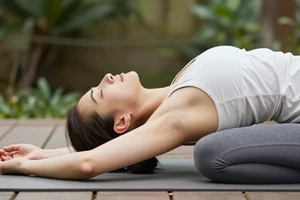
You just finished a restorative sequence that included Child's Pose and a long savasana. Logically, your shoulders should feel like they are floating. Instead, the muscles between your neck and shoulders (the upper trapezius) still feel like they are bracing for something. This is the most common sign of a desk-posture conflict.
When you sit at a computer, many people unconsciously shrug their shoulders up toward their ears, or hunch forward to look at the screen. This keeps the upper traps in a low-grade, persistent contraction. Yoga postures like Downward-Facing Dog and Cat-Cow can stretch these muscles effectively, but the benefit is short-lived if you return to a desk setup that immediately recreates the same tension pattern. Think of your yoga practice as trying to drain a sink that has the faucet running. Until you address the desk posture—the running faucet—your upper traps will never fully soften.
What to check at your desk
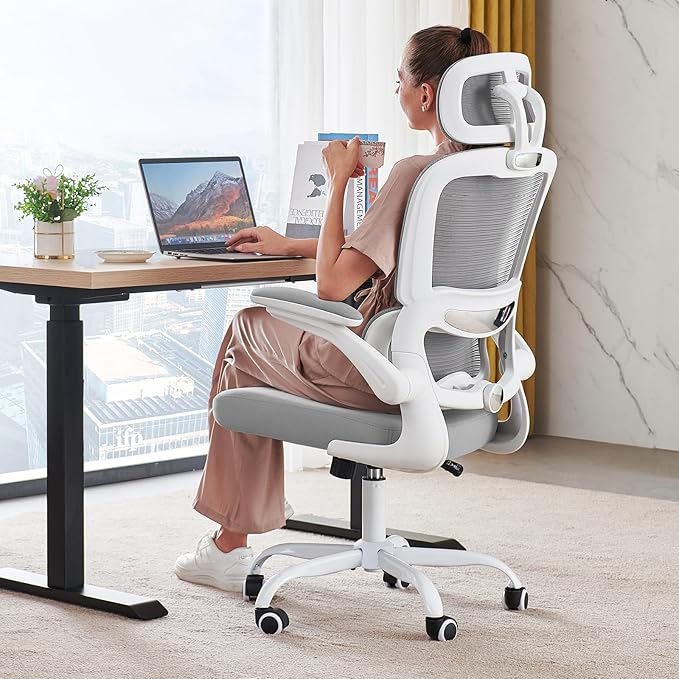
- Screen height: The top third of your monitor should be at or just below eye level. If you are looking down, even slightly, your neck is extending to compensate.
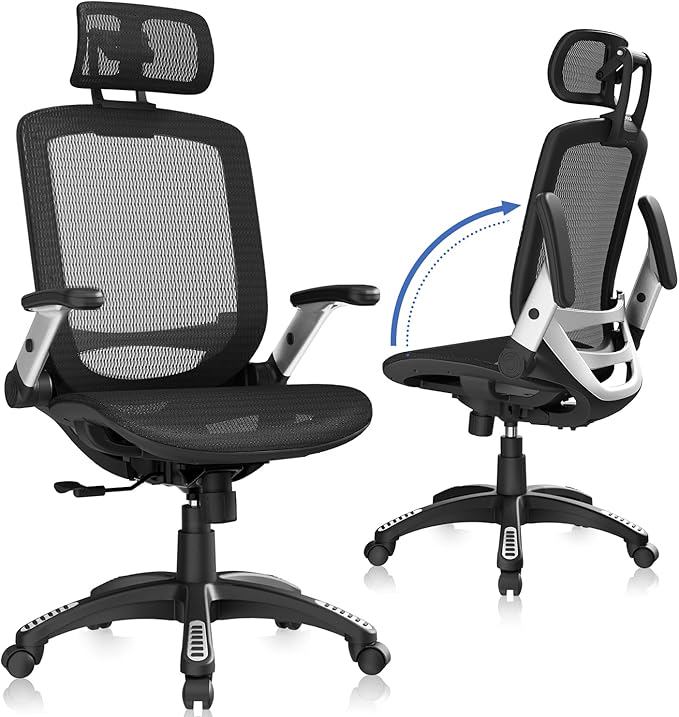
- Armrests: If your armrests are too high, they push your shoulders up. If they are too low, your shoulders drop and you grip the desk for stability. Aim for a 90-degree elbow angle with shoulders relaxed.
A quick reset: every 20 minutes, take one deep breath and let your shoulders drop completely. Imagine your collarbones widening. This two-second check can save an hour of neck tension later.
Your Hip Flexors Stay Locked After Savasana
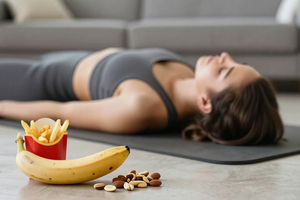
You lie down for final relaxation, feeling your lower back sink into the mat. It feels good. But when you stand up, you feel a familiar grab in the front of your hips. Maybe your lower back tightens up, or you feel like you cannot stand fully tall. This is a hallmark sign that your hip flexors—the psoas and iliacus muscles—have adapted to a seated shape and resist releasing.
Prolonged sitting shortens the hip flexors. Yoga poses like Low Lunge, Pigeon, and Happy Baby are excellent for opening the hips, but if you sit for six to ten hours a day, those releases are temporary. The psoas muscle in particular is connected to your stress response and your posture. When it is chronically shortened from sitting, it pulls on the lumbar spine, making your yoga recovery feel incomplete. You might even notice that your Standing Forward Fold feels deeper after a day of movement than after a day of sitting, because the hip flexors have been allowed to lengthen naturally.
A simple test
After your next practice, do not check your hip flexors while lying down. Stand up, walk a few steps, and then gently lift one knee toward your chest. Notice if the opposite hip feels tight or if your pelvis wants to tilt forward. That residual tightness is the desk talking.
What Yoga Tells Us About Posture Recovery
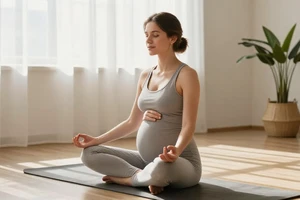
Yoga recovery is not just about the time you spend on the mat. It is about what happens between sessions. The principle of sthira sukham asanam—steadiness and ease in posture—applies to your office chair just as much as it applies to your Warrior II. If your body learns a pattern of collapse and tension during the day, it will carry that pattern into your yoga poses and into your recovery time.
Addressing desk posture is not about abandoning yoga. It is about supporting the work you already do. Simple changes like adding a lumbar roll, using a footrest to keep your hips level with your knees, and standing for brief intervals can dramatically improve how your body feels after your next practice.
If you have noticed that your neck or hips feel tight even after a good practice, you are not doing yoga wrong. Your body is just trying to negotiate two different instructions—one to open and one to hold. Your yoga practice is the wiser teacher. By tuning into these two specific warning signs, you can begin to bridge the gap between your desk life and your mat life, so that every Savasana actually means something when you walk away.


![Tumaz Yoga Strap/Stretch Bands [15+ Colors, 6/8/10 Feet Options] with Extra Safe Adjustable D-Ring Buckle, Durable and Comfy Delicate Texture - Best for Daily Stretching, Physical Therapy, Fitness](https://www.glowtheorylab.com/uploads/ad202604/d62cf3b7330d7d4a.webp)