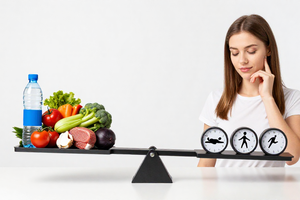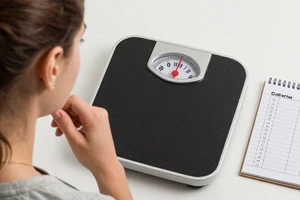

Few things are more frustrating than stepping on the scale after a week of clean eating and consistent workouts, only to see the needle hasn't budged—or worse, crept up by a pound or two. Before you assume you've hit a wall or started gaining fat, consider this: your body might be quietly undergoing a positive transformation called body recomposition. This is when you lose fat and gain muscle at roughly the same time, so your weight stays stable while your shape actually improves.
Distinguishing a true plateau from a recomp phase comes down to two specific warning signs—signals that are easy to miss if you're only fixated on the number on the scale.
Your clothes fit differently even though the scale hasn't moved
If your jeans feel looser around the waist and thighs, yet your weight is the same or slightly higher than last month, that's a textbook clue that body recomposition is happening. Muscle is denser than fat, so a pound of muscle takes up less space than a pound of fat. When you add a little muscle while shedding fat, your measurements shrink even though your mass stays constant. Pay attention to how your belt fits, whether rings slide on more easily, and if your sleeves feel snugger around the biceps. That last point—snugger sleeves—is another recomp giveaway: it means your upper-body muscles are growing while your torso slims down.
Instead of weighing yourself daily, try taking waist and hip measurements once a week. Many people see inches lost long before they see pounds lost during a recomp phase.
Your strength keeps increasing while your appetite stays controlled
Another key red flag that your stall is recomp, not fat gain, is that you're getting stronger in the gym. You might be lifting heavier weights, doing more reps, or recovering faster between sets—all signs of lean muscle growth. At the same time, you're not experiencing the ravenous hunger that often accompanies fat gain. Real fat gain tends to come with a caloric surplus that leaves you feeling sluggish and consistently hungry. Body recomposition, by contrast, often occurs when you're eating at maintenance or a slight deficit while training hard, so your hunger cues remain stable. Tracking your workout performance week over week can confirm that your body is building metabolically active tissue, even if the scale isn't cooperating.
How to confirm what's really happening
If you suspect body recomposition is masking fat loss, switch from weight-only tracking to a combination of methods. Progress photos taken in the same lighting and clothing every two weeks can reveal changes the scale misses. Body measurements (waist, hips, chest, arms) give you a second data set. Some people also use body-fat calipers or a smart scale that estimates body composition, but those tools can be inconsistent—trust the photos and tape measure more. If your waist is shrinking and your performance is improving, you're probably in a recomp phase, not a stall.
When a stall is actually a stall
Of course, not every plateau is recomp. True fat-gain stalls come with consistent weight increases over three to four weeks AND a loss of strength or endurance. If your clothes feel tighter, you're feeling tired and hungry all the time, and you're struggling to complete workouts you used to breeze through, you may be in a caloric surplus. In that case, reviewing your nutrition and portion sizes is a better first step. But for many active people, especially those who recently started resistance training or increased their protein intake, a few weeks of scale standstill is exactly the sign of healthy muscle gain.
Knowing these two warning signs—unchanged weight with looser clothing and rising strength with steady appetite—can save you from unnecessary diet changes or panic. Body recomposition is a slower process than straight weight loss, but it leads to a leaner, stronger physique that's often more sustainable in the long run.