You roll out your mat, move through your sun salutations, and end in a quiet savasana. On the surface, your yoga practice feels like a sanctuary—a dedicated time to release and reset. Yet sometimes, a subtle disconnect lingers. You’re doing the "right" thing for stress management, but your body might still be whispering—or shouting—signals that tension has taken up residence beneath the conscious calm.
Recognizing these signals isn't about judging your practice as insufficient. It’s about deepening your mind-body connection. Yoga teaches us to observe without attachment, and that includes observing the ways stress can manifest despite our best efforts. Here’s how to tune into two of the more subtle, physical signs that your nervous system may still be in a guarded state.
Your breath feels shallow or restricted, even during practice
Breath is the cornerstone of yoga. We link movement to breath, use ujjayi pranayama to steady the mind, and dedicate entire practices to breathwork. So it can be confusing when you notice your inhalation doesn’t quite reach your lower ribs, or you catch yourself holding your breath during a challenging hold.
Chronic stress activates the sympathetic nervous system, which naturally shifts breathing patterns from the slow, diaphragmatic breaths of rest to quicker, shallower chest breathing. This becomes the body’s default setting. When you step onto your mat, that physiological habit doesn’t always switch off just because you intend to breathe deeply.
If your breath feels like a guest that won't settle in, it’s often a sign your body is still on alert.
You might notice this as a constant, low-level effort to "make" the breath deep, a feeling of tightness across the front of your ribs or upper abdomen, or a tendency to finish an exhale with a subtle, relieved sigh. This isn't a failure of technique; it's a feedback mechanism. Your respiratory system is reflecting a nervous system that hasn’t fully received the "all clear" signal.
What to observe
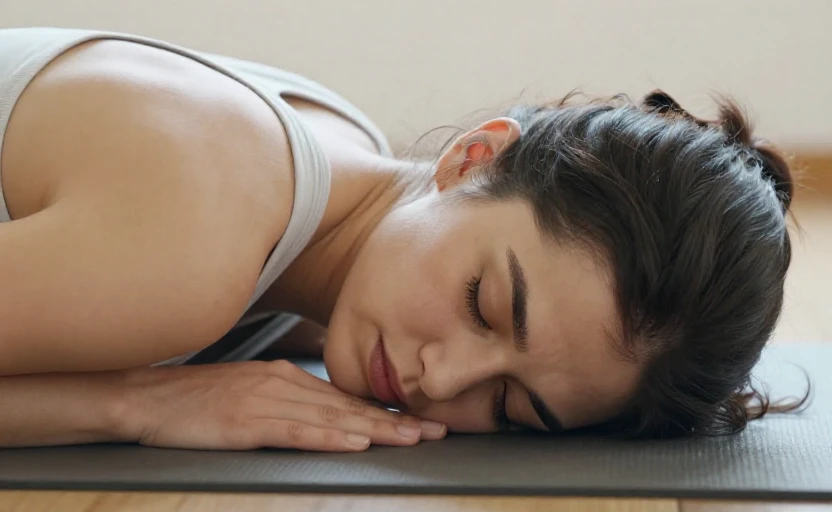
- In Savasana: Place one hand on your chest and one on your belly. Without trying to change it, notice which hand rises first on the inhale. A stress-held pattern often shows the chest leading.
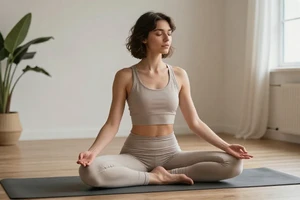
- In Seated Meditation: Does your breath feel smooth and circular, or does it have hitches, pauses, or a jagged quality? The latter can indicate residual tension.
- During Flow: Are you genuinely breathing with the movement, or are you mechanically matching a count while internally straining?
You experience persistent muscular "gripping" in supportive poses
Yoga is designed to create strength with ease—sthira sukham asanam. But when the body is chronically stressed, muscles can maintain a low level of contraction, a protective bracing that becomes unconscious. This often shows up not in obvious places, but in the so-called "accessory" muscles that jump in to help when the primary movers are disengaged or when the body feels unstable.
You may be holding a perfectly aligned Warrior II, yet your shoulders are creeping toward your ears. In a restorative forward fold, your jaw remains clenched. Your hip flexors fire intensely in Bridge Pose, preventing the glutes from fully engaging. This isn't about a lack of flexibility or strength; it's about the nervous system’s preference for a guarded, ready-for-action state, even in poses meant for release.
This gripping is a form of armoring. The body, conditioned by persistent stress, stays prepared for perceived threat. Your yoga practice becomes another "task" to perform correctly, rather than an opportunity to sense and soften.
Common holding patterns to scan for
- The Jaw & Tongue: Is there space between your molars? Is the tip of your tongue resting lightly on the roof of your mouth, or is it pressed firmly?
- The Shoulders: In poses where the arms are overhead or out to the side, do your shoulder blades slide down your back with ease, or do they feel locked and elevated?
- The Hands & Feet: Notice subtle clenching. Are your fingers splayed with awareness, or curled with tension? Are your toes gripping the mat?
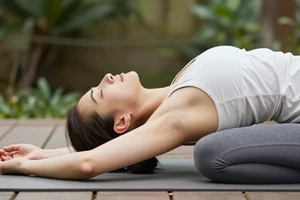
Noticing these signs is the first and most crucial step. It’s the practice of svadhyaya, or self-study. From this place of non-judgmental awareness, you can begin to invite change. This might mean dedicating a few minutes at the start of your practice to simple breath awareness, letting the body set the rhythm. It could involve incorporating more restorative or yin yoga to explicitly signal safety to your nervous system. Sometimes, it’s about the quality of your attention—shifting from "performing the pose" to "inhabiting the sensation."
Your body’s signals are intelligent communication, not criticism of your yoga journey. By listening to these subtler whispers, you move beyond the geometry of the poses and into the true heart of the practice: a compassionate dialogue between your mind and your body.