
Nut butter is a staple for anyone focused on healthy eating. It’s packed with protein, healthy fats, and fiber, making it a satisfying addition to oatmeal, smoothies, or a simple apple slice. Yet there’s a quiet truth that often goes unspoken: the portion we think we’re eating versus the portion we actually eat can be wildly different.
If you’ve ever scooped a spoonful of almond or peanut butter and logged it as one serving in your app, only to realize later that your jar’s label says a serving is actually much smaller—you’re not alone. This gap between perception and reality is exactly why your seemingly innocent daily dollop might be quietly adding more calories than you planned.
What Does a Standard Serving Actually Look Like?
The official serving size for most nut butters is two tablespoons (around 32 grams). That is roughly the size of a ping-pong ball or a standard ice cream scoop’s worth. But here’s where the trouble starts: when we dip a spoon into the jar, we tend to scoop a heaping tablespoon, not a level one. In fact, many people unknowingly double or triple the portion.
A quick visual check: if you spread nut butter on toast and it completely covers the bread with a thick layer, you’re likely looking at three to four tablespoons. That could mean 300–400 calories from the spread alone, not counting the toast. The gap between a level two-tablespoon serving and a generous scoop is often the difference between a satisfying snack and an unintended calorie bomb.
Why Nut Butter Portions Are So Easy to Underestimate
Several factors trick us into pouring more than we intend:
- Density matters: Nut butter is energy-dense. A small volume packs a lot of calories, so even a visually modest scoop can contain far more than you think.
- Spoon physics: A standard dinner spoon holds about one tablespoon. But many home spoons are larger, holding closer to 1.5 or even 2 tablespoons. If you use that to scoop, you’ve already overshot.
- The “just a little more” effect: Dripping, spreading, and licking the spoon all add invisible calories. That extra dollop “for good measure” can easily add 50–100 calories.
- Label confusion: Some jars list a serving as 2 tablespoons (32g), while others use 1 tablespoon (16g). Always check the gram weight. Relying on volume alone can mislead you.
How to Measure Nut Butter Without Going Crazy
You don’t need to weigh every single spoonful forever—but a little precision goes a long way. Here are practical strategies that don’t require a kitchen scale:
- Use a measuring spoon: Level off a real 1-tablespoon or 2-tablespoon measuring spoon. Scoop it, level it with a knife, and that’s your baseline. Doing this a few times will train your eye.
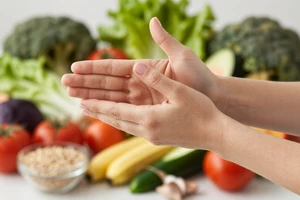
- Visualize with common objects: A level tablespoon is about the size of your thumb tip. Two tablespoons is roughly a ping-pong ball. For almond butter, a single serving is about the size of a whole walnut.
- Weigh it once: If you have a scale, weigh a typical serving you’d normally take. You might be shocked to see it’s 50g (about 3 tablespoons) instead of 32g. That one data point can recalibrate your future scoops.
- Pre-portion for convenience: On Sunday, scoop out single-serving portions into a silicone mold or small container. Grab one when you need it. This eliminates the guesswork completely.
Does Portion Size Matter That Much for Weight Management?
For most people in the healthy-eating space, the goal isn’t to fear nut butter—it’s to enjoy it intentionally. Nut butter is a nutrient-dense food, not an empty-calorie indulgence. The issue arises when the portion is unintentionally large, causing a steady calorie surplus that can slow weight loss or weight maintenance.
Consider this: if you eat two extra tablespoons of peanut butter per day (around 190 calories), that adds up to roughly 1,330 calories per week. Over a month, that’s more than 5,000 extra calories—enough to offset a meaningful calorie deficit. Yes, healthy fats are essential, but they are the most calorie-dense macronutrient (9 calories per gram). Every gram counts when you’re aiming for a specific body composition goal.
Tips for Mindful Nut Butter Eating
You don’t have to give up your daily spoonful. Instead, tweak the habit:
- Scoop once, not multiple dips. Decide your serving before you open the jar.
- Pair with low-calorie bulk: Spread nut butter on celery, cucumber slices, or rice cakes instead of dense bread. You get the same flavor satisfaction with fewer total calories.
- Read the nutrition label’s serving size in grams. Different brands vary. A serving of some natural almond butters may be 1 tablespoon because it’s extremely rich.
- Opt for single-serve packets if you’re prone to overscooping. They cost a bit more but remove the guesswork completely.
A calm mindset note: The goal isn’t to micromanage every gram of food. It’s to close the gap between what you think you’re eating and what you actually eat. Once you tune in, you can relax and trust your portions.
Common Questions About Nut Butter Portions
Does the type of nut butter change the portion size?
Yes, slightly. Peanut butter, almond butter, cashew butter, and sunflower seed butter all have similar calorie densities (roughly 90–100 calories per tablespoon), but the fat content varies. Cashew butter is slightly lower in fiber, while almond butter offers more vitamin E. Regardless, the two-tablespoon rule applies across the board for standard brands.
Can I eat nut butter every day and still lose weight?
Absolutely. Many successful weight-loss plans include nut butter daily. The key is portion control. A controlled serving of two tablespoons provides satiating protein and healthy fats, helping you avoid cravings later. Just be honest about your scoop.
What about “natural” nut butter that separates?
Natural nut butters with oil separation are nutritionally similar but often have less added sugar and hydrogenated oils. The same portion rules apply. Stir the oil back in thoroughly before measuring—otherwise your first scoop may be mostly oil, which is pure fat and calories.
Final Thoughts on the Nut Butter Portion Reality Check
Nut butter is a wonderful, versatile food that supports a healthy eating pattern. The worry isn’t the food itself—it’s the mismatch between your mental image of a serving and the actual amount on your spoon. By learning what two tablespoons looks like, measuring occasionally, and staying curious rather than judgmental, you can keep enjoying your favorite spread without derailing your goals.
Your portion of nut butter might be more than you think—but that also means a small, mindful adjustment can have a surprisingly big impact.