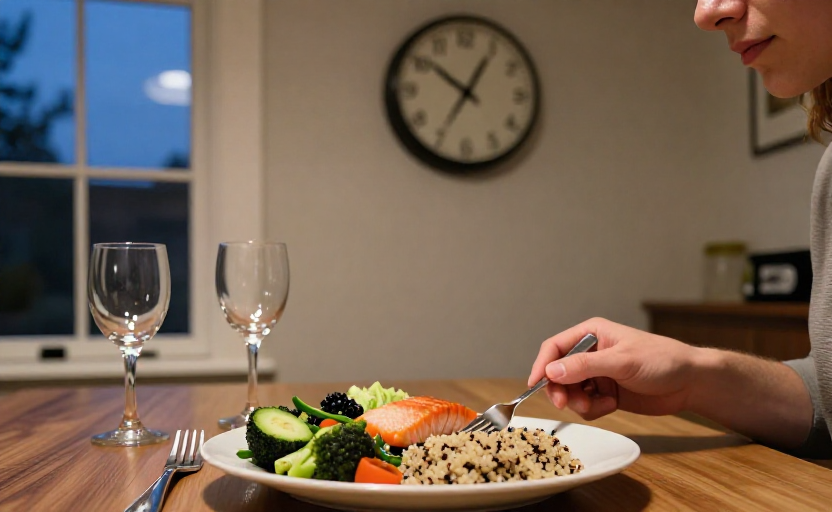
You track your calories, you choose whole foods, and you get your steps in. Yet the scale barely budges. If that sounds familiar, the timing of your last meal of the day might be the missing piece. Emerging research and nutrition science suggest that eating dinner late—especially within a few hours of bedtime—can interfere with your body's natural metabolic and hormonal rhythms, making weight loss harder than it needs to be.
It's not about strict fasting rules or cutting out entire food groups. It's about understanding how your internal clock responds to fuel. Here is a closer look at why a late dinner may be quietly working against your goals, along with practical shifts you can make.
What Happens When You Eat Close to Bedtime
Your body runs on a circadian rhythm—a 24-hour internal clock that influences digestion, hormone secretion, and energy expenditure. During daylight hours, your metabolism is primed to process food efficiently. At night, however, your body prepares for rest. Digestive activity slows, insulin sensitivity drops, and the production of melatonin (the sleep hormone) rises.
When you eat a substantial meal late in the evening, you are essentially asking your digestive system to work overtime when it is winding down. This mismatch can lead to a few measurable consequences that directly affect weight management.
Blood Sugar and Insulin Response
Studies have shown that eating later in the day tends to produce a higher blood sugar spike and a blunted insulin response compared to eating the same meal earlier. Over time, repeated late eating can contribute to insulin resistance—a condition where your cells become less responsive to insulin, making it easier for the body to store fat, especially around the abdomen.
A 2022 study published in Cell Metabolism found that eating dinner four hours later than usual increased hunger, decreased the number of calories burned during the day, and changed fat tissue gene expression toward more fat storage. This research controlled for meal composition and sleep duration, isolating the effect of timing itself.
Sleep Disruption and Appetite Hormones
Late eating doesn't just affect digestion; it can fragment sleep quality. Even if you fall asleep easily, your body may still be digesting, which can reduce deep sleep and increase nighttime wakefulness. Poor sleep, in turn, raises levels of ghrelin (the hunger hormone) and lowers leptin (the satiety hormone). You then wake up hungrier and more likely to crave high-calorie foods.
This creates a feedback loop: you eat late, sleep poorly, crave more calories the next day, and may again reach for late-night food to compensate for fatigue.
How Late Is Too Late?
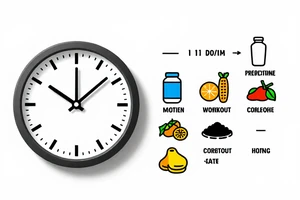
There is no single cutoff that works for everyone, but a general guideline supported by research is to finish your last substantial meal at least three hours before bedtime. For someone who goes to bed at 10:30 p.m., this means dinner should be finished by 7:30 p.m. A small, light snack an hour before bed—such as a handful of nuts or a cup of herbal tea—is unlikely to cause the same metabolic disruption.
The key variable is meal size and composition. A large, high-fat or high-carb dinner eaten at 9 p.m. will have a different effect than a small, protein-rich snack at the same time. But habitually eating your main meal late is where the trouble accumulates.
Why It Hits Weight Loss Harder Than You Think
Weight loss ultimately depends on a sustained calorie deficit, but late eating can undermine that math in several subtle ways:
- Increased total calorie intake: People who eat dinner late often snack more before bed or consume more calories at the meal itself because they are hungrier by the time they eat.
- Reduced fat oxidation: Your body burns more fat during sleep when it has been in a fasted state for several hours. A late dinner shortens that overnight fast and reduces the time your body spends burning stored fat.
- Lower next-day energy expenditure: As the Cell Metabolism study showed, late eating was linked to a small but significant decrease in calories burned the following day—enough to slow progress over weeks and months.
Practical Steps to Shift Your Dinner Earlier
Making a change in meal timing can feel challenging if your schedule is packed or you tend to eat socially late. It doesn't require perfection. Small, consistent adjustments can make a real difference.
- Move your meal by 15 minutes every few days. Gradually inch dinner earlier until you reach the three-hour pre-bedtime window. This avoids the hunger spike that comes with a sudden shift.
- Eat a satisfying afternoon snack. A balanced snack around 3–4 p.m. (protein, fiber, and healthy fat) can prevent extreme hunger by dinnertime, making it easier to eat a smaller meal earlier.
- Make dinner the lighter meal, not the heaviest. If you usually eat a large dinner late, try swapping portions: eat a more substantial lunch and a lighter dinner. This naturally aligns with circadian biology.
- If you must eat late, keep it small. Opt for a soup, a salad with protein, or a vegetable-based dish. Avoid heavy starches, fried foods, or large amounts of sugar close to bed.
A simple shift: finish your last major meal at least three hours before you turn off the lights. Your metabolism will thank you.
Realistic Expectations and the Bigger Picture
Meal timing is a powerful lever, but it is not a magic fix. If your overall diet is high in processed foods or your calorie intake far exceeds your needs, changing dinner time alone will not produce weight loss. However, for someone who already eats reasonably well and exercises but still hits a plateau, moving dinner earlier can often unlock the next phase of progress.
This approach also tends to improve sleep quality and morning energy—benefits that go beyond the scale. When you wake up feeling rested and less hungry, you are more likely to make better choices throughout the day.
The science is clear: when you eat matters. A late dinner can quietly sabotage your efforts by disrupting hormones, reducing fat burn, and increasing overall calorie intake. By giving yourself a few hours of digestive rest before sleep, you work with your body's natural rhythms rather than against them.