You reach for a cookie at 3 p.m. You crave a sugary latte after lunch. A chocolate bar calls your name before bed. These moments feel like a lack of willpower, but the real culprit might be something far simpler: thirst. Registered dietitians have long observed a fascinating connection between hydration and sugar cravings. When you are dehydrated, your body can send signals that are easy to misinterpret as a desire for sweets.
Understanding this link is not about finding a magic trick to erase cravings overnight. It is about using water as a foundational tool to support your body's natural signaling, stabilize your energy, and make your next healthy choice feel easier. Here is the science behind why a glass of water might be the most effective weapon in your pantry.
How the Brain Misthinks Thirst for Hunger
This is the core of the connection. The hypothalamus, a small region deep in your brain, acts as the master control center for both hunger and thirst. These signals are processed very close together. When you are even mildly dehydrated, the hypothalamus can generate a distress signal that your conscious brain may misinterpret as a craving for sugar.
Think of it as a crossed wire. Your body needs fuel (calories) and fluid. If it needs fluid first, it sends a general "eat something" alert because eating often brings in water through food. But your brain often reaches for the fastest energy source: sugar. The result is a sudden, powerful urge for a candy bar or a soda, when what your cells really need is a glass of water.
Next time a craving strikes, pause for one minute. Drink a full glass of water and wait ten minutes. Many people find the craving diminishes or vanishes entirely.
The Energy Rollercoaster: Dehydration and Blood Sugar
Dehydration directly impacts your body's ability to manage blood sugar. When you are low on fluids, your blood volume drops. This makes your blood more concentrated, and your liver responds by releasing stored glucose to provide emergency energy. This can cause a subtle spike in blood sugar, which your body then tries to correct with insulin.
That correction can overshoot, leading to a dip in blood sugar soon after. A blood sugar dip is a classic driver of intense, urgent cravings for simple carbohydrates and sugar. You are not weak; your body is trying to rapidly bring its glucose levels back up. By staying hydrated, you help your blood volume stay stable, which supports more even glucose levels and fewer of those sudden, crashing sugar urges.
Signs Your Cravings Might Be Thirst
- Sudden onset: A craving that feels urgent and out of nowhere is more likely dehydration-related.
- Timing: Cravings hit in the mid-afternoon or after exercise, when water stores are low.
- With fatigue: You feel both tired and craving sugar. Dehydration is a prime cause of afternoon energy slumps.
- After salty food: Your body is already trying to balance fluids, and the salt makes the thirst signal stronger.
Water as a Volume Tool and Habit Disruptor
Beyond the biological signals, water plays a simple, tactical role. Drinking a large glass of water before or during a meal adds volume to your stomach without calories. This activates stretch receptors that signal fullness to your brain, which can reduce the total amount you eat and dial down the desire for a sweet finish to a meal.
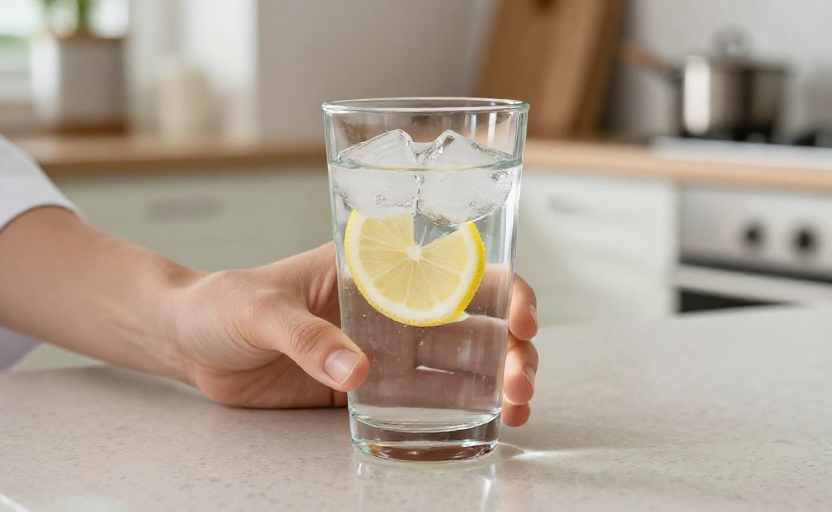
Water also acts as a powerful habit disruptor. Many sugar cravings are tied to routines: a coffee break, a stressful phone call, or watching TV at night. Replacing a sugary drink with a glass of water, perhaps sparkling water with a slice of lemon, breaks the automatic association. You still get the sensory ritual of sipping something, but you are feeding your body's actual need instead of a conditioned cue.
Practical Strategies from a Dietitian's Perspective
You do not need to chug a gallon of water at once. The goal is consistent, adequate hydration throughout the day. A common, evidence-based approach is to aim for roughly half your body weight in ounces of fluid per day. But individual needs vary based on activity, climate, and health conditions.
Start your day with a glass of water before coffee. Keep a reusable water bottle on your desk and set a timer to take a sip every 15 minutes. If plain water feels boring, add cucumber slices, a few fresh mint leaves, or a splash of citrus. Herbal teas (unsweetened) count toward your fluid totals as well.
When a sugar craving does hit, use the 10-minute rule. Drink a full glass of water, then distract yourself with a walk, a stretch, or a quick task. If the craving is still present after ten minutes, it might be true hunger or an emotional need, which is okay. The water test gives you a moment to check in with your body rather than reacting automatically.
Does This Mean You Will Never Crave Sugar Again?
No. Cravings are complex. They can be driven by habit, emotion, lack of sleep, and nutrient deficiencies as well. But dehydration is one of the most common and easily correctable triggers. By ensuring proper hydration, you remove a powerful, hidden driver of sugar cravings. You create a physiological environment in which your body's signals are cleaner, your energy is more stable, and your cravings are more likely to reflect genuine needs rather than mixed signals.
This approach is not about restriction or willpower. It is about giving your body what it actually needs so that you can make food choices from a place of calm awareness, not urgent reaction. A well-hydrated body is a quieter, more balanced body — and that makes handling the occasional sugar urge far more manageable.
Disclaimer: This article is for general health education purposes only and does not constitute personalized medical advice. Always consult a healthcare provider before making significant changes to your diet or fluid intake, especially if you have kidney, heart, or other chronic conditions.