You're reaching for a snack that wears a health halo—something labeled 'natural,' 'organic,' or 'high in protein.' It feels like a win for your goals. Yet somehow, the scale won't budge, or you feel puffy and sluggish by mid-afternoon. Chances are, you've fallen into the trap of dining on processed foods that seem virtuous but quietly deliver more calories—and less satisfaction—than you expect.
I see this in my own kitchen and hear about it from clients constantly. The granola bar that's basically a cookie with a résumé. The smoothie bowl that packs more sugar than a slice of cake. The 'healthy' frozen entree that leaves you hungry an hour later. It's not about moral failure; it's about marketing smoke and mirrors. Here are three grounded, dietitian-taught strategies for spotting and sidestepping these calorie sneak attacks without driving yourself crazy.
1. Look past the front-of-box buzzwords
Packages are designed to make you feel good about your purchase. Words like 'keto-friendly,' 'gluten-free,' 'no added sugar,' and 'plant-based' sound like nutritional gold stars. But none of those labels guarantee the product is actually low in calories, or that it's something your body needs right now.
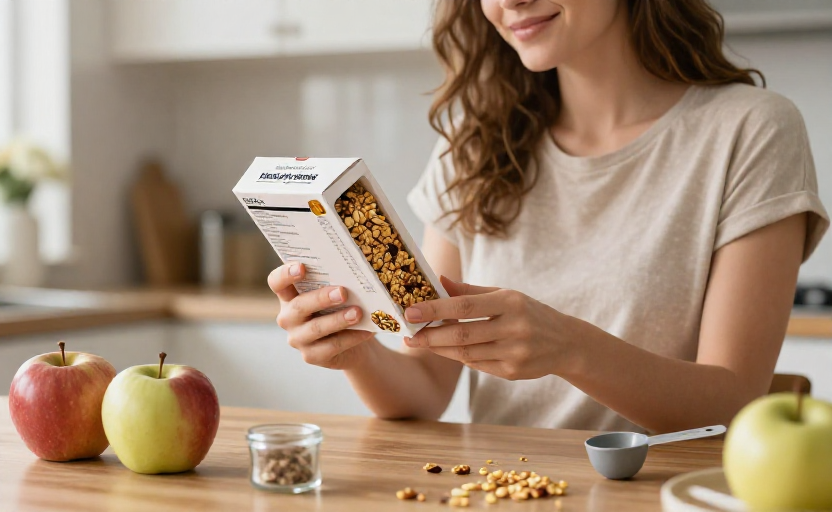
A quick test: turn the box over and check the calorie-per-serving and the serving size before you read the marketing claims.
A 'protein bar' might have 300 calories and 12 grams of added sugar—that's more sugar than a doughnut, with a similar calorie load. A 'keto mug cake' can clock in at over 400 calories for a single serving of what's essentially a fat-and-fiber experiment. When you're scanning, look for two things: a realistic serving size (is that tiny 40-gram bar actually one serving?) and the ratio of fiber to sugar. I aim for at least 3 grams of fiber and no more than 8 grams of added sugar per serving in a snack. Those numbers are just a baseline—your mileage may vary—but they cut through the noise.
2. Check the hidden fat and sugar in drinks and dressings
Liquid calories are the stealthiest players in the 'healthy' processed food game. Cold-pressed juices, 'immunity' shots, and bottled smoothies often strip out the filling fiber of whole fruit and serve up 30 to 50 grams of sugar in a 12-ounce bottle. The body absorbs that sugar almost instantly, spiking blood glucose and leaving you hungry again within an hour.
Then there are salad dressings and sauces. We all want to eat more vegetables, but pouring on a 'vinaigrette' that lists sugar or corn syrup as the second or third ingredient (right after oil) can add 150 to 200 calories to a salad that's otherwise very lean. A better move: buy an oil-and-vinegar based dressing where sugar sits far down the list, or simply shake together a quick mix of olive oil, lemon juice, salt, and pepper at home. It's cheaper, tastes brighter, and you control the calorie load.
3. Rethink 'healthy' snacks that don't fill you up
Many processed foods that are marketed as health-conscious—rice cakes, veggie straws, low-fat crackers, single-serving nut packs—are either too low in protein and fiber to satisfy, or they're calorie-dense in a way that doesn't register in your brain's satiety signals.
For example, a pack of 'baked' veggie straws has about 130 calories, 1 gram of protein, and virtually zero fiber. You can eat the whole bag in five minutes and not feel any different. Compare that to a small handful of almonds and an apple: about the same calories, but you get fiber, healthy fat, and protein that actually turns off the hunger signal. The processed-food version leaves you scavenging for something else shortly after.
If you want a packaged snack, pair it with something that has staying power. Have your rice cake, but add half an avocado or a smear of peanut butter. Dip those veggie straws into hummus or Greek yogurt. The goal isn't to ban processed foods—it's to make them work for you, not against your appetite.
The takeaway is not that all processed foods are villains. Many, like canned beans, frozen vegetables, and plain yogurt, are affordable and nutritious cornerstones of a balanced diet. The trick is learning to spot when a product's health image doesn't match its nutritional reality. Your body already knows the difference; sometimes the label just needs a little translation.