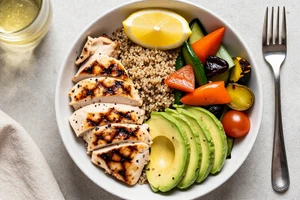
You're doing everything right. You load your bowl with leafy greens, colorful vegetables, a handful of nuts, maybe some avocado. You skip the creamy ranch and drizzle on a vinaigrette you made yourself. Then, for good measure—because healthy fats are good for you, right?—you add an extra glug of olive oil on top.
This seemingly virtuous habit is one of the most common pitfalls in the world of healthy eating. While fat is essential for absorbing fat-soluble vitamins (A, D, E, K) and helping you feel full, adding extra oil to an already balanced salad can quietly add hundreds of calories, turning a nutrient-dense meal into a calorie-dense one without you realizing it.
Why the Extra Glug Is So Common
Part of the problem is that we've been told for decades that fats like olive oil are good for us—and they absolutely are. But the message often gets oversimplified. A health-conscious person hears "healthy fat" and assumes "more is better." Add to that the visual appeal of a glossy, shimmering salad, and the habit becomes almost automatic.
Another factor is restaurant culture. When you order a salad out, it's often swimming in dressing or finished with a heavy-handed pour of oil. That becomes your baseline for what a "proper" salad looks like, so you replicate it at home. But restaurant kitchens are not measuring for waistlines; they are measuring for flavor and mouthfeel.
There's also the nutritional halo effect. We tend to think that if a food is healthy, the calories don't count the same way. A tablespoon of olive oil has about 120 calories. If you add two extra tablespoons beyond what your dressing already contains, you've just added 240 calories—the equivalent of a small meal—without making yourself any more satiated than a well-dressed salad would.
How Much Extra Oil Are You Really Adding?
Let's look at the numbers. A typical homemade vinaigrette uses about 1 tablespoon of oil per serving. That's a reasonable amount—about 120 calories. If you then add another tablespoon of oil directly to the bowl because "the greens look dry," you've doubled the fat content. Over a week of salads, that extra tablespoon per day adds up to 840 calories—nearly a quarter pound of body fat potential, if you're not compensating elsewhere.
What the Research Says
Studies on dietary fat and weight management consistently show that while unsaturated fats (like those in olive oil, nuts, and avocados) are beneficial for heart health, they are not free calories. Calorie density matters. Fats contain 9 calories per gram, more than double the 4 calories per gram found in carbohydrates and protein. Even the healthiest fat contributes to your total daily energy intake.
A 2019 randomized trial published in Nutrition & Diabetes found that participants who increased their intake of nuts and olive oil without reducing other calories did not lose weight. The key takeaway: healthy fats must be factored into your overall calorie budget, not added on top of existing meals.
The Better Way to Enjoy Healthy Fats on a Salad
The goal isn't to eliminate fat from your salad—it's to be strategic about it. Here are practical, non-restrictive ways to get the benefits of healthy fats without the unnecessary calorie surplus.
- Measure your dressing. Use a teaspoon or tablespoon to portion out your vinaigrette. One to two tablespoons is usually enough to coat a large salad. Pour it into a small dish first, then drizzle and toss until evenly distributed.
- Rely on whole-food fats. Instead of extra oil, add a quarter of an avocado, a tablespoon of sunflower seeds, or a few chopped walnuts. These provide fiber and micronutrients alongside fat, which increases satiety more than pure oil alone.
- Use the dressing as the finishing touch. Toss the greens with your measured dressing before adding toppings like cheese or seeds. This ensures even coating and prevents the urge to add more oil later.
- Try oil-free dressings. Blend ingredients like lemon juice, tahini, avocado, or plain Greek yogurt with herbs and spices. These can deliver creamy texture and flavor with far fewer calories than an oil-based dressing.
- Season with acid. A splash of vinegar, lemon, or lime juice can brighten a salad without adding fat. Pair it with a small amount of oil in a measured dressing, and you'll have plenty of flavor.
“A well-dressed salad doesn't need an oil slick. It needs a balanced, intentional relationship with every ingredient.”
Why It Matters for Weight Management
This one habit might not derail your progress on its own, but it's a classic example of how small, repeated choices add up. Weight loss and maintenance are not about perfection—they are about consistency. If you're eating salads daily for the health benefits, but unknowingly adding 200–300 extra calories per day in oil, you could be sabotaging your efforts without understanding why.
Moreover, the body processes liquid fat differently than whole food fat. Liquid oils are rapidly absorbed and stored, whereas the fat in whole foods like nuts or seeds is encased in cell walls, slowing digestion and promoting fullness. This difference matters for appetite regulation and energy balance.
Common Questions About Healthy Fats and Salads
Q: Is olive oil still a healthy fat? Absolutely. Olive oil is rich in monounsaturated fats and antioxidants. The issue is not the quality of the fat, but the quantity. Use it intentionally, not reflexively.
Q: Can I use a spray bottle to reduce oil? Yes, an oil mister can help you distribute a thin, even layer with far fewer calories than a pour. Just be aware that sprays can still add up if you're generous.
Q: What about pre-made dressings? Bottled dressings often contain added sugars, preservatives, and cheap oils. Making your own is usually healthier, but even homemade dressing should be measured.
Q: Should I avoid fat altogether to lose weight? No. Fat is essential for hormone function and vitamin absorption. The key is to choose quality sources and use them in appropriate amounts.
The Bottom Line
Adding extra oil to a salad that already contains a reasonable amount of dressing is a common healthy-fat mistake. It's an easy, well-intentioned move that can quietly add hundreds of calories to your day. The fix is simple: measure your dressing, lean on whole-food fats, and let the natural flavors of your vegetables shine. You don't need a pool of oil to have a delicious, nourishing salad. Often, less is more.