When you're eating in a calorie deficit, sugar cravings can feel like background noise that suddenly turns into a loud, insistent buzz. Your body is used to quick energy from carbs and sweets, so when calories drop, it often looks for the fastest fuel source available: sugar. But there is a simple, non-restrictive way to calm those urges before they take over your meal plan. The answer isn't found in willpower alone—it's in hydration.
Dehydration and sugar cravings are frequently mistaken for each other. Your brain's thirst signal is weak; hunger is loud. When you are even slightly dehydrated, your body may trigger a desire for sugar or carbohydrates because it needs energy to process fluids. By focusing on foods with high water content, you can solve two problems at once: you increase your fluid intake while delivering volume and nutrients that keep you full and satisfied.
Why water-rich foods work during a calorie deficit
Water-rich foods—typically fruits and vegetables that are 85 to 95 percent water—help you feel full without adding many calories. This is because water adds weight and volume to your meals, stretching the stomach and triggering satiety signals. When you eat a serving of cucumber instead of a handful of candy, you get a similar sensation of eating something substantial, but with a fraction of the calories and no blood sugar spike that leads to a crash-and-crave cycle.
Additionally, many hydrating foods contain natural sugars (fructose and glucose) that are bound with fiber, water, and nutrients. This structure slows down sugar absorption, giving you a steady, mild energy release rather than the sharp spike and drop that comes from processed sweets. That steady state is exactly what keeps cravings at bay.
Specific hydrating foods that target sugar cravings
Watermelon
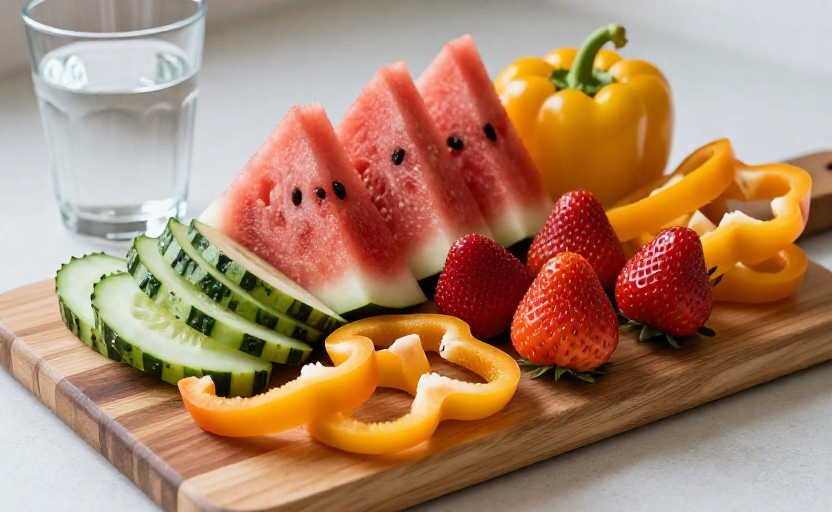
Watermelon is over 90 percent water. Eating a bowl of watermelon cubes gives you volume and a hit of natural sweetness for fewer than 50 calories per cup. The lycopene in watermelon is an antioxidant, but the real craving benefit comes from the combination of water and fiber—even though it has low fiber, the water content is so high that it fills the stomach quickly. Try freezing watermelon chunks for a sorbet-like treat that feels indulgent but keeps you on track.
Cucumber
Cucumber is the ultimate neutral hydrator. At around 96 percent water, it offers almost zero calories per serving but adds crunch and freshness. When a sugar craving hits, a plate of cucumber slices sprinkled with a pinch of salt or a squeeze of lime can redirect your mouth's desire for a snacking sensation. The act of chewing itself sends satiety signals to the brain, and cucumber gives you that without any sugar load.
Celery
Celery is another near-zero-calorie option that is packed with water and provides a satisfying crunch. It also contains natural sodium and potassium, which help with electrolyte balance—something often overlooked during a calorie deficit when people drink more water but flush out minerals. Balanced electrolytes reduce fatigue and brain fog, two things that often masquerade as sugar cravings.
Strawberries and berries
Berries, especially strawberries, are about 91 percent water. A cup of sliced strawberries has around 50 calories and a good dose of vitamin C, plus fiber (about 3 grams per cup). The natural sweetness of ripe berries is often enough to satisfy a sugar urge, and the fiber slows digestion, keeping blood sugar stable. Frozen berries are especially useful: they take longer to eat, which gives your brain time to register fullness.
Bell peppers
Bell peppers, particularly red ones, are water-dense and naturally sweet. A whole medium red bell pepper has about 30 calories and more than 150 percent of your daily vitamin C needs. Eating slices of bell pepper with a little hummus or cottage cheese creates a balanced mini-meal that can stop a sugar craving in its tracks without blowing your calorie budget.
Zucchini and summer squash
Zucchini is about 95 percent water and very low in calories. It can be spiralized into noodles, sliced into chips and baked, or simply eaten raw with a dip. Because it is so mild, it takes on flavors well—try it with a sprinkle of cinnamon and a little stevia for a dessert-like experience that is mostly water.
Simple swap: When you feel a craving, drink a full glass of water first, then eat a hydrating food. Often the combination of fluid and volume is enough to end the urge.
How to build a hydrating snack plate
Instead of chasing individual foods, build a snack plate that combines three or four hydrating items with a small source of protein or healthy fat. The protein and fat slow digestion even further, prolonging fullness and stabilizing blood sugar. For example:
- Cucumber slices + a tablespoon of almond butter
- Strawberries + a few cubes of cheese
- Celery sticks + a little cottage cheese
- Bell pepper strips + a tablespoon of hummus
This approach works because you are satisfying multiple needs at once: the desire for volume, crunch, sweetness, and satiety. It also ensures you are getting a mix of nutrients that support energy and mood, reducing the psychological edge of deprivation that often comes with a calorie deficit.
Troubleshooting: when cravings still hit
If you have eaten a hydrating snack and still want sugar, do not ignore it. The craving might be genuine physiological hunger, especially if you are not eating enough protein or fat overall. In that case, have a small portion of a planned sweet—like a square of dark chocolate or a date stuffed with a peanut. The key is to choose a portion-controlled, satisfying option rather than letting yourself spiral into a binge of convenience sweets.
Another reason cravings persist is that your body may be adapting to lower calorie intake. This is normal and usually passes within a week or two as your cells become more efficient at using fat for energy. During that transition, hydrating foods are a gentle bridge that prevents you from undoing your deficit while still providing comfort and satisfaction.
Hydrating foods are not a cure—but they are a powerful tool
No single food will erase all sugar cravings forever. But by intentionally including water-rich fruits and vegetables at every meal and snack, you create an environment where cravings are less frequent and less intense. You also improve your overall hydration, digestion, and nutrient intake, which supports energy and mood during a calorie deficit. The result is a sustainable way to eat less without feeling deprived—and that is the foundation of long-term success.