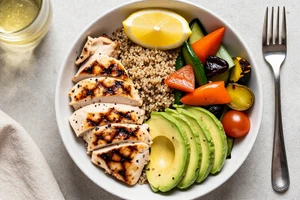
You know the feeling. You’re eating what seems like a healthy diet, you’re making an effort, but the scale just won’t budge. It’s a common and frustrating experience. Often, the culprit isn’t a lack of willpower, but a simple lack of awareness. Small, unaccounted-for bites, sips, and portions—what we might call ‘calorie leaks’—can quietly add hundreds of extra calories to your day, completely derailing your progress without you even realizing it.
This is where a food journal becomes your most powerful tool. It’s not about judgment or creating a rigid rulebook. It’s a practice of mindful observation, a way to turn the lights on in a room you’ve been navigating in the dark. By recording what you eat and drink, you move from guesswork to clarity, uncovering the specific patterns and habits that are holding you back. This guide will show you how to use a food journal not as a chore, but as a practical, insightful map to your own eating habits.
Why a Simple Log Works Better Than Willpower Alone
Our memory for food is notoriously unreliable. A study published in the Journal of the Academy of Nutrition and Dietetics found that people consistently underreport their food intake, often by a significant margin. We forget the handful of crackers, the extra splash of oil in the pan, the latte we grabbed on the way to a meeting. A food journal bypasses this faulty recall, providing an objective record.
More than just a calorie counter, it reveals the context of your eating. You start to see connections you might have missed: that you always crave a sugary snack at 3 p.m., that your portions grow larger on stressful days, or that you tend to eat mindlessly while watching TV. This awareness is the first and most crucial step toward making sustainable changes. You can’t fix what you don’t see.
Setting Up Your Journal for Success
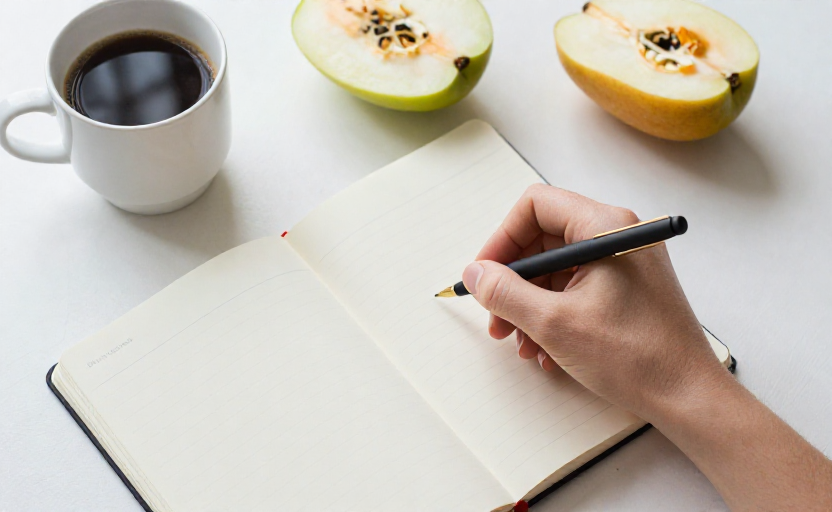
Your journal can be anything that works for you—a dedicated notebook, a notes app on your phone, or a photo log. The method matters less than the consistency. The goal is to make it easy and habitual.
At its core, aim to capture a few key details for each eating occasion:
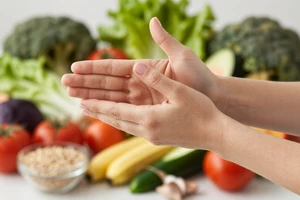
- What and How Much: Be as specific as you can. “Chicken salad” is vague. “Large bowl of spinach salad with 4 oz grilled chicken, 2 tbsp ranch dressing, and 5 croutons” is useful. Use measuring cups or visual cues (a fist-sized portion of carbs, a thumb-sized portion of fat) until you get better at eyeballing.
- When: The time you ate. This helps identify patterns like long gaps between meals that lead to overeating.
- Where and What Else: Were you at your desk, in the car, on the couch? Were you scrolling, working, or talking? This captures the environment of your eating.
- How You Felt: Note your hunger level before and after (on a scale of 1-10), and any emotions like stress, boredom, or happiness. This links food to feelings.
The most powerful entries aren't about perfection; they're about honesty. Log the handful of M&Ms from the office bowl. It’s data, not a demerit.
The Detective Work: How to Spot Your Calorie Leaks
After a week of consistent logging, set aside some time to review your entries not with criticism, but with curiosity. Look for these common patterns where calories tend to slip through unnoticed.
The Beverage Blind Spot
Liquid calories are the champion of stealth. A daily latte, a glass of orange juice with breakfast, a couple of sodas, a glass of wine in the evening—each can add 100-300 calories. They don’t trigger the same feeling of fullness as solid food, so they’re easy to overlook. Your journal will make this leak glaringly obvious.
The Condiment and Cooking Fat Factor
A tablespoon of olive oil is 120 calories. Two tablespoons of peanut butter on toast is nearly 200. Salad dressing, mayonnaise, butter, and sauces are dense with calories. We often pour or dollop without measuring, turning a healthy base like a salad or grilled chicken into a high-calorie meal.
Grazing and “Tasting”
This is the death-by-a-thousand-cuts phenomenon. A bite of your partner’s meal, a few chips while making dinner, a sample at the grocery store, the leftover crusts from your child’s sandwich. Individually, they seem insignificant. Logged together, they often form a substantial, unplanned mini-meal.
Portion Distortion
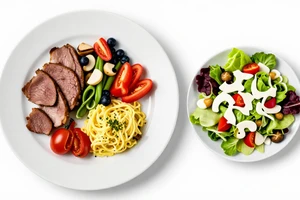
Our idea of a “normal” portion has grown dramatically. Your journal might reveal that your “bowl” of pasta is actually three or four official servings. Comparing your logged portions to standard serving sizes (check nutrition labels) can be a real eye-opener.
Turning Insight into Action
Once you’ve identified one or two primary leaks, you can address them with targeted, manageable strategies. This is where the journal shifts from a diagnostic tool to a blueprint for change.
If beverages are your leak, your action might be: “Swap my afternoon soda for sparkling water with lemon.” If condiments are the issue: “Measure one tablespoon of dressing for my salad instead of pouring.” For grazing: “Prepare a small plate of vegetables to snack on while I cook dinner to avoid tasting.”
Choose one small change at a time. Implement it for a week, and keep journaling. Your log will show you if it’s working. This creates a positive feedback loop: awareness leads to a small action, which leads to a result, which builds momentum.
Moving Beyond the Numbers
The deepest benefit of a food journal often has little to do with calories. You may start to notice that you eat fastest when you’re anxious, or that you feel uncomfortably full when you eat in front of the TV. This is invaluable insight into your relationship with food.
Use your journal to explore these connections without pressure. The goal is to build a more intuitive and satisfying way of eating, where you feel nourished and in control. The journal is simply your guide on that journey, helping you separate physical hunger from emotional hunger and choose foods that truly make you feel good.
Start simply. Pick up your notebook or open your app with your next meal. Write it down. You might be surprised by what you learn, and even more surprised by how that simple act of noticing can quietly change everything.