Fat used to be the villain on every weight-loss plate. We trimmed it, skimmed it, and drained it away. Today, we know better: healthy fats are essential for hormone function, brain health, and even satiety—the feeling of fullness that helps you eat less overall. But the nuance that often gets lost is portion. You can absolutely overdo a good thing, and with fats being the most calorie-dense macronutrient (nine calories per gram, compared to four for protein and carbs), those portions matter more than most people realize.
Here's how actual registered dietitians approach fat portions when the goal is weight control—not deprivation, not fear, just practical measurement.
Why fat is your friend (in the right amount)
When clients tell me they've cut all fat to lose weight, I usually see the same pattern: they're hungry, their skin is dry, and they eventually binge on something they've been avoiding. Dietary fat slows gastric emptying, which means food stays in your stomach longer after a meal. That translates to a steadier release of energy and fewer cravings an hour later.
A 2021 review in Nutrients looked at how different fat sources affect appetite hormones like ghrelin and peptide YY. The researchers found that including a moderate amount of fat at meals—roughly 20 to 35 percent of total daily calories—helped participants feel fuller longer compared to very low-fat meals. The key word is moderate. For a 1,800-calorie weight-management diet, that's about 40 to 70 grams of total fat per day, depending on individual needs.
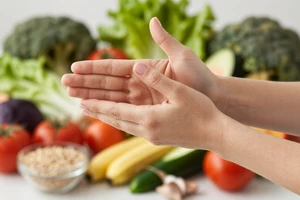
The rule of thumb: aim for roughly one to two thumbs' worth of fat-rich foods per meal. That's not a lot of visual space, but it's enough to do the job.
The hand method dietitians actually use
You don't need a food scale at every meal. Dietitians often teach a hand-based portion system because it's portable and consistent. Here's how it translates for high-fat foods:
- Nuts and seeds: one small handful (about 1 ounce or ¼ cup) equals roughly 160 to 190 calories and 14 to 18 grams of fat. For many women aiming for weight loss, that's one serving per snack or meal, not three.
- Avocado: one-quarter of a medium avocado is a reasonable portion. That's about 80 calories and 7 grams of fat. It's easy to eat half an avocado without thinking, but that pushes the fat grams to 15 and the calories toward 160.
- Nut butters: two tablespoons, measured, not scooped from the jar with a spoon. That's roughly the size of a ping-pong ball. One tablespoon is a smarter portion for a snack, coming in around 95 calories and 8 grams of fat.
- Oils and dressings: one tablespoon for cooking or dressing. If you pour directly from the bottle, you're likely getting two to three times that. Use a measuring spoon at least once to calibrate your eye.
- Full-fat dairy: a one-ounce cube of cheese is about the size of your thumb tip. For yogurt, stick to ¾ cup (6 ounces) of plain full-fat Greek yogurt.
The visual shortcut: if your fat source is a spread or liquid, use your thumb. If it's a solid like nuts or avocado, use your palm or fingers as a rough guide. It's not perfect, but it's far better than guessing.
How to balance fats with the rest of your plate
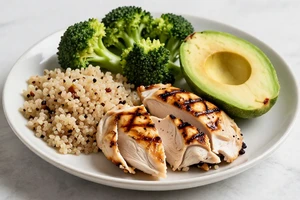
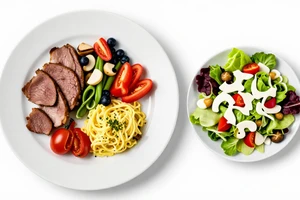
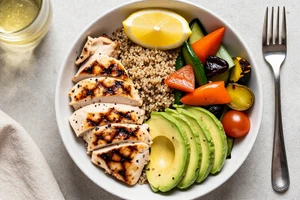
Portioning fat is easier when you build your plate deliberately. Think of fat as a seasoning and a finishing touch, not the foundation. Start with non-starchy vegetables (half your plate), then lean protein (quarter), then a small serving of whole-food carbs like beans or quinoa (quarter). The healthy fat goes on top or alongside—a drizzle of olive oil on the vegetables, a few slivered almonds over the chicken, a slice of avocado with the salad.
This approach, often called the plate method, naturally limits fat to somewhere around one to two tablespoons total per meal. If you cook with oil and then add nuts or cheese on top, you're likely doubling your fat intake without realizing it. Pick one main fat source per meal and stick with it.
Common pitfalls with plant-based fats
It's easy to assume that because a fat comes from a plant, you can eat unlimited amounts. That's how clients end up eating a full cup of trail mix (400+ calories from fat) or pouring tahini sauce over a grain bowl without measuring. Watch out for these specific traps:
- Trail mix: portion out ¼ cup into a small bowl before eating. Never eat from the bag.
- Chia and flax seeds: one to two tablespoons is plenty. They're fiber-rich, yes, but they're also roughly 60 to 70 calories per tablespoon from fat.
- Coconut products: one tablespoon of coconut oil is 120 calories—same as butter. Consider coconut more as a flavor accent than a health freebie.
What about omega-3s and fatty fish?
Fatty fish like salmon, mackerel, and sardines are a special category because the fat they contain is primarily anti-inflammatory omega-3s. Most people don't eat enough of these fats, and they're usually worth making room for in a weight-control plan. A typical serving of cooked salmon (3 to 4 ounces) contains about 12 to 15 grams of fat and 200 calories. That's fine for a meal, but if you're eating fatty fish daily, you'll want to reduce fat from other sources that day—skip the nuts at snack time, use less oil on your vegetables.
The same logic applies to avocado oil, olive oil, and nut-based sauces. They're heart-healthy, but they're not zero-calorie. The healthiest fat in the world still counts toward your daily energy balance.
Frequently asked questions
Can I eat whole eggs on a weight-loss diet?
Yes. One large egg contains about 5 grams of fat, mostly in the yolk, and only 72 calories. Whole eggs are nutrient-dense and surprisingly satiating for their calorie load. Most dietitians recommend including the yolk for vitamins D, B12, and choline. If you're eating multiple eggs, just be mindful of what you cook them in—butter or oil adds up fast.
Should I measure fats every single day?
Not forever, but it helps to measure for a week or two to recalibrate your estimates. Most people are shocked to see what an actual tablespoon of olive oil looks like on a spoon. Once you've trained your eye, you can be less strict. The goal is mindful awareness, not obsessive tracking.
What if I'm still hungry after eating small fat portions?
Then check the rest of your meal. Hunger after a meal often means you're short on protein or fiber, not fat. Make sure you have at least 20 to 30 grams of protein and plenty of vegetables. Fat contributes to satiety, but it's not the only lever. If your meal is balanced and you're still hungry, you can add a little more fat—just do it intentionally.
Are low-fat dairy products better for weight loss?
Not necessarily. Some research suggests that full-fat dairy may be more satisfying, leading to less snacking later. A serving of full-fat plain Greek yogurt (¾ cup) contains about 8 grams of fat versus 0–2 grams in nonfat, but it's also thicker and more satiating. Choose whichever helps you eat a balanced overall diet. The small difference in calories per serving is less important than the quality of your overall eating pattern.