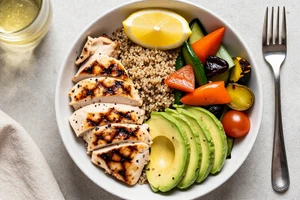

You sit down for a proper breakfast, feeling committed to a healthy start. The meal is finished, the plate is cleared, and you settle into your morning. Then, right on schedule, that familiar pang returns. It’s not quite 10 a.m., and you’re already thinking about the snack drawer. This pattern isn’t just frustrating; it’s a signal. Your breakfast, while perhaps nutritious in some ways, is missing the key components that create lasting satiety.
Understanding this isn't about willpower. It's about the biology of fullness. A meal with true staying power works with your body's natural hunger hormones, blood sugar regulation, and digestive pace to keep you satisfied and energized for hours. When one or more of these elements is missing, the hunger returns far too soon.
What Does a Breakfast with “Staying Power” Actually Mean?
Think of satiety not as a simple on/off switch, but as a complex, well-orchestrated symphony. A satisfying breakfast conducts this symphony by addressing three core physiological needs: it stabilizes blood sugar, triggers the release of fullness hormones, and provides slow, steady fuel. When the harmony is off, the hunger cues start playing loudly again, disrupting your entire morning.
The 3 Signs Your Breakfast Is Leaving You Short
If you’re hungry again shortly after eating, one or more of these factors is likely at play. Recognizing the signs can help you pinpoint what to adjust.
1. The Energy Crash and Craving Cycle
This is the most classic sign. You feel a quick burst of energy after eating, followed by a noticeable slump, mental fog, and a strong urge for something sweet or starchy about 60 to 90 minutes later. The culprit here is often a breakfast heavy in refined carbohydrates and sugars without enough balancing protein, fat, or fiber.
Foods like sugary cereals, pastries, white toast with jam, or even a large fruit smoothie can cause a rapid spike in blood sugar. Your body releases insulin to usher that sugar into your cells, but sometimes it overcorrects, leading to a sharp drop—a “crash.” This crash signals a fuel emergency to your brain, which interprets it as hunger, specifically for quick-energy carbs to bring levels back up. It’s a rollercoaster you didn’t sign up for.
If your breakfast is mostly beige or comes from a wrapper, it’s likely setting you up for a mid-morning crash.
2. Your Stomach Feels Physically Empty Too Soon
You might not feel a sugar crash, but you have a distinct, hollow sensation in your stomach. The meal seemed to “disappear” almost as soon as you ate it. This often points to a lack of bulk and volume, primarily from fiber, and insufficient protein or healthy fats.
Fiber, especially the soluble kind found in oats, chia seeds, and apples, absorbs water and forms a gel-like substance in your gut. This slows digestion and adds physical volume, sending stretch signals to your brain that you’re full. Protein and fats digest more slowly than carbs, providing a steady trickle of energy. A breakfast lacking in these elements moves through your system too quickly, leaving your stomach empty and grumbling.
3. You Feel Satisfied… But Not for Long
This is a subtler sign. The meal tastes good and feels satisfying as you eat it. You might even feel comfortably full. But that feeling of contentment is fleeting, vanishing well before lunchtime. This can happen when a meal has some good elements but misses a critical piece of the satiety puzzle.
For example, a breakfast of egg whites and spinach is high in protein but very low in fat and perhaps carbs. While protein is highly satiating, a complete meal often needs a combination of macros to truly last. Conversely, avocado toast on whole-grain bread provides fiber and healthy fats, but without a significant protein source like an egg or cottage cheese, you might find yourself searching for more soon after.
Building a Breakfast That Lasts
The goal isn’t to create a complicated recipe, but to build a simple, satisfying plate using the principles of balance. Aim to include at least two, and ideally three, of the following categories in your morning meal.
Protein: The champion of satiety. It reduces levels of the hunger hormone ghrelin and boosts peptide YY, a hormone that makes you feel full. Think eggs, Greek yogurt, cottage cheese, tofu, edamame, or a quality protein powder blended into a smoothie.
Fiber: Your digestive pace-setter. It slows everything down, stabilizing blood sugar and adding physical bulk. Seek out whole grains (oats, quinoa, whole-wheat bread), chia or flax seeds, vegetables (spinach, peppers, mushrooms), and fruits with skin (berries, apples).
Healthy Fats: The slow-burning fuel. They delay gastric emptying and aid in the absorption of fat-soluble vitamins. Include sources like avocado, nuts, seeds, nut butter, or olive oil.
A practical approach is to start with a base you enjoy and then “add.” Love oatmeal? Add a scoop of protein powder or Greek yogurt and a tablespoon of almond butter. Always have toast? Choose a seeded, whole-grain variety, top it with mashed avocado, and add a couple of eggs. A smoothie person? Blend spinach and berries with protein powder and a spoonful of chia seeds instead of just fruit and juice.
Listening to Your Body’s True Signals
Sometimes, hunger soon after eating can be confused with thirst or habit. Before reaching for another snack, drink a full glass of water and wait 10 minutes. Ask yourself if the hunger is physical—a true empty feeling, perhaps with a slight headache or low energy—or if it’s driven by boredom, stress, or the sight of food.
True, lasting satiety should provide steady energy and a quiet mind, free from constant thoughts of food. By tuning into the signs your breakfast is giving you and adjusting the balance on your plate, you can break the cycle of mid-morning hunger and create a morning that truly fuels you.