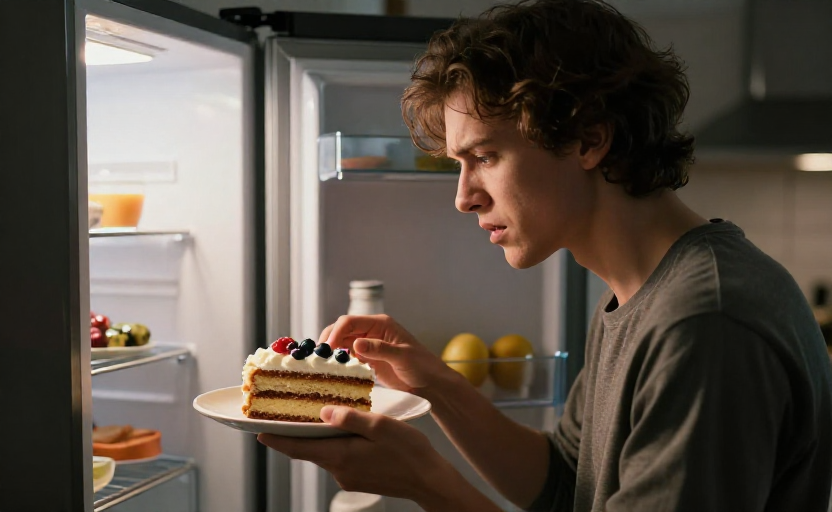
You had a long day. The kind where your inbox won't stop pinging and your to-do list seems to grow instead of shrink. By the time you get home, the last thing you want to think about is chopping vegetables. Instead, you find yourself standing in front of the pantry, staring at a bag of chips or a block of chocolate, needing it in a way that feels deeper than simple hunger.
This isn't a lack of willpower. It's a biological response. When stress hormones like cortisol surge, your body craves quick energy and comfort — usually in the form of sugar, salt, and fat. Eating your feelings is common, but it can also become a cycle that leaves you feeling worse than before. The first step to breaking it is recognizing when it's happening. Here are three clear signs that stress, not hunger, is running the show.
1. The Urge Feels Urgent and Specific
True physical hunger builds gradually. You might start thinking about an apple, a sandwich, or a bowl of oatmeal. It's open to options. Emotional eating, on the other hand, feels like a command. You don't just want food; you want a specific food — usually something crunchy, creamy, or sweet — and you want it right now.
This is your brain's stress-response system at work. Cortisol and other stress hormones trigger cravings for energy-dense foods because, in a primitive sense, your body thinks it needs fuel to fight or flee. But in modern life, that urgency isn't about survival; it's about the need for an immediate dopamine hit to soothe a stressful moment. If you notice that your craving is laser-focused on one item and feels impossible to ignore, pause and ask yourself: What am I actually feeling right now?
A quick check: Real hunger is patient and flexible. Stress eating is impatient and demands a specific fix.
2. You Eat Without Noticing
Have you ever finished an entire bag of something and realized you barely tasted it? When stress drives your eating, you often eat on autopilot. You're not present. You might be scrolling through your phone, working through a tense email, or replaying an argument in your head while your hand moves from bag to mouth automatically.
This mindless eating disconnects you from your body's natural satiety signals. The stomach might be full, but because you didn't experience the food — its textures, flavors, or smells — your brain doesn't register that it's eaten enough. This is why you can feel uncomfortably stuffed but still emotionally unsatisfied after a stress-eating session. The food didn't serve its purpose because you weren't there for it.
Try disrupting the pattern. Before you take another bite, put the food down and notice it. Look at the color, smell it, and take one bite slowly. This simple act of paying attention can break the autopilot loop and give you a moment to decide if you actually want to continue.
3. You Feel Guilty, Not Satisfied
One of the most telling signs of emotional eating is how you feel afterward. A meal that genuinely satisfies physical hunger leaves you feeling energized and content. A stress-driven eating episode often leaves you feeling bloated, sluggish, and — most importantly — guilty or ashamed.
That guilt is a red flag. It tells you that the eating was not aligned with what your body needed, but rather with what your emotions were trying to manage. The problem is that guilt often sparks more stress, which can trigger another round of emotional eating. This is how the cycle tightens. Instead of judging yourself for what you ate, try naming the feeling without attaching a story to it. A simple, neutral observation — "I ate that quickly, and now I feel heavy" — can stop the shame spiral in its tracks.
Recognizing these signs isn't about banning comfort food from your life. Sometimes a cookie after a hard day is just a cookie. But when stress-eating becomes a routine pattern that leaves you feeling depleted, it's worth paying attention to. The real goal is to create a small gap between the urge and the action — just enough space to ask: Is this hunger, or is this stress? Over time, that pause is where your freedom lives.