Many people start a weight loss journey with good intentions, only to feel frustrated when the scale doesn't budge. Often, the issue isn't what you're eating, but how much. Portion control is not about starvation; it is a practical, sustainable strategy that helps you enjoy a variety of foods while managing your calorie intake. It empowers you to build a healthier relationship with food without resorting to restrictive diets that are hard to maintain.
Think of it as learning a new skill. Just as you wouldn't expect to play a musical instrument perfectly on the first try, mastering portion sizes takes practice and awareness. This guide is designed to give you straightforward, evidence-based tools to manage your portions effectively, helping you reach your weight loss goals in a way that lasts.
What Is Portion Control vs. Serving Size?
One of the first steps to taking control is understanding the difference between a serving size and a portion size. This is a common point of confusion that can derail even the most dedicated efforts.
- Serving size is a standardized amount of food, such as one cup of cereal or one tablespoon of peanut butter. It is a measurement used on nutrition labels to provide a consistent reference for calories and nutrients.
- Portion size is the actual amount of food you choose to put on your plate. This can be one serving, half a serving, or several servings.
A typical restaurant entrée, for example, can contain three or four servings. Being able to visually distinguish between a single serving and a large portion is a key skill for managing your intake without needing to weigh every gram of food.
Simple Visual Cues for Everyday Foods
You don't need a kitchen scale to practice good portion control. Using your hand and common household objects can be an incredibly effective way to gauge appropriate amounts when you're preparing a meal or eating out.
Using Your Hand as a Guide
Your hand is portable and always with you, making it a perfect tool for portion estimation. This method is flexible and adjusts roughly to your body size.
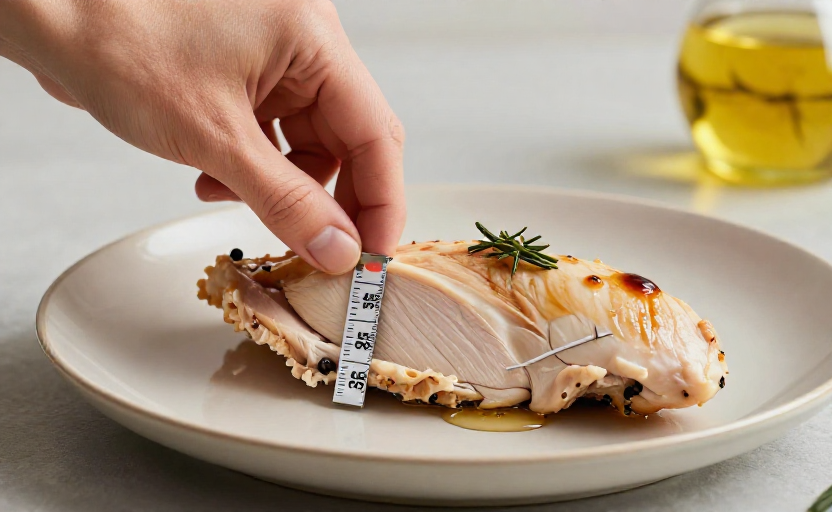
- Protein (chicken, fish, meat, tofu): One serving is about the size and thickness of your palm (excluding fingers). For women, aim for one palm-sized portion per meal; for men, two.
- Vegetables (leafy greens, broccoli, peppers): Aim for one to two fist-sized portions per meal. These are nutrient-dense and low in calories, so you can be more generous here.
- Carbohydrates (rice, pasta, potatoes, whole grains): A serving is roughly one cupped handful. For women, one handful per meal; for men, two.
- Fats (avocado, nuts, oils, butter): A serving is about the size of your thumb (from the tip to the base). For women, one thumb-sized portion per meal; for men, two.
Using Everyday Objects
When your hand isn't the best guide, comparing food to common items can be just as effective.
- A serving of cheese is about the size of two dice.
- A serving of cooked rice or pasta is about the size of a tennis ball.
- A serving of peanut butter is about the size of a golf ball.
- A serving of cooked meat (3 ounces) is about the size of a deck of cards.
Practical Tip: Try using a smaller plate. Research shows that people tend to serve themselves less on a 9-inch plate compared to an 11-inch plate, which can help reduce calorie intake without making you feel deprived.
Mindful Eating: The Other Half of the Equation
Portion control isn't just about measuring food; it's also about how you eat. Mindful eating is a practice that helps you tune into your body's hunger and fullness cues, which naturally guides you toward eating appropriate amounts.
Many of us eat on autopilot—while watching TV, scrolling through our phones, or working at our desks. This disconnection can lead to overeating because we aren't registering when we are full. Here are a few ways to incorporate mindful eating into your routine:
- Eliminate distractions during meals. Put your phone away and turn off the television.
- Chew slowly and savor each bite. It takes about 20 minutes for your brain to register that your stomach is full.
- Pause halfway through your meal. Ask yourself if you are still hungry or just eating out of habit.
- Serve your food on a plate rather than eating directly from the package. This prevents mindless snacking and helps you see exactly how much you're eating.
Common Pitfalls and How to Avoid Them
Even with the best intentions, certain situations can challenge your portion control efforts. Being aware of these common traps is the first step to navigating them successfully.
Eating Out and Social Gatherings
Restaurant portions are notoriously oversized. To stay on track, try asking for a to-go box when your meal arrives. Immediately put half of the entrée into the box to save for another meal. You can also order an appetizer as your main course or share a main dish with a friend. At social events, scan the buffet table before you start eating and choose a small plate. Fill half of it with vegetables, a quarter with protein, and a quarter with carbohydrates.
Emotional Eating
Stress, boredom, or sadness can trigger cravings that have nothing to do with physical hunger. When you feel the urge to eat, pause and ask yourself what you are truly feeling. If it's not a physical need for fuel, try a different activity like going for a short walk, drinking a glass of water, or calling a friend. Creating a list of alternative activities can be a helpful tool when cravings strike.
Building a Sustainable Plan for Long-Term Success
Sustainable weight loss is not about being perfect all the time; it's about consistency. The goal is to build habits that you can maintain for a lifetime, not just a few weeks. Start small. Pick one or two of these techniques to practice this week. For example, you might begin by using a smaller plate at dinner or by keeping a food diary for a few days just to see your current portion sizes.
As you become more comfortable, you can layer on more strategies. Remember, the most effective plan is one that fits your life and doesn't feel like a chore. By focusing on portion control, you are giving yourself the freedom to enjoy a wide range of foods while still achieving and maintaining a healthy weight.