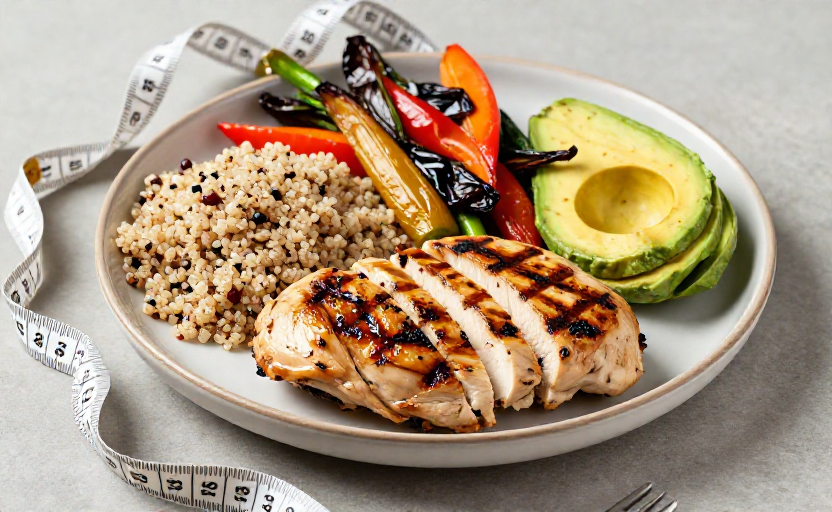
You are eating fewer calories than you burn. You are tracking your food. You feel you are doing everything right. Yet the scale doesn't budge, or your energy crashes by mid-afternoon. The problem may not be the number of calories but where those calories come from.
A calorie deficit is the foundation of fat loss, but the composition of those calories—your macronutrient balance—determines whether that deficit works for you or against you. Protein, fat, and carbohydrates each play distinct roles in satiety, energy, muscle preservation, and even how well you sleep. When the ratio is off, your body responds in ways that can undo the deficit entirely.
1. Cutting protein too low to save calories
The most common mistake is slashing protein to keep total calories low. A salad with grilled chicken becomes a salad without it. An egg is swapped for a handful of berries. Over time, protein intake drops below what your body needs for basic repair and satiety.
Low protein triggers a cascade: you lose lean mass along with fat, your metabolism slows, and you feel hungry again soon after eating. Studies consistently show that higher protein intakes—around 1.6 to 2.2 grams per kilogram of body weight—help preserve muscle during a deficit while keeping appetite in check.
If you are eating 1,500 calories but only getting 50 grams of protein, your deficit is likely eating away at muscle tissue, not just fat. That is not the outcome anyone wants.
2. Loading up on carbs while neglecting fat
Many people assume that fat is the enemy during a deficit. They eat rice cakes, oatmeal, fruit, and whole grains but avoid nuts, avocado, olive oil, and eggs. The result can be a carb-heavy diet that leaves blood sugar bouncing and hunger returning quickly.
Dietary fat is essential for hormone production, including hormones that regulate metabolism and satiety. When fat intake falls too low—typically under 20% of total calories—people often report dry skin, lower energy, and persistent cravings. A moderate fat intake, around 25–35% of calories, helps meals feel satisfying and provides a steadier fuel source than carbs alone.
A bowl of oatmeal with berries is fine. A bowl of oatmeal with berries plus a tablespoon of almond butter or a few walnuts is better for keeping you full until lunch.
3. Relying on low-fat or diet products to cut calories
It seems logical: buy the low-fat yogurt, the fat-free dressing, and the sugar-free cookies to save calories. But these swaps often backfire because the missing fat or sugar is replaced by starches, sugars, or artificial sweeteners that can still affect hunger signals.
Moreover, low-fat versions tend to be less satisfying, so you end up eating more of them. A full-fat Greek yogurt with 140 calories and 12 grams of protein will keep you full longer than a 90-calorie low-fat version with only 6 grams of protein and added sugar. The small calorie savings are not worth the drop in satiety.
Simple rule: Choose minimally processed sources of protein, fat, and carbs, and let portion size control the deficit—not artificial fillers.
4. Eating too few carbs for your activity level
On the flip side, some people slash carbs drastically to speed up fat loss. While a very low-carb diet can work short term, it can derail performance and recovery if you exercise regularly.
Carbohydrates are the primary fuel for high-intensity exercise. Without enough carbs, your workouts feel harder, you recover slower, and your non-exercise activity (walking, fidgeting, daily movement) tends to drop as your body conserves energy. That lower total daily energy expenditure can shrink the deficit without you noticing.
Most moderately active people benefit from a carb intake around 40–50% of total calories, with higher amounts on training days. The goal is to fuel activity, not to fear carbs as if they were pure sugar water.
5. Ignoring fiber within the carb category
Not all carbohydrates behave the same way in the body. When people focus only on total grams of carbs, they often overlook fiber—the type of carb that slows digestion, blunts blood sugar spikes, and increases fullness.
A dinner of white rice and bread can meet your carb target while leaving you hungry an hour later. Swap half that rice for lentils or roasted vegetables, and you get the same calories with triple the satiety benefit. Fiber from vegetables, legumes, whole grains, and fruit is a tool, not a waste of carbs.
The average person eats about half the recommended fiber intake. During a deficit, pushing fiber up to 25–35 grams per day can make the difference between feeling deprived and feeling satisfied.
6. Treating all calories as equal for body composition
This mistake is subtle but important: people assume that as long as calories are under control, the macro split does not matter for fat loss. While total calories drive weight change, macronutrient ratios influence what kind of weight you lose and how sustainable the process feels.
Three different 1,500-calorie days can produce very different results. One might deliver 80g protein, 50g fat, and 180g carbs with plenty of fiber and micronutrients. Another might deliver 40g protein, 20g fat, and 270g carbs from processed sources. Both create a deficit, but the first preserves muscle, maintains hormone function, and keeps energy stable—making it easier to stick with for weeks or months.
Balance does not mean perfection. It means ensuring each of the three macronutrients has a clear role in your daily eating pattern.
A practical way to check your balance
If you suspect your macro balance is off, track your usual intake for three days without judgment. Look at these rough benchmarks for a standard deficit plan:
- Protein: aim for at least 25–30% of your total calories
- Fat: aim for at least 25% of total calories
- Carbohydrate: fill the remainder, prioritizing fiber-rich sources
Adjust gradually. If your protein is sitting at 15%, shift one snack or meal to include a high-protein option. If fat is below 20%, add a source like nuts, seeds, avocado, or full-fat dairy at one or two meals. Small tweaks create big improvements over a few weeks.