When you're running a calorie deficit, sugar cravings are often the first uninvited guests to show up. It's not a lack of willpower—it's biology. Your body is used to quick energy from glucose, and when calories drop, it looks for the fastest fuel source available. The problem is that giving in to refined sugar usually means spiking your blood sugar, crashing your energy, and blowing past your calorie budget before you've even registered the bite.
The good news is that you don't have to white-knuckle through every craving. With a few tactical food swaps, you can satisfy the sweet tooth, stabilize your energy, and keep your deficit intact. These are not "diet versions" that taste like cardboard. These are real, satisfying trades that work with your biology—not against it.
Why Sugar Cravings Hit Harder on a Deficit
Before we get to the swaps, it helps to understand the mechanics. When you cut calories, your brain's reward center—specifically dopamine signaling—can downshift. Sugar triggers a huge dopamine hit, so your brain starts to crave that quick spike to feel good. That's normal. The goal isn't to eliminate all sweetness but to choose sources that also bring fiber, protein, or healthy fats to slow digestion and keep blood sugar stable.
The quick fix: Pair any sweet food with protein or fat. That one habit changes how your body processes sugar.
Swap 1: Flavored Yogurt → Plain Greek Yogurt with Berries
Flavored yogurts are the sugar sleeper agents of the grocery store. A single serving of fruit-on-the-bottom yogurt can pack 15–20 grams of added sugar—often more than a glazed donut. The trade is simple but transformative.
The swap: Go for plain full-fat or low-fat Greek yogurt. Then stir in a half-cup of frozen or fresh berries. The berries bring natural sweetness and about 4 grams of fiber, while the yogurt provides protein and probiotics. If you need a little more sweetness, add a tiny sprinkle of stevia or monk fruit. You get the creamy-sweet experience, but you're actually feeding your body something that supports satiety and gut health.
- What you lose: 15+ grams of added sugar, some of it high-fructose corn syrup or cane sugar.
- What you gain: Protein, fiber, probiotics, and a lower glycemic load.
Swap 2: Granola Bar → Trail Mix with Dark Chocolate
Granola bars are marketed as health food, but most are held together with sugar syrups, chocolate coatings, and refined carbs. One bar can have 10–15 grams of sugar, very little protein, and almost no fiber—meaning you'll be hungry again in 45 minutes.
The swap: Make a small trail mix with raw almonds, walnuts, a few unsweetened coconut flakes, and 2–3 dark chocolate chips (70% cocoa or higher). Keep the portion to about ¼ cup. The healthy fats and fiber in the nuts blunt the blood sugar response, and the small amount of dark chocolate is often enough to satisfy a chocolate craving without triggering a full binge. Studies show that dark chocolate may reduce cravings for both sweet and salty foods, possibly due to its bitter compounds and lower sugar density.
- What you lose: Processed sugar, seed oils, and empty calories.
- What you gain: Magnesium, healthy fats, and a slower release of energy.
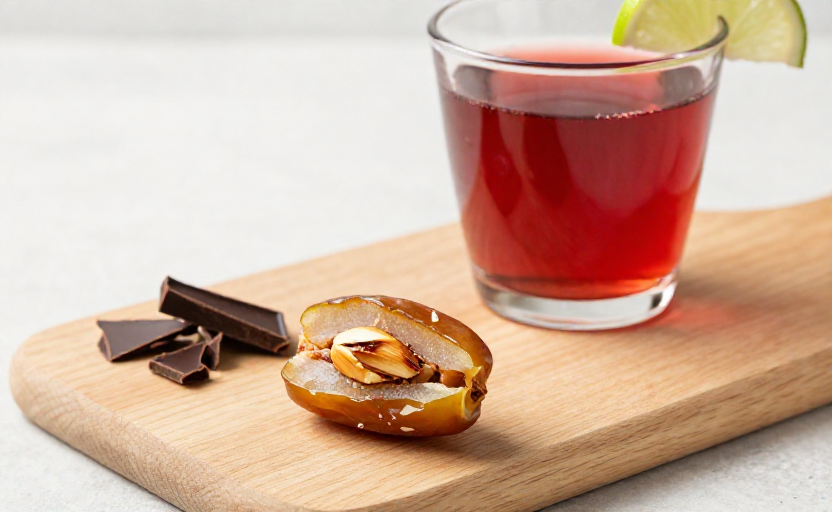
Swap 3: Soda or Sweetened Latte → Iced Hibiscus Tea with Lime
Liquid sugar is the easiest way to blow a deficit without feeling full. A standard 12-ounce soda contains about 40 grams of sugar—roughly 10 teaspoons. A flavored latte from a coffee shop can be just as bad, with syrups pushing it into dessert territory.
The swap: Brew a strong hibiscus tea concentrate (use 3–4 tea bags for a quart of water). Let it cool, pour over ice, and squeeze in half a lime. Hibiscus is naturally tart with a berry-like sweetness that doesn't require any added sugar. It's rich in anthocyanins and antioxidants, and it gives you the sensory experience of a sweet beverage—cold, refreshing, a little tangy—without the insulin spike. If you need sweetness, add a drop of liquid stevia or erythritol.
- What you lose: 30–40 grams of liquid sugar, empty calories, and a guaranteed energy crash.
- What you gain: Antioxidants, hydration, and a faint natural sweetness.
Swap 4: Ice Cream → Frozen Greek Yogurt Bark
Ice cream cravings are often about the cold, creamy texture as much as the sugar. Regular ice cream is essentially dairy sugar and fat whipped with sugar syrup—and a decent bowl can run 300–400 calories.
The swap: Line a sheet pan with parchment. Spread plain Greek yogurt about ¼-inch thick. Top with sliced strawberries, a drizzle of sugar-free syrup or honey (use sparingly), and a sprinkle of dark chocolate shavings. Freeze for 2 hours, then break into shards. You get the cold, crunchy, creamy satisfaction of ice cream for roughly half the calories and a fraction of the sugar. Plus, the protein content keeps you full instead of sending you back to the freezer.
- What you lose: 20+ grams of added sugar, high-calorie load, zero nutritional value.
- What you gain: Protein, calcium, antioxidants, and a portion-controlled treat.
Swap 5: Candy Bar → Date Stuffed with Almond Butter
Candy bars are engineered for maximum dopamine release: sugar, salt, fat, and texture all in one. But a standard candy bar has around 25–30 grams of sugar and minimal nutrition.
The swap: Take 1 Medjool date (about 66 calories), pit it, and stuff it with about 1 teaspoon of unsalted almond butter. The date is intensely sweet thanks to natural fructose, but it comes with fiber (about 1.6 grams per date) and several trace minerals including potassium and copper. The almond butter adds protein and fat to slow digestion. This is a one-bite sweet bomb that registers instantly with your taste buds, but it doesn't produce the same crash-and-crave cycle as a candy bar.
- What you lose: High-fructose corn syrup, artificial ingredients, and a massive calorie hit.
- What you gain: Fiber, natural sugars, healthy fats, and a single serving that naturally limits itself.
Making These Swaps Stick
The key to succeeding on a deficit isn't willpower—it's preparation. If you have a bag of candy in your desk drawer, you're fighting biology. If you have a bag of trail mix already portioned in a snack bag, your brain will grab that instead. Take 15 minutes once a week to prep: make the yogurt bark, portion out trail mix, stuff a few dates, and brew a pitcher of hibiscus tea. When the craving hits, the good choice is the easy choice.
These swaps work because they mimic the sensory experience of what you want—sweet, creamy, cold, crunchy—while delivering real nutrition. They're not about restriction; they're about substitution that keeps your deficit intact and your sanity stable.