Slowing down at meals is often easier said than done. You know the advice: put the fork down between bites, chew thoroughly, wait before reaching for seconds. Yet when life is busy or you are genuinely hungry, those good intentions tend to evaporate by the third mouthful. The secret might not be just eating slowly, but knowing which foods naturally force a slower pace. Dietitians often point to three specific categories of food that, when eaten on their own terms, can help you feel full sooner and eat less overall.
These foods share a common trait: they require work. They demand chewing, breaking down, or careful handling. This built-in friction is a powerful tool against overeating. Instead of fighting your instincts to finish quickly, you work with foods that simply won't let you. Here are the three foods dietitians recommend eating slowly to reduce overeating, along with the simple reasons they work.
Why eating slowly actually changes how much you eat
Your body’s satiety signal — the feeling that you’ve had enough — doesn’t start in your stomach. It begins in your brain, and it takes time. A well-studied hormone called cholecystokinin (CCK) is released as food enters your small intestine. It tells the brain to stop eating, but there is a built-in delay of about 15 to 20 minutes. If you finish a meal in five minutes, you are eating well past the point of fullness before your brain registers it.
Slow eating gives that signal time to arrive. It also encourages more chewing, which increases the surface area of food for digestion and allows more time for enzymes in the mouth to begin breaking down carbohydrates. The result is a gentler rise in blood sugar and earlier, more reliable fullness. The three foods below are particularly effective at creating this natural pause in your meal rhythm.
1. Nuts and seeds: The crunch that buys you time
It is nearly impossible to scarf down a handful of almonds or sunflower seeds the same way you might inhale a handful of potato chips. Whole nuts are dense, fibrous, and require a surprising amount of jaw work. A 2017 study in Nutrients found that participants who chewed almonds 40 times reported greater fullness and better absorption of healthy fats than those who chewed only 15 times.
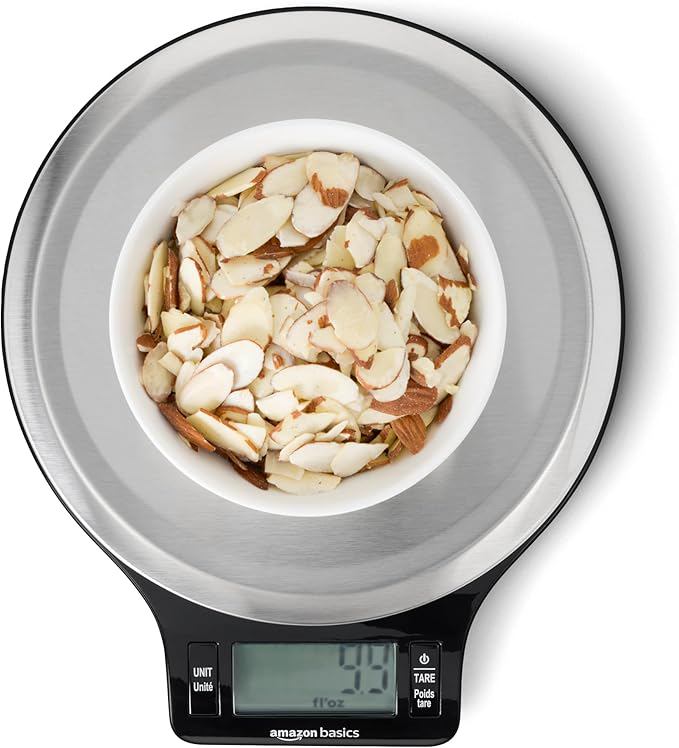
Dietitians recommend eating nuts slowly because the combination of fiber, protein, and healthy fat creates what researchers call a high satiety density. Your stomach physically separates the fat from the fibrous structure as you chew, which triggers digestive signals to the brain gradually. Make them a mindful snack: pour a single serving into a small bowl rather than eating from the bag. Count each chew — not rigidly, but with awareness — until the nut is fully broken down before swallowing. This alone can add two to three minutes to your eating time.
A practical note on portion size
One serving of nuts is about one ounce, or roughly a small handful. That equals about 23 almonds, 14 walnut halves, or 84 pistachios (the ones you have to shell are an excellent built-in speed bump). Eating them slowly from a bowl, rather than straight from a jar, is the simplest way to let these foods do their job.
2. Whole fruits with edible skin and seeds: Nature’s pause button
Not all fruits are equal when it comes to slowing you down. A glass of apple juice disappears in seconds. An entire whole apple, however, demands chewing, biting, and working around the core. Dietitians specifically recommend whole fruits that retain their peel, pith, and seeds — like apples, pears, oranges, and berries.
The skin of an apple contains insoluble fiber called pectin. When you eat an apple whole, you chew that skin thoroughly, which allows the pectin to bind with water in your stomach and form a gel-like substance. This gel slows stomach emptying, keeping you fuller longer. A 2020 review in Advances in Nutrition noted that whole fruit consumption is consistently linked with lower calorie intake at subsequent meals, while fruit juice is not.
Eat them slowly by committing to the entire fruit experience: bite into an apple rather than slicing it, peel an orange segment by segment, or eat pomegranate seeds one by one. The manual effort involved — breaking through the skin, removing seeds, preventing yourself from swallowing too fast — is a built-in mindfulness practice that dietitians say effectively reduces overall eating speed by 30 to 40 percent.
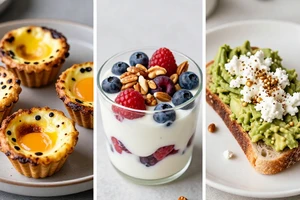
Tip: For a satisfying, slow-paced dessert, try a small bowl of mixed berries. Their small size and delicate structure require purposeful chewing that extends the eating window naturally.
3. Leafy greens and fibrous vegetables: The volume trick
Leafy greens like kale, collard greens, broccoli rabe, and even raw cabbage require serious mastication. This is not a drawback — it is the feature. Dietitians call this the chewing tax. When you eat a large volume of low-calorie, high-fiber vegetables, your mouth and jaw have to work for every bite, and that work translates directly into less food consumed overall.
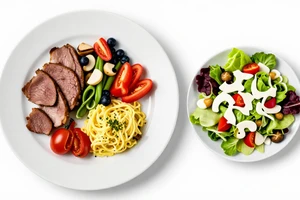
Consider a study in the Journal of the Academy of Nutrition and Dietetics that compared eating a salad before a pasta meal versus skipping the salad. Participants who ate the salad consumed about 12 percent fewer calories during the main meal, and they ate slowly. The salad took about 15 minutes to finish, which gave the main course less time to tempt them into overeating.
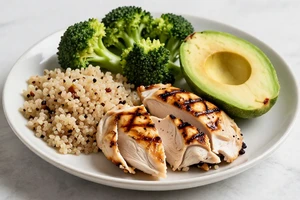
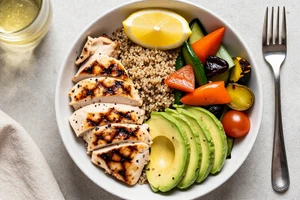
To maximize the effect, choose hearty greens that require active chewing: raw kale massaged with a bit of lemon juice, steamed broccoli with a fork, or shaved Brussels sprouts. Avoid pre-shaved or finely chopped versions if your goal is to slow down — the more structure the vegetable retains, the longer you will need to eat it. Pair with a moderate amount of healthy fat, such as olive oil or avocado, to increase satiety further without adding the speed of processed food.
How to incorporate these foods without overcomplicating your plate
You do not need to eat a pound of kale at every meal. The idea is to include at least one slow-food anchor at each main eating occasion. At breakfast, that might be a handful of walnuts added to oatmeal. At lunch, a whole apple on the side. At dinner, steamed broccoli or a small salad eaten first. These foods naturally extend the eating window by two to five minutes per meal, which is often enough to let your brain catch up to your stomach.
Dietitians also emphasize that slow eating is not about turning meals into a chore. It is about choosing foods that already have a built-in governor. When you eat nuts, whole fruits, and fibrous vegetables, you are not trying to eat slowly — the food itself does the work. The health benefit follows naturally.
Start with one meal tomorrow. Add a handful of almonds before lunch or eat an apple 20 minutes before dinner. Notice how your appetite adjusts. Over a few weeks, this one shift can reduce overall calorie intake without willpower or tracking.