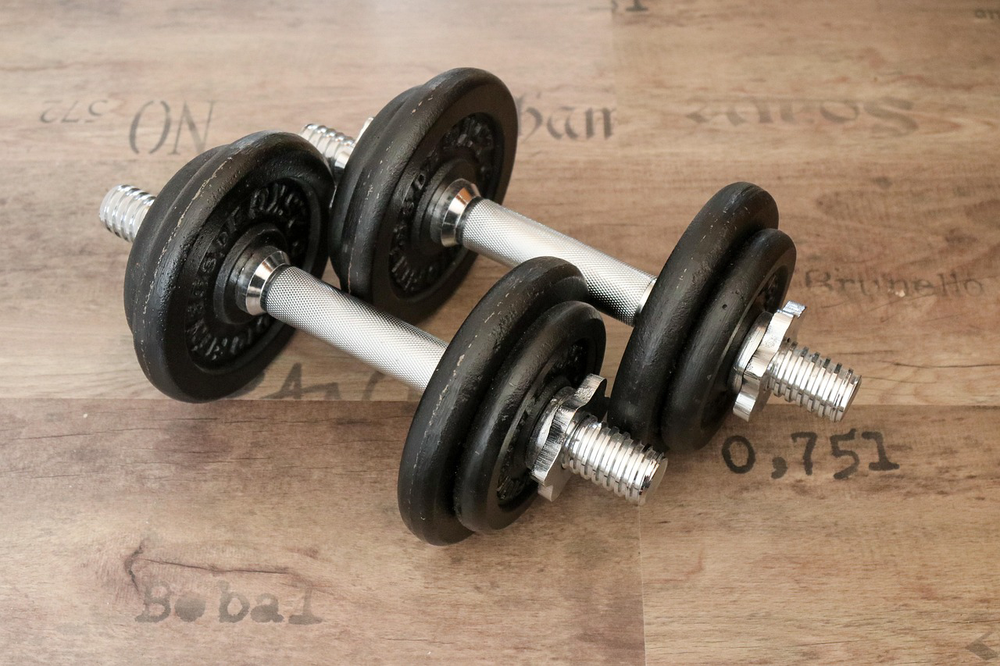
You walk into the gym with good intentions. You pick up a dumbbell, and without thinking, you use your right hand for the first set. You finish the set, switch to your left, and the movement feels noticeably harder. Maybe you push through anyway, or maybe you lower the weight. Either way, a pattern has just begun.
Strength imbalance is something almost every beginner encounters. It happens when one side of your body becomes stronger, more coordinated, or more mobile than the other. If left unchecked, it can lead to awkward movement patterns, joint discomfort, and frustration down the road. The good news is that you can prevent an imbalance from solidifying before it ever becomes a habit. Here are three expert-backed strategies that belong in your very first workouts.
Start every exercise on your weaker side
This is the single most practical change you can make. Most people instinctively lead with their dominant arm or leg. That means your stronger side sets the pace, dictates the range of motion, and dictates how many reps you complete. By the time you switch to your weaker side, fatigue has already begun to shape the outcome.
The fix is simple: always begin with your non-dominant side. For example, if you are right-handed, do the left side of a dumbbell row first. If you are left-footed, start a single-leg squat with your right leg. Here is why this works:
- Your weaker side sets the standard. You complete as many clean reps as your weaker side can handle, then match that number exactly on your stronger side. You do not push past failure on one side alone.
- You train with intention. It forces you to mentally check in with the side that needs more attention before your stronger side takes over.
- You avoid the trap of compensating. When you train your strong side first, it is easy to let your form drift and still lift the weight. Your weaker side cannot hide as easily when it goes first.
This approach does not cure imbalance overnight, but it stops the gap from widening. Over several weeks, you will notice that your weaker side starts to catch up, because you are giving it the same workload, not less.
Include unilateral exercises from week one
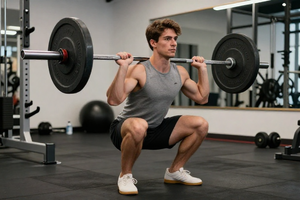
If you only ever do bilateral lifts—exercises where both limbs work together, like a barbell squat, bench press, or deadlift—your stronger side can quietly do more of the work. Your body is smart: it will shift load toward the side that can handle it, and the weaker side will learn to coast.
Unilateral exercises (where one arm or leg works independently) strip away that camouflage. They force each side to carry its own weight. Adding just two unilateral movements to your routine is enough to build a strong foundation.
Good options for beginners include:
- Dumbbell single-arm overhead press instead of a barbell press
- Single-leg glute bridge or Bulgarian split squat instead of a bilateral squat
- Single-arm dumbbell row instead of a barbell row
- Single-leg calf raise instead of a standing calf raise machine
Perform these exercises in the 8–12 rep range, and be honest about when your form breaks. If your right leg can complete ten clean reps but your left leg can only do seven, stop at seven on both sides. That gap tells you exactly where you stand. Track it. Write it down. Over the next few weeks, watch that gap shrink.
Quick tip: A good rule of thumb is to include one unilateral movement for every bilateral movement in your main workout. That keeps the workload balanced without overcomplicating your program.
Address mobility restrictions before they become compensations
A strength imbalance is rarely just about strength. Often, it begins as a mobility problem. If your left hip does not rotate as freely as your right, you will instinctively shift your weight during a squat. If your right shoulder is stiffer in the overhead position, you will lean to one side during the press. Your body takes the path of least resistance, and that path creates asymmetry.
Before you load up the barbell, spend five minutes assessing your baseline. Stand in front of a mirror and try the following:
- Overhead reach: Raise both arms overhead. Do your shoulders feel equally open? Can you reach the same height on both sides?
- Deep squat hold: Sit into a deep squat without weight. Does your weight shift to one foot? Do you feel a pinch in one hip?
- Lunge test: Step into a forward lunge on each leg. Does one side feel tighter through the front of the hip or the back of the calf?
If you notice a restriction, that is not a reason to panic—it is a reason to be deliberate. Spend an extra few minutes on that side during your warm-up. For example, if your right hip feels tight during the squat hold, add a few hip circles, a couch stretch, or a deep lunge hold on that side before you start lifting. You do not need to fix the mobility issue in one session, but you do need to stop reinforcing an uneven starting position.
Think of your warm-up as the first opportunity to balance your body. If you skip it, you are asking your stronger side to do even more work, widening the imbalance with every rep.
Strength imbalance is not a permanent condition—it is a pattern that you can interrupt from the very beginning. Start on your weaker side, use unilateral movements to expose the gaps, and address mobility restrictions before they turn into compensations. These three practices are simple enough to apply today, and they will keep your body working as one cohesive unit as you build strength over the months ahead.