
You track your meals, you hit the gym, you drink your water — and yet the mirror doesn't seem to reflect your effort. If your body composition has stalled or shifted in the wrong direction, the culprit might not be what you're doing during the day. It could be what's happening while you sleep.
Nighttime habits have a surprisingly powerful effect on how your body builds muscle, burns fat, and recovers. Even small missteps before bed can undermine weeks of hard work. Here are three common mistakes that may be quietly sabotaging your body composition progress at night — and what to do about them.
1. Eating Too Close to Bedtime
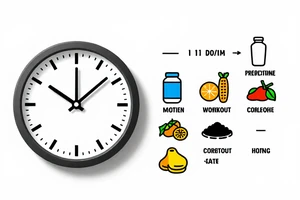
Finishing dinner and then snacking right up until you close your eyes is one of the quickest ways to disrupt body composition goals. When you eat late, your body's digestive system stays active instead of shifting into repair-and-recovery mode. This can blunt the natural rise in growth hormone that occurs during deep sleep — a hormone critical for fat metabolism and muscle maintenance.
A 2020 study in the Journal of Clinical Endocrinology & Metabolism found that late eating altered key markers of fat breakdown and hunger regulation the next day. Participants who ate within two hours of sleep showed poorer glucose tolerance and fat oxidation compared with those who stopped eating earlier.
The fix isn't complicated: set a cutoff time for food, ideally two to three hours before bed. If you absolutely need something, keep it small — a spoonful of cottage cheese or a few almonds — and avoid anything high in sugar or refined carbs, which can spike insulin and interfere with fat burning overnight.
2. Sleeping in a Warm Room
Your body's internal thermostat plays a bigger role in body composition than most people realize. As you drift toward sleep, your core temperature naturally drops — a signal that helps trigger restful slumber. If your bedroom is too warm, that natural cooling is disrupted, and your sleep quality suffers.
Poor sleep quality directly impacts body composition by raising cortisol (the stress hormone) and lowering growth hormone and testosterone. Elevated cortisol encourages fat storage, especially around the midsection, while reducing your body's ability to use fat for energy. It also breaks down muscle tissue — exactly the opposite of what you want.
The recommended bedroom temperature for optimal sleep and metabolic health is between 65 and 68 degrees Fahrenheit (18–20°C). If you can't control the thermostat, consider a cooling mattress pad, a breathable cotton or bamboo sheet set, or a small fan aimed at your body. Keeping your feet uncovered can also help regulate temperature naturally.
3. Using Screens Right Before Sleep
Scrolling through your phone or watching TV in bed isn't just a bad sleep habit — it's a direct threat to your body composition progress. The blue light emitted by screens suppresses melatonin production, the hormone that governs your sleep-wake cycle. When melatonin is low, it takes longer to fall asleep and you spend less time in the deep, restorative stages of sleep.
It's during those deep-sleep cycles that your body repairs muscle tissue, balances hunger hormones like ghrelin and leptin, and optimizes insulin sensitivity. Skimping on that phase means you wake up with higher cravings for sugar and carbs, lower energy for your next workout, and a metabolism that's not firing on all cylinders.
The simplest solution is a screen curfew: put away phones, tablets, and laptops at least 60 minutes before your head hits the pillow. If you need a wind-down activity, try reading a physical book, gentle stretching, or a few minutes of deep breathing. If you must use a device, enable night mode or blue-light filtering settings, but know that they're not a perfect substitute for an actual screen break.
Body composition isn't built only in the gym or at the dinner table. What happens in the hours between your last meal and your morning alarm matters just as much. By eating earlier, cooling down your sleep environment, and stepping away from screens before bed, you give your body the undisturbed recovery time it needs to burn fat, build muscle, and reset your metabolism for the day ahead.