Becoming a new mom reshapes your world—and your body. After weeks or months of recovery, limited sleep, and hormone shifts, the urge to "get back" to exercise can be strong. But the path from postpartum to fit is strewn with well-intentioned missteps that can sideline progress or lead to injury.
As a health editor who has worked with postpartum physical therapists and fitness coaches, I see the same three beginner mistakes surface again and again. Here is how to recognize them—and what to do instead—so your return to movement is safe, effective, and sustainable.
Mistake #1: Jumping back into your pre-pregnancy routine too soon
The most common error is simply assuming the body can pick up where it left off. A 2019 study in the Journal of Women's Health Physical Therapy found that nearly 60% of new mothers resumed high-impact exercise before receiving medical clearance—often because they felt pressure to reclaim their former fitness level.
The hard truth: pregnancy and delivery permanently change the core and pelvic floor. Even if you feel strong, connective tissues like the linea alba (the strip between your abdominal muscles) need time to regain tensile strength. Jumping into heavy lifting, high-impact plyometrics, or intense cardio before these structures have repaired can worsen diastasis recti (abdominal separation) or contribute to incontinence.
What to do instead
- Get clearance from your provider—usually at the 6-week checkup, but sometimes later for cesarean births.
- Start with low-impact movement: walking, swimming, or a gentle postpartum-specific program.
- Graduate slowly. Think weeks, not days. If you were running before, begin with brisk walks, then walk-jog intervals, then short runs on forgiving surfaces.
Editor’s tip: A general rule of thumb: spend at least as many weeks rebuilding as you spent being cleared. A 6-week clearance means 6 weeks of foundation work before adding intensity.
Mistake #2: Ignoring the core and pelvic floor
Many new moms focus on visible muscles—abs, glutes, arms—while neglecting the deep stabilizers that support everything. The result? A workout that looks good in the mirror but sets you up for back pain, leakage, or a stubborn belly pooch known as "coning" or "doming."
The core system includes: the pelvic floor muscles, the multifidus (deep back muscles), the diaphragm, and the transverse abdominis (your natural weight belt). If you don't engage these during exercise, other muscles compensate—often poorly.
Signs your core isn't ready for advanced moves
- You see a tent-like ridge form down the middle of your belly during crunches or planks.
- You leak urine when you sneeze, cough, or jump.
- You feel low back strain during simple exercises like squats.
What to do instead
- Work with a pelvic floor physical therapist—even one session can give you a tailored breathing and bracing strategy.
- Practice diaphragmatic breathing and gentle core engagement (imagine zipping up a tight pair of jeans) before any weighted move.
- Switch crunches for exercises that challenge core stability without spinal flexion: dead bugs, side planks, bird-dog, and farmer carries with light weight.
Mistake #3: Undereating or under-recovering while trying to lose baby weight
The fitness industry often equates exercise with calorie burn, but for a new mom, recovery is the real bottleneck. You are already operating on fragmented sleep, fluctuating hormones, and possibly breastfeeding. Adding a calorie deficit and heavy training on top of that can tank energy, slow muscle repair, and suppress milk supply.
A 2021 review in Nutrients emphasized that postpartum women need at least 1,800–2,200 calories per day (often more if breastfeeding) just to support basic functions. Cutting below that while exercising is a recipe for burnout.
What to do instead
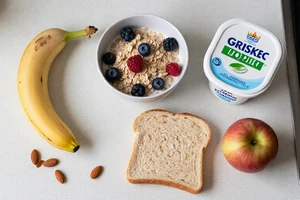
- Prioritize protein at every meal—aim for 20–30g per eating occasion to support muscle repair.
- Sleep and hydration count as recovery. If you can't get 8 hours of sleep, focus on quality naps and pre-sleep wind-down routines.
- Reframe your goal: instead of "lose weight," think "rebuild strength and energy." The weight often follows as movement becomes consistent and eating is adequate.
The big picture: Exercise is a stressor. Your body can handle stress only when recovery resources are available. New moms are already operating on a deficit—add training smartly, not aggressively.
How to build a smarter postpartum workout plan
If you've made any of these mistakes, don't panic. The body is resilient. The key is to pivot now. Here is a simple framework for the first three months back:
- Weeks 1–4: Gentle walking, deep core breathing, cat-cow, and glute bridges. No added weight. Focus on form and feeling your pelvic floor lift and release.
- Weeks 5–8: Add bodyweight squats, lunges (shallow range), dead bugs, and banded walks. Introduce light dumbbells (5–10 lbs) for upper body only.
- Weeks 9–12: Slowly increase load. Add jumping jacks on a soft surface, jogging intervals (1 minute run, 3 minutes walk), and full planks. Continue monitoring for coning or leakage.
Throughout this timeline, check in with your body after each workout. Are you more fatigued than usual? Is your back sore? Do you feel any pelvic pressure? These signals are not weakness—they are data.
When to see a specialist
If you experience persistent pelvic pain, urinary incontinence beyond occasional leaks, or visible abdominal coning that does not resolve with core bracing, see a pelvic floor physical therapist. This is not an optional luxury; it is standard care for postpartum recovery. Many insurance plans cover it with a referral.
Returning to exercise after having a baby is not about how fast you can get back to your old self. It is about building a new, stronger self—one that can carry your child, chase after a toddler, and feel proud of what your body has done. That takes patience, smart choices, and respect for the process.