You might not think twice about how you sit. But over months and years, the height of your chair can quietly affect the way your blood moves through your legs. When your chair is too high or too low, it places subtle, repeated pressure on your blood vessels and nerves. Over time, that pressure can add up to circulatory problems that are easy to dismiss—until they become harder to ignore.
Here are two specific warning signs that your current chair height may be compromising your circulation. Recognizing them early gives you a chance to make small adjustments that can have a real impact on your long-term vascular health.
1. Persistent Numbness or a "Pins and Needles" Feeling in Your Thighs or Feet
If you regularly notice that your legs fall asleep while you're seated, or if you feel a persistent tingling, prickling, or burning sensation in your thighs, knees, or feet, it may not be just a case of sitting still too long. This type of nerve irritation—often called paresthesia—can be a direct signal that your chair height is off.
When your chair is too low, your knees rise above your hips. That angle can compress the sciatic nerve and strain the blood vessels running through the back of your thighs and behind your knees. Conversely, a chair that is too high can leave your feet dangling, putting pressure on the underside of your thighs where major arteries and nerves pass close to the surface.
A quick check: Sit in your chair with your feet flat on the floor. If your knees are not at roughly a 90-degree angle, or if the front edge of the seat presses into the back of your thighs, your chair height likely needs adjusting.
Occasional numbness that resolves quickly after standing or shifting position is common. But if you notice tingling that lasts after you get up, or if the sensation recurs day after day, your chair height may be creating sustained compression that interferes with normal nerve function and blood flow.
2. Swelling in Your Lower Legs and Ankles After Sitting
Another telltale sign is edema—swelling in your feet, ankles, or lower legs that appears after you've been seated for a while and improves when you lie down or elevate your legs. This swelling happens when gravity and positioning work against your circulatory system.
When your chair is too low, your knees are bent more sharply than they should be, which kinks the venous pathways that return blood from your lower legs back to your heart. Blood pools in the veins of your calves and ankles, causing them to expand and fluid to leak into the surrounding tissue. A chair that is too high can have a similar effect by compressing the back of the thighs, which slows venous return even before blood reaches the knee.
Mild ankle swelling at the end of a long day is normal for many people. But swelling that appears consistently within an hour or two of sitting, or that leaves deep indentations when you press on the skin (pitting edema), warrants attention—especially if you also feel a sensation of heaviness, achiness, or fatigue in your legs.
What to do about it
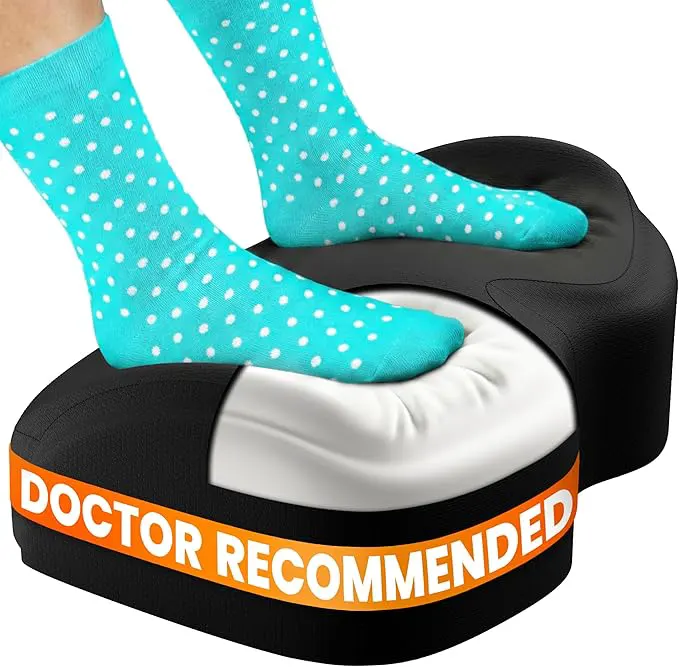
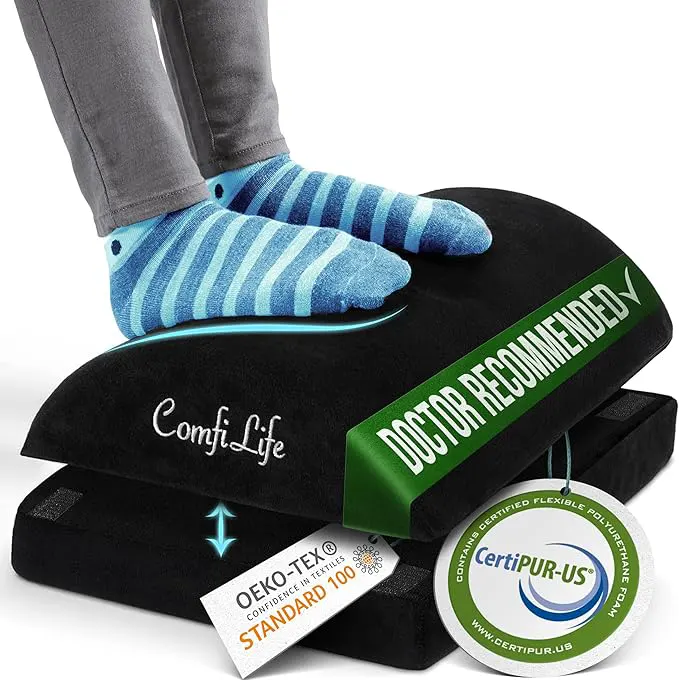
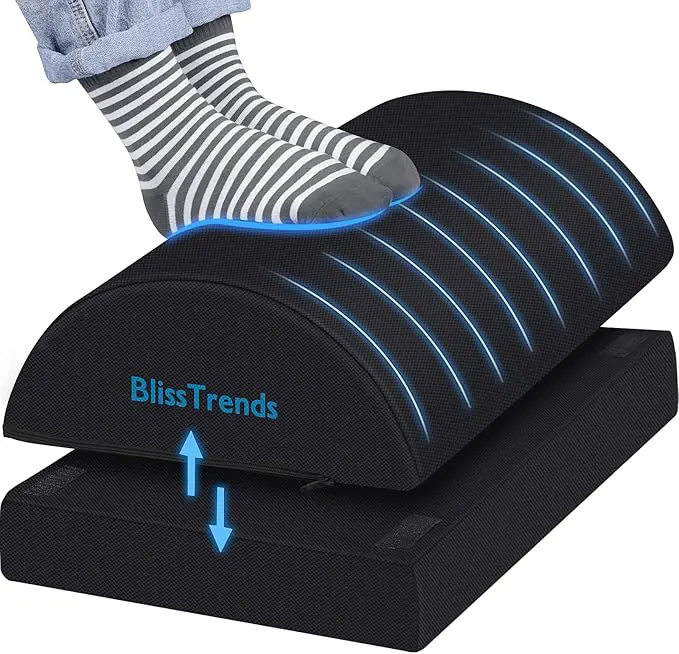
The fix is often straightforward. Aim for a seat height that allows your feet to rest flat on the floor (or on a footrest) with your knees at a 90-degree angle. Your hips should be level with or slightly higher than your knees. If your chair lacks an adjustable height, a firm cushion or a footrest can help correct the angle.
You don't need to overhaul your entire workspace overnight. Small changes, repeated consistently, can restore better circulation and reduce uncomfortable symptoms. If numbness or swelling persists after you've adjusted your seating, it's wise to consult a healthcare professional to rule out other underlying conditions.