Eating out is one of life’s pleasures, but it can quietly undo weeks of mindful eating at home. Restaurants are designed to make food look and taste irresistible, and the portions they serve often bear little resemblance to what we would plate for ourselves. Even health-conscious diners can fall into the same traps without realizing it. Here are two of the most common portion control mistakes people make when eating out, and how to navigate them with confidence.
Mistake #1: Treating everything on the plate as a single serving
When a meal arrives, it's natural to assume the entire plate is meant for one person. But restaurant servings—especially in the U.S.—can be two to three times larger than standard portion sizes. A typical pasta dish, for example, might contain four servings of noodles. A steak can easily weigh 12 to 16 ounces, while a moderate portion of protein is closer to 3 to 4 ounces. The mistake is eating it all because it's there, rather than listening to your body's fullness cues.
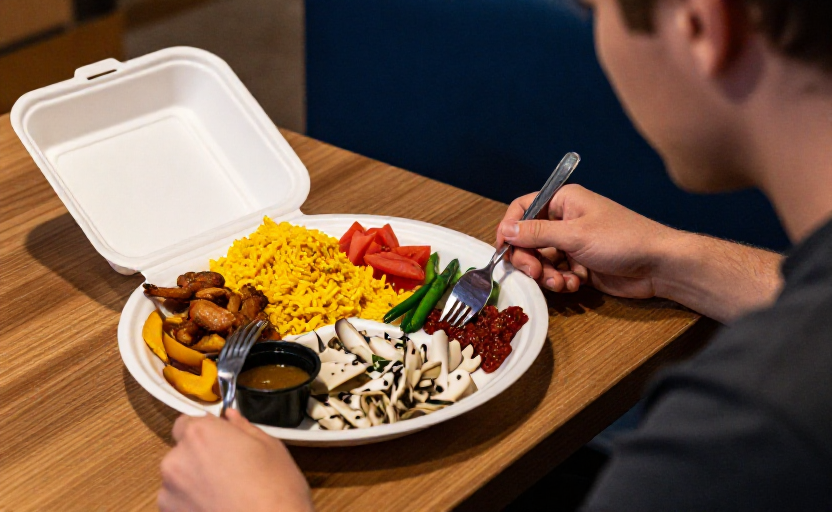
This is where the “clean plate club” mentality we learned as children works against us. Instead, get in the habit of visually dividing your meal before you take the first bite. Set aside half—or even two-thirds—to take home. Ask for a to-go box at the start and pack it away immediately. That simple act removes the temptation to finish everything and gives you a second meal for tomorrow.
A practical tip: the plate check
Before you eat, quickly assess your plate. Aim for a balance similar to what you'd serve at home: half vegetables or salad, a quarter lean protein, and a quarter complex carbohydrates (like rice, quinoa, or roasted potatoes). If the ratio is off—say the rice mound is massive and the broccoli is just a garnish—consider it a red flag. You can always ask for extra vegetables on the side or request a smaller portion of the starch.
Mistake #2: Trusting the “healthy” menu items at face value
It's easy to think that salad or grilled chicken is automatically a safe choice. The second common mistake is assuming a dish labeled “light,” “healthy,” or “fit” is also portion-controlled. Many of these items are still served in oversized portions or are loaded with calorie-dense dressings, oils, and toppings. A Caesar salad can contain more calories than a burger when you factor in the cheese, croutons, creamy dressing, and often a heavy drizzle of oil.
What matters is the actual composition of the meal, not just the label. When the server says “grilled salmon with steamed vegetables,” you still need to check: are the vegetables swimming in butter? Is the salmon the size of your hand or the size of a football? The health halo that surrounds certain dishes can make us lower our guard, so we eat more than we intended.
Caveat: A menu description is a starting point, not a guarantee. Always ask how a dish is prepared, and don't hesitate to request modifications like dressing on the side, extra veggies instead of fries, or a half portion if available.
How to outsmart the oversize portions
Once you know the two core mistakes, the fix is fairly straightforward. You don't need a scale or a calorie counter at the table—just a few simple strategies that work every time.
- Split an entrée. Sharing a main course with a dining partner automatically cuts the portion in half. You can always order an extra side salad or vegetable to round out the meal.
- Order an appetizer as your main. Many starter portions are closer to a reasonable serving size. Pair it with a broth-based soup or a green salad for a satisfying, balanced meal.
- Use your hand as a guide. Your palm is roughly the size of a single protein portion; your cupped hand holds about a cup of grains or vegetables. When the plate arrives, compare the portions to these familiar reference points.
- Be upfront with the server. A simple phrase like “Could you bring me a box with the meal? I'm going to pack half away before I eat” is perfectly acceptable. Servers hear this all the time.
These habits may feel unnatural at first, especially if you're used to clearing the plate. But after a few tries, they become automatic. The goal is not restriction—it's awareness. You can still enjoy the full restaurant experience without the discomfort of overeating.
Restaurant meals are meant to be savored, not finished in ten minutes. By recognizing that most plates are bigger than a single serving and that “healthy” labels don't guarantee proper portions, you can eat out with more control and less guilt. The best part? You'll walk away feeling satisfied, not stuffed.