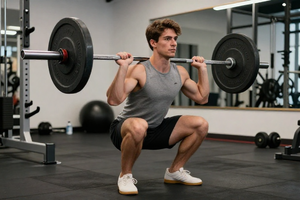

You just finished your first real workout split—maybe you hit legs and shoulders, or back and biceps. You're tired, hungry, and honestly, a little proud. But now comes the part that often trips up new lifters: the post-workout meal. Specifically, the question of when to eat that protein.
If you've heard that you need to slam a shake within 30 minutes of your last rep—or risk losing all your gains—you're not alone. That window is real, but it's not the panic button some make it out to be. For someone just starting a split routine, understanding the "why" behind that timing matters more than the clock itself.
Why the first 30 minutes are different for a new lifter
When you're new to resistance training, your muscles are not yet adapted to the stress of lifting. Each split session—whether it's push-pull or upper-lower—creates micro-tears in muscle fibers. Your body's response is to repair and rebuild, but it needs raw materials to do that. Protein provides the amino acids that serve as those building blocks.
The 30-minute window (often called the anabolic window) is the period when your muscles are most receptive to those amino acids. After a workout, blood flow to the trained muscles increases, and insulin sensitivity is temporarily heightened. This means protein can be shuttled into muscle cells more efficiently right after training than it can two hours later.
For a new lifter, this effect is amplified. Untrained muscles have a greater relative response to both the stimulus of lifting and the nutrients you provide. Miss that early window consistently, and you may slow down the recovery process—making it harder to show up for your next split session with the same energy.
What counts as "protein" in that window
Not all protein sources work the same way when the clock is ticking. The key factor is digestion speed. You want something that hits your system relatively fast without causing digestive distress midway through your cool-down.
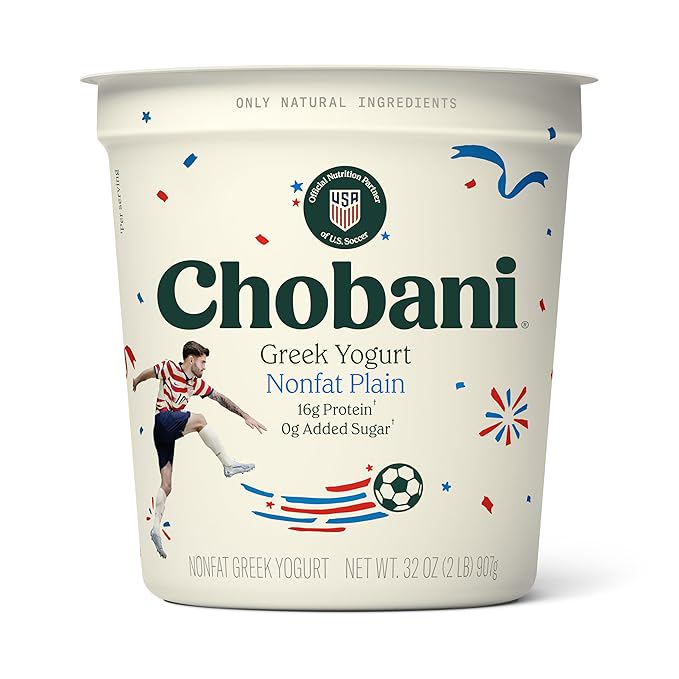
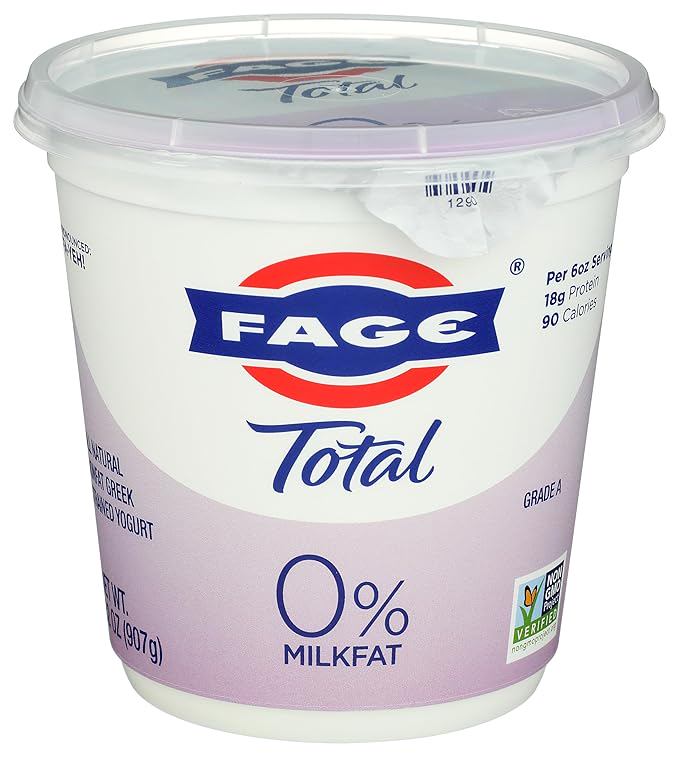
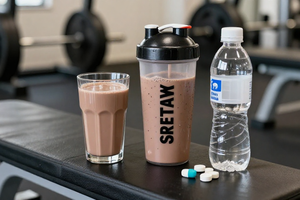
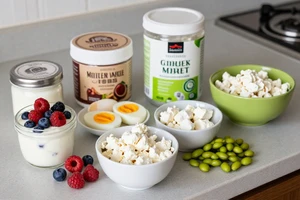
Whey protein isolate is the classic choice because it digests quickly and has a high leucine content—the amino acid most responsible for turning on muscle protein synthesis. But it's not the only option. A skinless chicken breast, a can of tuna, or even Greek yogurt can work if you eat them soon after training. The caveat is that whole foods take longer to break down, so the 30-minute mark becomes a bit fuzzier—aiming for 30 to 45 minutes is realistic.
If you train first thing in the morning, a rapid-digesting option like a whey shake or a carton of milk can be practical. For afternoon training, a turkey sandwich on whole-grain bread does the job, as long as you keep the portion reasonable.
A practical rule: eat or drink at least 20–30 grams of protein within 30 minutes of finishing your split. That's roughly one scoop of most protein powders or a deck-of-cards-sized portion of lean meat, poultry, or fish.
Does it matter if you ate before training?
Yes—and this is where many new lifters get confused. If you had a protein-rich meal two to three hours before your workout, your blood amino acid levels are still elevated during the session. In that case, the urgency of the 30-minute post-workout window decreases slightly. Your body already has a pool of amino acids to draw from, so you have maybe 60 to 90 minutes to eat again without losing much.
But if you trained fasted, or if you ate only a small carbohydrate snack pre-workout, then that 30-minute window becomes much more important. Your muscle protein synthesis rates drop after training, and without a fresh supply of amino acids, your body may start breaking down muscle protein for energy. That's the opposite of what you want as a new lifter trying to build strength.
The takeaway: match your post-workout timing to your pre-workout fueling. If you ate protein earlier, you have a bit more time. If you didn't, prioritize the shake or meal sooner.
Common mistakes new lifters make with the timing rule
The biggest error is stressing so much about the 30-minute cutoff that you skip the meal entirely. Maybe you forgot to pack a shake, or the drive home takes 40 minutes. That's not a disaster. The 30-minute guideline is optimal, not mandatory. Having a protein-rich meal at 45 minutes is still far better than waiting three hours because you thought you missed the window entirely.
Another mistake is consuming too much protein at once. Some new lifters down 50 or 60 grams immediately post-workout, thinking more is better. But muscle protein synthesis has a ceiling—usually around 30 to 40 grams per meal for most people. Beyond that, the excess is oxidized or stored as fat. Spreading your protein across the day, including that post-workout window, is more effective than a single monster dose.
Finally, don't forget carbohydrates. While protein is the star, a small amount of carbs post-workout—like a banana or a cup of rice—can replenish glycogen stores and may slightly enhance protein uptake. You don't need a massive carb load unless you're doing very high volume, but ignoring carbs entirely is a missed opportunity.
How to build the habit without overthinking it
For new lifters, consistency beats perfection. The simplest system: have a protein source ready before you start training. If you're training at home, that might mean a shaker bottle with powder already portioned, or a pre-cooked chicken breast in the fridge. If you train at a gym, pack a shake in your bag or keep a protein bar in your car as a backup.
Set a timer on your phone for 25 minutes after you finish your last set. That gives you a few minutes to stretch, shower, or change before you eat. The timer trains your brain to link the end of the workout with the meal—a powerful habit loop.
If you find that digesting a shake during a cold shower feels awful, switch to a solid option that you can eat once you're settled. A hard-boiled egg and a glass of milk works. Cottage cheese with fruit works. The goal is to get protein into your system, not to follow a rigid protocol that makes you dread recovery.
The science behind the 30-minute window is sound, especially for new lifters whose bodies are still adapting to split training. But the real key is simply eating enough protein over the course of each day while making sure you don't go hours without it after training. That's a standard any beginner can meet—and one that will support steady, visible progress from week one.