You walk into the gym. You see the barbell loaded. You want to get straight to the deadlifts or squats because that is the real workout. It feels efficient, even brave, to skip the warm-up. But for anyone new to strength training, that skipped warm-up is the fastest route to a stalled lift or an injury.
Compound lifts — think squats, deadlifts, bench presses, and overhead presses — recruit multiple joints and muscle groups at once. They demand coordination, mobility, and activation. A cold muscle is a stiff muscle. A cold nervous system is an unprepared one. Here is why taking ten minutes to warm up is the most productive thing a beginner can do before touching the heavy bar.
What happens when you skip the warm-up?
Imagine trying to stretch a cold rubber band. It snaps. The same principle applies to your muscles, tendons, and connective tissue. Blood flow is reduced when tissue is at rest. Muscle fibers are less pliable, and joint fluid is thicker. When you immediately load a cold system with a heavy compound movement, your body compensates in poor ways.
Beginners are especially vulnerable because their movement patterns are not yet grooved. If you walk up to a squat with cold hips and an unmobilized thoracic spine, your torso will fold forward. Your lower back takes the load. Your knees might cave. These are compensations rooted in stiffness, not weakness. Over weeks, that pattern becomes chronic — and painful.
More than injury prevention, skipping the warm-up also steals performance. Neural drive, or how effectively your brain recruits muscle fibers, improves after targeted activation. Without it, your first heavy set feels shaky and weak. You lift less weight and you lift it worse.
Five to ten minutes that change everything
A thoughtful warm-up for compound lifts does not need to be long. Beginners can accomplish everything needed in five to ten minutes. The goal is never to tire yourself out. It is simply to prepare your body to move safely and powerfully in the specific range of motion that your main lift demands.
Here is what an effective warm-up covers:
- Increase core temperature. Two to three minutes of light cardio — jogging in place, jumping jacks, or using a rower — raises your heart rate and sends blood to working muscles.
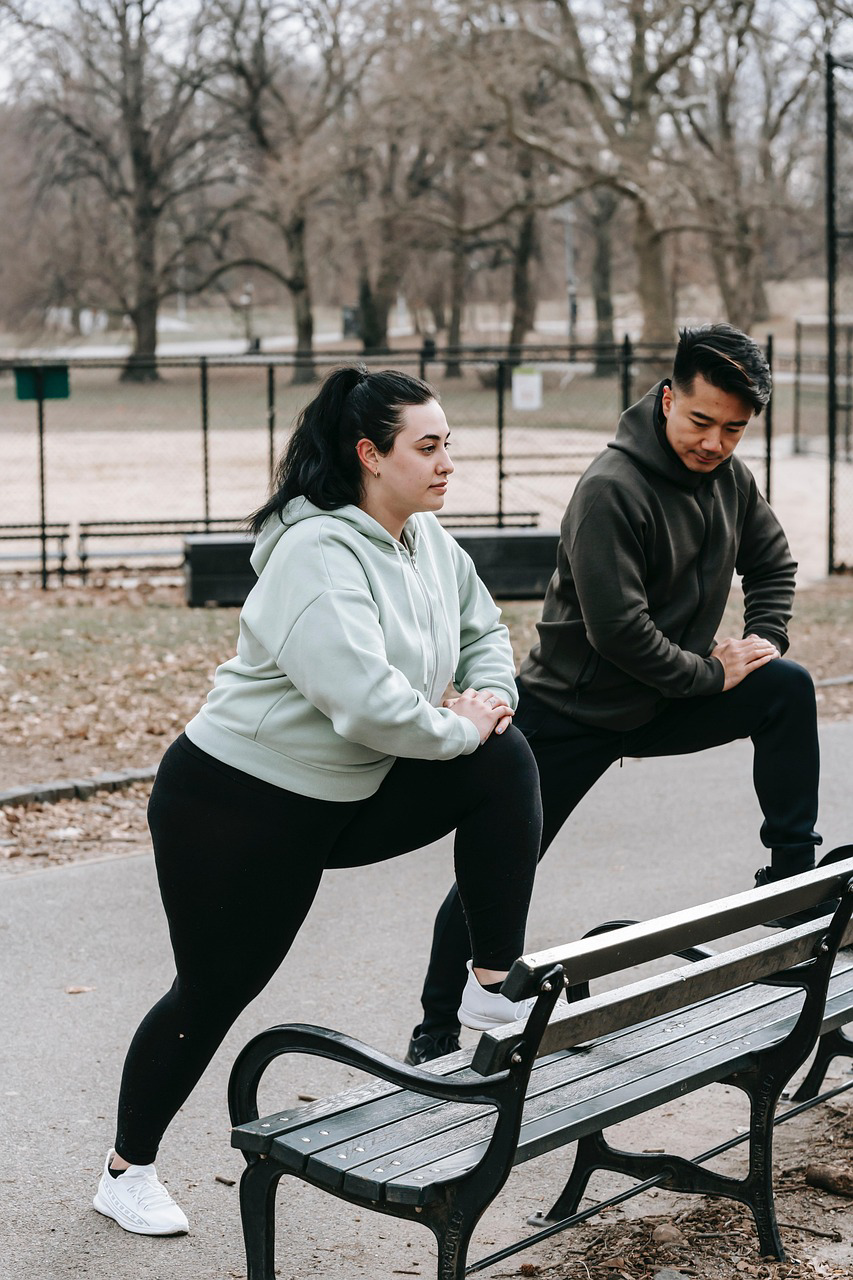
- Do dynamic stretching. Hold nothing. Move through the joint’s full range. For squats, that means bodyweight squats, leg swings, and hip circles. For bench press, it is band pull-aparts and arm rotations.
- Perform activation drills. Isolate a weak muscle that tends to fall asleep. Glute bridges before squats activate the hips. Scapular push-ups before bench press wake up the upper back.
- Execute ramp-up sets. Take the barbell alone for three to five reps. Add a light plate. Add more. Each set feels easier than the last, even as the load climbs. This is the secret to feeling heavy weight as manageable weight.
This sequence does more than warm tissue. It rehearses the exact motor pattern of your lift. Every squat warm-up rep teaches your nervous system where the bottom of the squat is, how to brace, and how to stand up. You have effectively practiced the movement before the real work begins.
The science of connective tissue and joint readiness
Muscles warm up quickly because they are filled with blood vessels. Tendons and ligaments are not. They are dense, fibrous, and receive less blood flow. This means they stay cold longer. A pulled hamstring or an irritated patellar tendon often happens not during the heavy set but during the first explosive rep on a cold day.
Research indicates that a proper warm-up increases the elasticity of tendons and reduces the viscosity of joint fluid. For a beginner performing a squat, this translates to deeper range of motion with less discomfort. Your hip joint actually glides better. Your Achilles tendon can store and release energy more efficiently. These are not advanced concerns. They are basics that every new lifter should build into their routine from day one.
One common frustration: skipping warm-ups because the workout is already too long. But think about this differently. If you warm up properly and lift with better positioning, you will recover faster between sessions. You will not have to take unplanned rest weeks to heal a sore lower back. The ten minutes you invest before lifting buys you months of consistent training.
Why beginners specifically need this habit
Experienced lifters might be able to get away with a quick warm-up. They have years of movement patterns stored in their nervous system. Their connective tissue has adapted to heavy loads. Their brain knows how to brace and stabilize without thinking.
Beginners have none of that. Their posture at the bottom of a squat is unrefined. Their shoulder stability during an overhead press is untested. The warm-up is where they teach these positions to their body for the first time each session.
Think of the warm-up as your movement practice. The heavy sets are the test. You want to take the test after you have practiced, not during it.
The warm-up also builds awareness. When you do five bodyweight squats with intention, you might notice that your right hip feels tighter than your left. That information is gold. You can adjust your stance or add an extra stretch on that side before loading the bar. If you skip the warm-up, you never know that the imbalance exists until it forces your lift into a dangerous angle.
Two beginner-friendly warm-up templates
Before a squat or deadlift session
- Two minutes of walking lunges or bodyweight squats (no weight)
- Ten leg swings each side (forward and lateral)
- Ten glute bridges with a two-second squeeze at the top
- Five deep bodyweight squats, holding the bottom for two seconds
- Barbell (or light dumbbell) good mornings — ten reps
- Two to three ramp-up sets with increasing weight
Before a bench press or overhead press session
- One minute of arm circles (large and small)
- Ten band pull-aparts or towel pulls (strengthens upper back)
- Ten scapular push-ups (push-up position, move only shoulder blades)
- Five to ten push-ups (full range or from knees)
- Ramp-up sets: start with the bar, add small increments
Adjust rep counts as needed. The feeling should be warm, not fatigued. If you are sweating heavily before your first working set, you have done too much.
A mindset shift that protects your progress
Many beginners view the warm-up as wasted time. They want to maximize every minute in the gym. But efficiency and safety are not opposites. A warm-up is the most time-efficient thing you can do because it ensures that the rest of your workout is productive.
Consider this: a skipped warm-up that leads to a back tweak will cost you at least two weeks of lifting. That is weeks of lost progress, not days. Compare that to ten minutes of preparation before each session. The math is clear.
Compound lifts are powerful tools for building strength, bone density, and metabolic health. But they demand respect for the process. The warm-up is not a chore. It is the first rep of your lift. Handle it with the same attention you give your heaviest set. Your body will reward you with steady progress and fewer interruptions.
If you are new to the gym and feel embarrassed about warming up because everyone else seems to just start lifting, ignore them. The strongest lifters in the room did not get there by skipping steps. They built their foundation with patience. You are building yours. Do not skip the warm-up.