Walking into the gym with a clear plan for your compound lifts is the difference between building a house with a blueprint and piling bricks at random. The big movements—the squats, deadlifts, presses, and rows—are the foundation of real strength. But how you arrange them across your week can make or break your progress, your recovery, and even your motivation. We asked strength coaches for the principles they use to build effective, sustainable weekly structures, so you can move from guesswork to a strategy that works.
The goal isn't to mimic a champion's exact split, but to understand the 'why' behind the schedule. Your life, your recovery capacity, and your goals are unique. A good structure respects that while applying timeless principles of stress, recovery, and adaptation.
The Core Philosophy: Stress, Recover, Adapt
Every strength coach thinks in terms of this cycle. A compound lift is a significant stressor on your nervous system and musculature. You create a stimulus, then you must allow adequate time to recover from that stress, which is when your body adapts and gets stronger. Cram too much stress too close together, and you short-circuit recovery. Space it out too far, and you lose the training frequency needed for positive adaptation.
The art of programming lies in managing fatigue, not just creating it.
This is why your weekly structure matters profoundly. It's the framework that ensures you're hitting each movement pattern with enough frequency to improve, while giving each the focused attention and recovery it demands.
Key Variables Coaches Manipulate
Before looking at sample splits, it helps to know what dials coaches are turning. They rarely just pick days at random.
Frequency: How often you train a lift or movement pattern per week. Most coaches agree that training a major pattern at least twice weekly is the sweet spot for most lifters seeking steady progress.
Exercise Selection & Variation: Not every 'squat' day needs to be a barbell back squat. Coaches use variations (front squats, safety-bar squats) to manage joint stress, emphasize different muscles, and keep training engaging.
Volume & Intensity: This is the classic seesaw. High-intensity days (heavy loads, lower reps) are neurologically demanding. High-volume days (moderate loads, higher reps) create more muscular fatigue. A good structure balances these demands across the week so you're not crushed by both at once.
Movement Pairings: What you train together affects the quality of your work. Pairing two massively fatiguing lower-body lifts in one session might compromise both. Coaches think about synergy and interference.
Common Weekly Structures, Decoded
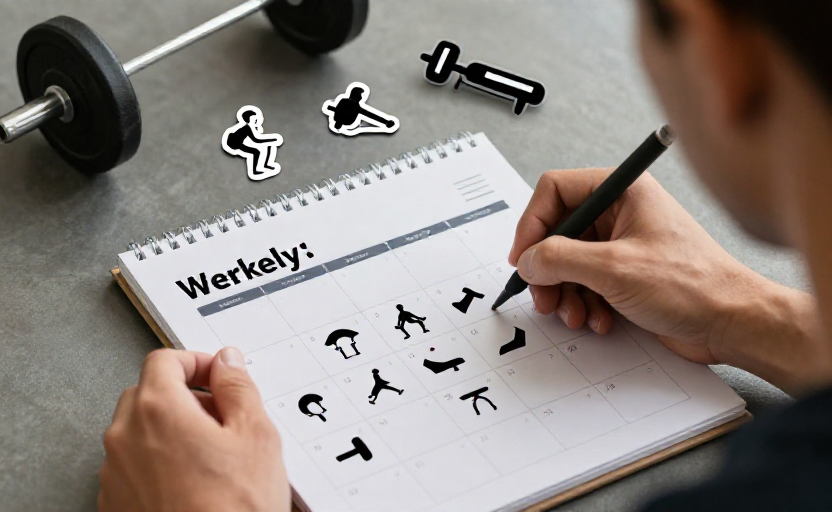
Here’s how these principles translate into practical weekly layouts. Think of these as templates, not commandments.
The Upper/Lower Split (4 Days)
Perhaps the most widely recommended structure for intermediate lifters. It offers a clear, balanced rhythm.
- Day 1: Lower Body (Squat Focus) – Back squats, followed by a hinge pattern like Romanian deadlifts or leg presses, then accessory work.
- Day 2: Upper Body (Press Focus) – Bench press or overhead press, followed by a horizontal or vertical pull, then accessory work.
- Day 3: Rest or Active Recovery
- Day 4: Lower Body (Deadlift Focus) – Conventional or trap bar deadlifts, followed by a squat variation like front squats or lunges.
- Day 5: Upper Body (Pull Focus) – Weighted pull-ups or rows, followed by a press variation, then accessory work.
- Days 6 & 7: Rest
This split neatly separates the two most taxing lifts (squat and deadlift) by several days, allows for twice-weekly frequency on upper and lower patterns, and fits a standard workweek.
The Full Body Split (3 Days)
Ideal for those with limited time, beginners building skill, or anyone prioritizing recovery. Every session hits the entire body, but the primary focus rotates.
A sample week might look like:
- Monday: Squat (primary), Bench Press, Row
- Wednesday: Deadlift (primary), Overhead Press, Pull-up/Lat Pulldown
- Friday: Squat Variation (primary, e.g., front squat), Bench Variation (e.g., incline), Row Variation
The key here is modulating intensity. You wouldn't go for a max-effort deadlift and a max-effort squat in the same session. One lift is prioritized with higher intensity or volume, while the others are trained with moderate loads.
The Push/Pull/Legs (PPL) Split (6 Days)
A high-frequency approach for the more advanced or time-rich lifter. It allows extreme focus on a movement pattern per session.
- Push Days: All pressing movements (bench, overhead, triceps).
- Pull Days: All pulling movements (rows, pull-ups, deadlifts, biceps).
- Legs Days: Squats, hinges, and leg accessory work.
Coaches often caution that a 6-day PPL can be a recipe for overtraining if not managed carefully. It’s critical to auto-regulate—if you're drained, turning two days into one rest day is wise. This split also requires you to decide where to place the deadlift: on pull day (where it fits mechanically but adds huge fatigue) or on leg day (which can make that session brutal).
The Non-Negotiable Rules Coaches Emphasize
Beyond the calendar, coaches stress these universal guidelines.
Separate Squat and Deadlift Intensity. This is the golden rule. Both are supremely taxing on the lower back and central nervous system. If you have a heavy squat day, your deadlift work later in the week should be lighter, focused on technique, or using a variation like a deficit deadlift or rack pull. Never program max attempts on both in a 72-hour window.
Balance Your Push and Pull. For every pressing movement (a push), you should be doing at least one pulling movement. This maintains shoulder health and postural balance. A simple check: if you do 15 sets of chest and shoulder presses in a week, aim for at least 15 sets of rows, pull-ups, and face pulls.
Listen to Your Body, Not Just the Calendar. A plan written on Sunday is a proposal, not a contract. If you slept poorly, are overly sore, or feel run down, it’s smarter to turn a heavy day into a technique-focused, lighter day. Coaches value consistency over blindly hitting arbitrary numbers on a pre-set day.
Programs don't get you stronger. Recovering from the program does.
How to Know If Your Structure Is Working
Signs of a good weekly structure include steady progress in your main lifts over weeks and months, energy and enthusiasm for your sessions, and the absence of nagging, chronic aches (acute muscle soreness is fine; joint pain is not).
Red flags that your structure needs tweaking include perpetual fatigue, stalled lifts for more than a few weeks, trouble sleeping, or dreading your training. Often, the fix is as simple as reducing the intensity on one of your compound days, inserting an extra rest day, or switching a lift to a less stressful variation for a few weeks.
Ultimately, the best weekly structure is the one you can adhere to consistently, that makes you stronger without burning you out. It should feel challenging yet sustainable—a rhythm you can move to for the long haul, building strength one thoughtful week at a time.