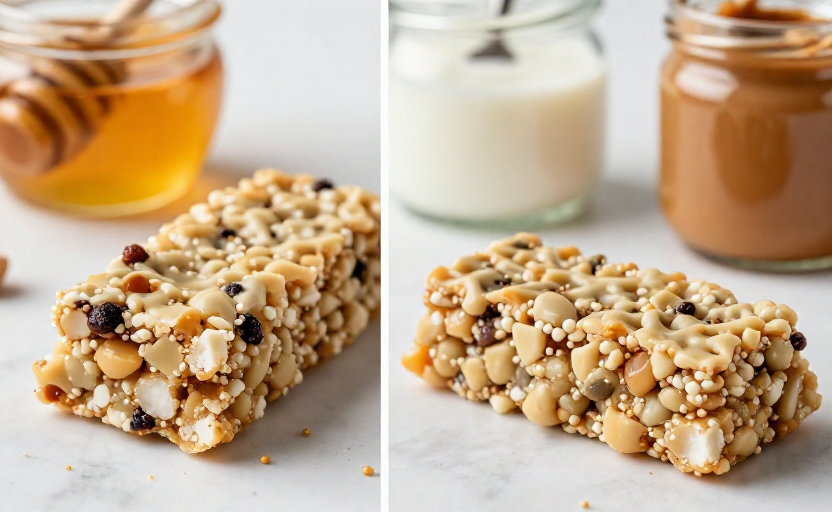
You’ve measured your oats, scooped your protein powder, and stirred in your favorite nut butter with care. The mixture looks perfect in the bowl, promising a batch of chewy, satisfying homemade protein bars. But after they’ve set and you cut into them, they crumble into a dry, messy heap. That frustrating texture—more like granola than a grab-and-go bar—is a common kitchen letdown. The culprit usually isn't a lack of effort, but a simple, overlooked mistake in the binding process.
Getting that ideal texture—firm enough to hold together, yet soft enough to enjoy—comes down to understanding how the wet and dry ingredients interact. It’s a balance, and one specific error throws it off more than any other.
Why Do Homemade Protein Bars Fall Apart?
At its core, a protein bar is a held-together system. Dry ingredients like protein powder, oats, and seeds provide structure and nutrition, but they’re inherently absorbent and crumbly. The liquid or wet ingredients—nut butters, syrups, purees—are the glue. The problem arises when there isn’t enough of that “glue,” or when the glue you’re using isn’t effective enough to coat and bind all the dry particles.
Think of it like making a sandcastle. Dry sand just falls through your fingers. Add the right amount of water, and it holds a shape. In your protein bars, the wet ingredients are that essential water.
The Most Common Binding Mistake
So, what’s the specific error? It’s using a binding ingredient that’s too thick or not sticky enough for the dry mix you’ve created.
Many recipes call for a base of nut butter and a liquid sweetener like honey or maple syrup. The mistake happens when you use a nut butter that’s overly dry or stiff (especially if it’s natural and the oil has separated and hasn’t been fully reincorporated), or when you don’t use enough of the liquid sweetener relative to the absorbency of your dry ingredients. Protein powder, in particular, is a notorious moisture sponge. If your nut butter is stiff and your syrup measure is scant, you simply don’t have enough viscous liquid to create a cohesive paste.
The mixture should resemble a very thick, slightly sticky cookie dough before pressing it into the pan. If it looks more like crumbly streusel, it won’t magically bind in the fridge.
How to Fix and Prevent Crumbly Bars
Thankfully, this is an easy problem to solve, both before you mix and as a rescue mission if your mixture is already too dry.
1. Choose Your Binders Wisely
Not all wet ingredients bind equally. For maximum hold, you need ingredients with sticky, viscous, or gelling properties.
- Sticky Liquids: Honey, brown rice syrup, and maple syrup are excellent. Brown rice syrup is less sweet but creates a particularly firm, chewy bind.
- Creamy Fats: Use well-stirred, drippy nut or seed butter. If yours is rock-solid, gently warm it in the microwave for 10-15 seconds to make it pourable.
- Fruit Purees: Unsweetened applesauce, mashed banana, or date paste add moisture and mild binding power, though they often need a companion sticky syrup for full structure.
2. Master the Ratio and Mixing Technique
The goal is complete coating. Here’s a reliable method:
- Whisk all your dry ingredients together in one bowl (protein powder, oat flour, spices).
- Whisk all your wet ingredients together in another bowl (nut butter, syrup, vanilla). Warm them slightly if needed to combine smoothly.
- Pour the wet mixture over the dry. Use a sturdy spatula to fold and press, ensuring every bit of powder is moistened. It will be thick.
- Let the mixture sit for 5-10 minutes. This allows the protein powder and oats to absorb the moisture, which helps you see the final texture. If it’s still crumbly, it’s time to adjust.
3. The Simple Rescue Recipe
If your mixture is too dry, don’t just add more liquid sweetener by the spoonful—you can over-sweeten it. Instead, create a “binding booster.” Mix equal parts (say, one tablespoon each) of your nut butter and your liquid sweetener. Microwave for 15 seconds to thin it, then stir it into your main bowl. This adds binding power without drastically altering the flavor profile. Repeat with small additions until the mixture holds together when pinched.
Additional Tips for Perfect Bars
Binding is the main event, but a few supporting actors help ensure success.
Press, Don’t Pat: When transferring your mix to the pan, use the bottom of a flat, heavy glass or measuring cup to press it down with firm, even pressure. This compacts the ingredients, eliminating air pockets that lead to crumbling.
Chill Thoroughly: Always let your bars set in the refrigerator for at least 3-4 hours, or preferably overnight. This gives the binders time to fully set and firm up.
Cut with Care: Use a sharp knife, and for extra-clean cuts, you can briefly run it under hot water and wipe it dry before slicing.
Making homemade protein bars is a rewarding way to control what fuels your body. That crumbly texture is just a small hurdle. By focusing on the balance between your dry ingredients and your sticky binders, you can move from a frustrating pile of crumbs to a perfect, portable bar that holds together bite after satisfying bite.