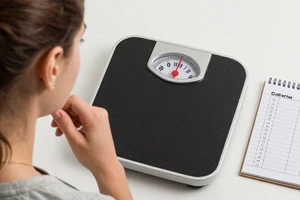

If you have been working toward a weight goal for a while, you have probably hit that frustrating stretch where the scale refuses to budge. A plateau. For many people, the first instinct is to tighten the reins even further—skip a snack, shrink portions, or add an extra round of cardio. It feels logical: if progress stalled, just do more of what was working before. But cutting calories even lower during a plateau is a common mistake, and mounting evidence suggests it can backfire.
When your body seems to stop responding to your usual routine, the urge to restrict harder is understandable. Yet experts in nutrition and metabolic health warn that this approach often makes things worse. Instead of breaking through the plateau, aggressive calorie cutting can trigger metabolic adaptations that make long-term fat loss even more difficult. Let's unpack why the “eat less, push harder” reflex is a myth worth leaving behind.
What happens when you cut calories during a plateau
Your body is not a simple calculator. It is a complex, adaptive system that interprets a large calorie deficit as a signal that food is scarce. When you abruptly drop calories lower while already in a prolonged deficit, your metabolism responds by downshifting. Basal metabolic rate drops, non-exercise movement declines unconsciously, and the body becomes more efficient at storing energy.
This is often called “metabolic adaptation” or “adaptive thermogenesis.” Research shows that after sustained weight loss, daily energy expenditure can be significantly lower than expected for a person’s new size. Cutting even more calories at this point only reinforces the slowdown. Instead of losing fat at the same pace, many people find that weight loss grinds to a halt—or that they feel exhausted, cold, and irritable with little progress to show for it.
In practical terms, a plateau is rarely a sign that you need to starve yourself. More often, it is a sign that your current calorie level has become too low for your body to function optimally.
The role of hormones and hunger
Severe calorie restriction also disrupts the hormonal signals that regulate appetite and satiety. Levels of ghrelin (the hunger hormone) rise, while leptin (the fullness hormone) drops. Your brain begins to prioritize eating over other processes, making willpower harder to sustain. This biological pushback is not a failure of character—it is a survival mechanism.
When you cut calories further during a plateau, you amplify these hormonal changes. The result is often a cycle of restriction followed by intense cravings, which can lead to overeating and guilt. Many people misinterpret this as a lack of discipline, but it is actually the body’s natural response to a perceived famine.
Take note: A plateau may last a few days or several weeks. Trying to force the scale to move by slashing calories often prolongs the standoff instead of resolving it.
Sustainable strategies for breaking a plateau
Letting go of the “cut more” mindset opens the door to smarter, more effective approaches. The goal is not to eat less—it is to support your body’s metabolism while creating a small, consistent energy gap.
Reassess your energy needs
Your calorie requirements change as you lose weight. A smaller body needs fewer calories to maintain itself, but that does not mean you should keep cutting until you hit an unsustainable low. Instead, recalculate your maintenance calories at your current weight and aim for a modest deficit—typically 200 to 300 calories below maintenance, not lower.
Prioritize protein and fiber
When calories are tight, what you eat matters more than ever. High-protein meals support muscle preservation and increase the thermic effect of food (the energy used to digest nutrients). Fiber-rich vegetables and whole grains improve satiety and steady blood sugar. Together, they help you feel satisfied without needing to reduce portions drastically.
Review your movement routine
Instead of simply adding more workouts, consider varying the type of exercise you do. Increasing non-exercise activity—like walking more during the day, taking stairs, or doing household chores—can boost daily energy expenditure without the stress of extra cardio. Strength training and Progressive overload are especially helpful during plateaus because building or preserving muscle tissue supports a higher resting metabolism.
Check your sleep and stress levels
Poor sleep and chronic stress raise cortisol, a hormone that can encourage fat storage and make weight loss harder. If you are sleeping poorly or feeling constantly overwhelmed, that alone could be enough to stall progress. Addressing these factors can sometimes break a plateau more effectively than any dietary tweak.
A mindset shift: plateaus are not failures
Perhaps the most important change is how you talk to yourself about the plateau. Weight loss is rarely linear. Periods of slower progress are normal and may even be a sign that your body is adjusting to a new set point. Rushing the process by cutting calories further can erode muscle, slow your metabolism, and undermine your relationship with food.
Rather than seeing a plateau as a wall, think of it as a checkpoint. It is a signal to examine your approach, not to tighten the screws. Many people find that after a few weeks of eating at a maintenance level (the so-called “diet break”), their weight begins to drop again when they return to a moderate deficit—because their metabolism has had time to recover.
The bottom line
The myth that cutting more calories is the answer to a plateau persists because it seems so straightforward. But the human body is not a simple math problem. Pushing yourself into a deeper deficit during a stall usually backfires, slowing metabolism, worsening cravings, and increasing the risk of rebound weight gain. A more effective path is to approach the plateau with patience, pay attention to non-calorie variables like sleep and exercise variety, and trust that sustainable progress comes from consistency, not severity.