If you have oily or acne-prone skin, your skincare journey often feels like a search for the right tools. Two ingredients consistently rise to the top of the list: salicylic acid and niacinamide. Both are celebrated for their ability to manage oil and improve skin clarity, but they work in fundamentally different ways. Understanding these differences is the key to using them effectively, either alone or together, to build a routine that works for you.
What is salicylic acid and how does it work?
Salicylic acid is a beta-hydroxy acid (BHA) known for its deep-cleaning, exfoliating power. Unlike surface-level exfoliants, its oil-soluble nature allows it to penetrate into the pores. Think of it as a targeted cleanser for the pore lining itself. It works by dissolving the mix of sebum (oil) and dead skin cells that can clog pores, leading to blackheads and whiteheads. By keeping pores clear, it prevents the formation of new blemishes and can help reduce their appearance over time.
Salicylic acid is your go-to for immediate, targeted action on existing clogs and breakouts.
You'll commonly find it in cleansers, toners, spot treatments, and leave-on serums. Its strength is in addressing the visible signs of congestion—those bumps, blackheads, and inflamed pimples. It provides a more immediate, physical clearing of the pathways that lead to breakouts.
What is niacinamide and how does it work?
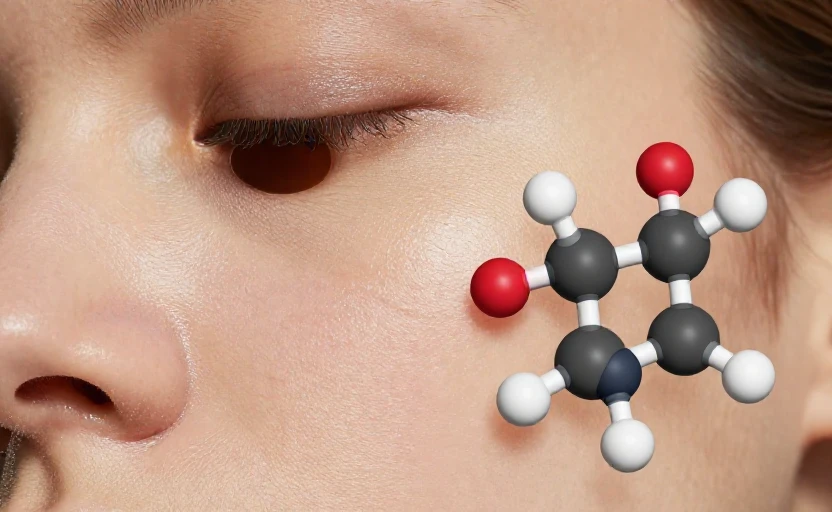
Niacinamide, a form of vitamin B3, operates on a broader, more systemic level within the skin. It’s less of a spot-fighter and more of a multi-tasking regulator. For oily skin, its primary benefit is its ability to help regulate sebum production. It doesn’t strip the skin but can signal to your oil glands to produce a more balanced amount of oil over time.
Beyond oil control, niacinamide strengthens the skin's barrier function, improves hydration, reduces redness, and can minimize the appearance of enlarged pores by improving skin elasticity. It works to calm and fortify the skin, making it more resilient. You’ll find it in serums, moisturizers, and toners, often marketed for its soothing and balancing properties.
Key differences: A direct comparison
While both aim for clearer skin, their approaches are distinct. Salicylic acid is an exfoliant that clears out what’s already there. Niacinamide is a regulator that helps manage future oil production and improves skin health. A simple analogy: if your pore is a clogged drain, salicylic acid is the drain cleaner that breaks up the clog, while niacinamide is the maintenance plan that helps prevent future blockages.
Salicylic acid can sometimes be drying or irritating, especially when first introduced or if overused. Niacinamide is generally well-tolerated by most skin types, including sensitive skin, and is known for its calming effects. One tackles the symptom (the clog), the other works on a contributing cause (excess oil and a weakened barrier).
Can you use salicylic acid and niacinamide together?
Absolutely. In fact, they can be a highly complementary pair in a skincare routine. Because they work through different mechanisms, they don’t cancel each other out and can address oily skin concerns from multiple angles. The key is application.
How to layer them effectively
A common and effective approach is to use salicylic acid as a cleanser or treatment in the evening to clear pores, followed by a niacinamide serum or moisturizer to soothe, hydrate, and regulate. This allows each ingredient to do its job without interference.
If applying leave-on products, a good rule of thumb is to apply the thinner, water-based product first. Often, this is a niacinamide serum. After it absorbs, you can follow with a salicylic acid treatment product if needed, focusing on oily zones. Listen to your skin; if using both leave-on formulas causes irritation, alternate them on different nights or use the salicylic acid product less frequently.
Start slowly when combining active ingredients. Introduce one at a time to see how your skin responds.
Building a routine for oily skin
Your goal is balance: effective cleansing and exfoliation without compromising your skin’s barrier. Here’s a simple framework.
- Morning: Use a gentle, non-stripping cleanser. Apply a niacinamide serum to help regulate oil throughout the day. Follow with a lightweight, non-comedogenic moisturizer (yes, even oily skin needs hydration) and always finish with sunscreen.
- Evening: Double cleanse to remove sunscreen and makeup. Consider a salicylic acid cleanser 2-3 times a week, or a gentle cleanser on other nights. Apply your niacinamide serum. On nights you don't use a salicylic acid cleanser, you might use a salicylic acid treatment serum or toner on problem areas. Finish with a moisturizer.
Remember, consistency trumps aggression. Using salicylic acid too often can strip your skin, potentially triggering more oil production as a rebound effect. Niacinamide’s benefits build with consistent use over weeks.
What to look for in products
For salicylic acid, effective concentrations in over-the-counter products typically range from 0.5% to 2%. Start at the lower end to assess tolerance. For niacinamide, research shows benefits at concentrations between 2% and 5%; many effective serums use 5% or 10%. Higher percentages aren’t necessarily better and may cause irritation for some.
Look for formulas that are fragrance-free and designed for oily or acne-prone skin. Simplicity is often best—a product focused on delivering its key active effectively without a long list of potential irritants.
Navigating oily skin care is about choosing the right tools for the job. Salicylic acid is your precise implement for clearing blockages, while niacinamide is your foundational tool for long-term balance and resilience. Used wisely, either alone or in tandem, they can help you achieve a clearer, calmer, and more comfortable complexion.