
If you've ever hit the gym and felt a sharp pinch in your hip, a tug in your lower back, or a sense that your squat just isn't going deeper no matter how hard you try, you might have wondered: Should I push through this or switch up my workout? The honest answer is that sometimes the best way to get a better squat is to stop squatting—at least for a while, and replace it with a targeted mobility drill.
This isn't about making excuses to skip hard work. It's about understanding that squats are a complex, multi-joint movement that demands a certain range of motion and stability. When your body isn't ready for that demand, grinding through reps can reinforce bad patterns and lead to injury. Knowing when to swap a squat for a mobility drill is a skill that smart lifters develop. Here's expert-backed guidance on making that call.
What does a mobility drill actually do?
Mobility is more than just stretching. It's the ability to move a joint through its full range of motion with control. A mobility drill targets the specific restrictions—tight muscles, stiff joints, or poor neuromuscular control—that limit a squat. For example, a deep squat requires at least 120 degrees of knee flexion and about 40 degrees of ankle dorsiflexion, along with adequate hip flexion and thoracic spine extension. If any one of these is lacking, your squat form will compensate, often by rounding your lower back or shifting your weight forward.
Mobility drills like a couch stretch for hip flexors, a downward dog for ankle mobility, or a half-kneeling hip capsule opener are designed to address those gaps. They are not a substitute for strength work, but they are a prerequisite for safe, effective squatting.
Four clear signs it's time to swap
You don't need a doctor to tell you that something feels off. There are four practical cues that indicate you should swap at least one squat set for a mobility drill:
- Your lower back hurts during the squat. If you feel a dull ache or sharp pain in your lumbar spine as you descend, your hips or ankles aren't opening up enough, and your back is taking the load. That's a mobility issue, not a strength issue.
- Your heels lift off the ground. If your heels pop up as you go down, your ankle dorsiflexion is limited. Without that range, you'll pitch forward, which stresses the knees and lower back.
- Your knees cave inward. This is often a sign of weak or inhibited glutes, but tight hips can also force your knees into a valgus collapse. A hip mobility drill can help restore the neutral tracking your squat needs.
- You hit a hard stop before parallel. If you simply cannot squat to parallel depth without feeling a bone-on-bone block or feeling like you're going to fall backward, your hip structure or soft tissue is limiting you. Forcing depth here will not help you adapt—it'll likely lead to impingement.
A practical way to decide: the warm-up test
One of the simplest expert-backed methods is to perform a warm-up set of bodyweight squats or goblet squats at the start of your session. Do five reps slowly. If you feel one of the above issues (especially lower back pain or heel lift), do not load the bar. Instead, spend 5–7 minutes on a mobility drill specific to that limitation. For example, if your heels are lifting, try a calf stretch with a bent knee or a banded ankle mobilization. If your back hurts, try a couch stretch or a child's pose with a lateral shift.
After the drill, repeat the squat test. If the pain or limitation improves, you can likely squat safely with reduced weight. If it doesn't improve, it may be best to skip squats that day and focus on drills that keep you moving well. This is called a symptom-modulation approach, and it's used by physical therapists to decide whether a movement is safe to continue.
“If the movement hurts and it doesn't get better after a mobility drill, don't push through. Find an alternate exercise that builds strength without reinforcing the compensation.” — Dr. John Rusin, performance coach
One-for-one substitution: what to do instead
So you've decided to replace a squat with a mobility drill—now what? Don't just stand around. Treat the drill with the same structure as a strength set. Pick a specific exercise, hold it for 1–2 minutes per side, and focus on deep, relaxed breathing. Good options include:
- Deep squat hold with elbow pushes: Sit in a deep bodyweight squat, use your elbows to push your knees outward, hold for one minute.
- 90/90 hip shift: Sits you on the floor with one leg in front at 90 degrees, one leg behind at 90 degrees. Shift gently side to side to open the hips.
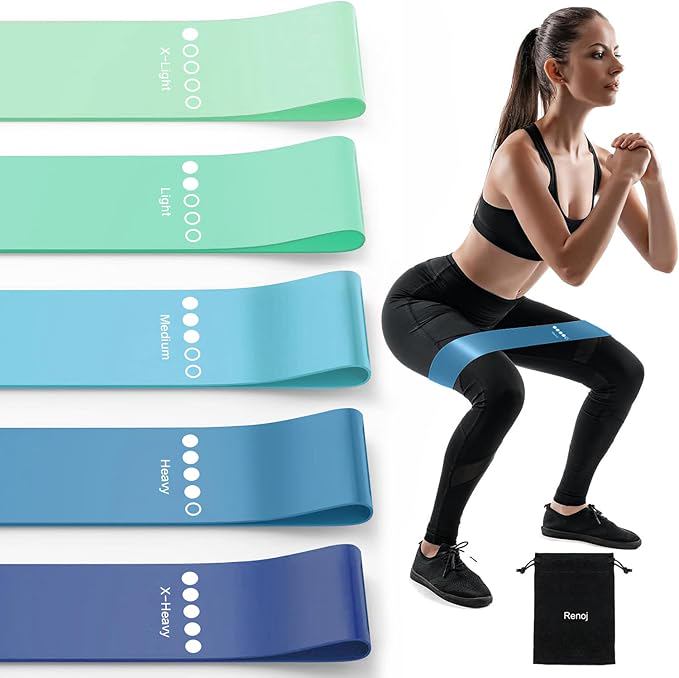
- Band ankle mobilization: Loop a resistance band around your ankle just above the joint, then lunge forward while keeping your heel down.
After the drill, you can return to your workout. If the main barbell squat is still limited, consider switching to a front squat, goblet squat, or leg press—these variations are more forgiving on mobility restrictions and can maintain your leg strength while you work on your range of motion.
When to keep squatting (and just refine it)
There is a time to work through discomfort. Muscle burn, tension, and fatigue are normal. If you feel a stretch in your hips or calves as you descend, but it doesn't hurt, you can likely squat safely. Focus on a slightly wider stance, slower tempo, or shorter range of motion. Many lifters confuse a lack of flexibility with a dangerous restriction. A genuine mobility restriction feels like a hard block or sharp pinching, not a deep stretch.
You also do not need to replace a squat every time you feel a little stiff. If you had a poor night of sleep or sat for eight hours at a desk, your body may need a few warm-up sets to open up. Stick with your squats but drop the weight by 20–30% for the first two sets. If the movement improves, proceed as normal.
Common mistakes to avoid
Even experienced lifters make these errors when deciding whether to replace a squat with a mobility drill:
- Doing drills as an afterthought. A 10-second calf stretch before your heaviest set does not fix anything. Spend real time—two minutes per side—on the specific limitation.
- Thinking mobility work is only for beginners. Advanced lifters often have the most restrictions because they have honed a specific movement pattern for years. A mobility drill can unlock the next level of depth for an experienced squatter.
- Substituting with a completely unrelated exercise. If you need hip mobility, doing a bicep curl won't help. Choose a drill that directly targets the joint and muscle group that is limiting your squat.
When to see a professional
If you consistently experience sharp pain during squats that does not improve with mobility work, or if you have a history of hip labral tears, lumbar disc issues, or knee meniscus injuries, see a physical therapist or a sports medicine professional. The advice in this article is for general wellness education. Some mobility restrictions are actually structural, and no amount of stretching can safely change your bone shape. In that case, your professional can help you find squat variations or alternative exercises that keep you strong without pain.
Learning when to replace a squat with a mobility drill is a skill that protects your body and improves your lifting long-term. It's not about doing less; it's about being smarter with your training time.