You’ve dialed in your form, chosen your weight, and you’re ready to lift. But as you brace for a heavy squat or deadlift, a simple question can stop you cold: when exactly am I supposed to breathe? It’s not just an afterthought. How you manage your breath during compound exercises is a fundamental skill, as crucial as proper grip or stance. It stabilizes your spine, maximizes your power, and keeps you safe under load. This guide cuts through the confusion with clear, practical principles you can apply in your next session.
Think of your breath not as a passive reflex, but as an active tool. When you breathe with intention during movements like squats, presses, and pulls, you create intra-abdominal pressure. This pressure acts like a natural weight belt, bracing your core and supporting your spine from the inside out. It’s the difference between feeling solid and strong versus wobbly and vulnerable.
The Core Principle: Bracing, Not Just Breathing
Before we talk about the timing of inhales and exhales, we need to understand the goal: bracing. Proper breathing for heavy compound lifts is about creating tension throughout your torso. It’s more than sucking in your stomach; it’s a 360-degree expansion.
Imagine someone is about to gently poke you in the stomach. Your instinctive reaction—tightening your abs and preparing for the touch—is very close to the brace you need for lifting.
To practice this, take a deep breath into your belly, not just your chest. Feel your ribs expand to the sides and your lower back. Now, without exhaling, try to tighten all the muscles around your midsection—your abs, obliques, and even the muscles of your lower back. You should feel solid and full of pressure. This is the braced position you’ll maintain during the hardest part of your lift.
The Valsalva Maneuver: Your Built-in Support Belt
What you just practiced leads us to the Valsalva maneuver. It sounds technical, but you’ve done it naturally when lifting something heavy off the floor or pushing a stuck car. It involves taking a breath, closing your airway (by keeping your glottis shut, not by pinching your nose), and gently bearing down against that closed system while your muscles contract.
This action dramatically increases intra-abdominal pressure, stabilizing your spine. For healthy individuals performing heavy, sub-maximal lifts, it is a safe and essential technique. The key is the gentle bearing down; you’re not straining to the point of seeing stars. The pressure should be contained and supportive.
Use the Valsalva for the rep, not the entire set. Hold the brace and breath for the concentric and eccentric phases, then exhale and reset at the top or between reps.
Breathing Patterns for Key Lifts
With bracing and the Valsalva in mind, let’s apply this to specific movements. The golden rule is generally to inhale and brace before the eccentric (lowering) phase, and exhale after completing the concentric (lifting) phase.
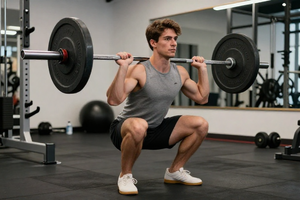
The Squat
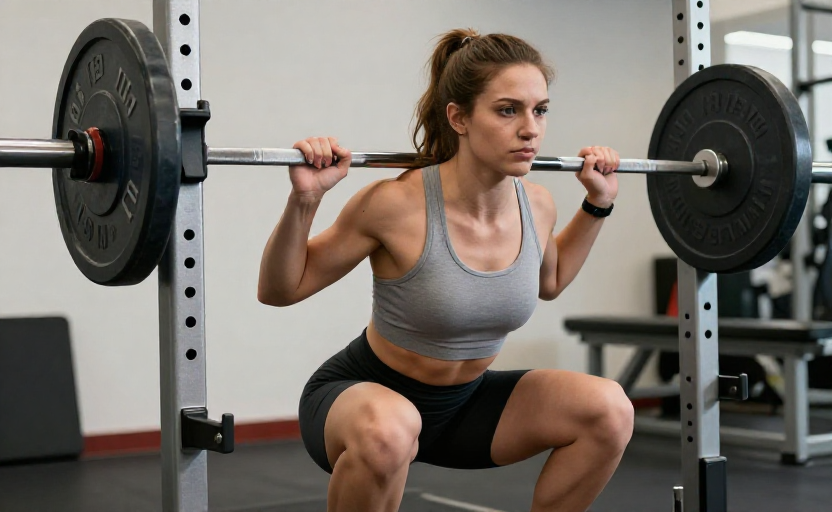
At the top of the movement, take a big breath into your belly and brace your core. Hold that breath and brace as you descend into the hole. Maintain the tension as you drive back up. Once you’ve passed the most challenging part of the ascent (the “sticking point”) and are nearing the top, you can exhale forcefully. Reset your breath at the top for the next rep.
The Deadlift
Before you even initiate the pull, with your hands on the bar and hips set, take your breath and brace. Your spine should be locked into a neutral, supported position by this pressure. Hold the brace as you pull the bar from the floor to a locked-out standing position. Exhale at the top, or if performing multiple reps, exhale and quickly re-brace before the next descent.
The Bench Press
As you unrack the bar and position it over your chest, take a breath and brace, pulling your shoulder blades back and down. Hold this tight, supported position as you lower the bar to your chest. Drive the bar back up, and exhale as you lock out your elbows. Re-brace before the next descent.
The Overhead Press
With the bar at your collarbone, take a breath and create full-body tension—brace your core, squeeze your glutes, and keep your ribs down. Press the bar overhead, exhaling only after you’ve fully locked it out. The brace is critical here to protect your lower back from overarching.
What to Avoid: Common Breathing Mistakes
Fixing poor breathing habits is often the fastest way to improve lifting performance and comfort.
- Exhaling Too Early: Letting all your air out at the bottom of a squat or as you initiate a deadlift pull instantly deflates your internal support system. Wait until you’re past the hardest part of the lift.
- Shallow Chest Breathing: Quick, upper-chest breaths don’t create the necessary intra-abdominal pressure. Practice diaphragmatic breathing to engage your full torso.
- Holding Your Breath for Multiple Reps: The Valsalva is for a single repetition. Holding one breath for 3, 5, or 10 reps will spike your blood pressure and can make you lightheaded. Breathe and re-brace for every rep during heavy sets.
- Forgetting to Breathe Altogether: Some lifters, especially when fatigued, simply grind through a rep while holding their breath from the start. This is a recipe for lost power and increased risk.
Breathing for Endurance and Lighter Sets
For higher-rep sets, metabolic conditioning, or bodyweight exercises, a rhythmic breathing pattern is more sustainable. The principle of bracing still applies, but you’ll be exhaling on the exertion. A simple pattern like inhale on the eccentric, exhale on the concentric works well. For a push-up, that means inhaling as you lower your chest and exhaling as you push back up. This keeps oxygen flowing and helps you maintain a steady pace.
Mastering your breath transforms lifting from a series of motions into a coordinated, powerful practice. It connects your mind to the muscle action, ensuring you move with control and purpose. Start by practicing the bracing technique without weight. Then, apply the breath patterns with light loads, focusing on the rhythm. In time, it will become second nature—the silent, steady partner to every strong rep you perform.