If you’re a teenager looking in the mirror at a new breakout, you’re far from alone. Acne is a near-universal experience during adolescence, but that doesn’t make it any less frustrating or confusing. Understanding what’s happening beneath the surface can shift your perspective from one of blame to one of biology. It’s not about poor hygiene or eating the wrong snack; it’s about your skin going through a profound, hormone-driven transformation.
This change is a normal part of development. Your teenage skin is fundamentally different from the skin you had as a child, and it operates under new rules. Let’s walk through the practical science of why this happens, what makes teen skin unique, and how those factors converge to create acne.
What Makes Teenage Skin So Different?
Before puberty, your skin’s primary job is to act as a protective barrier. Sebaceous glands—tiny factories that produce oil, or sebum—are quiet and small. With the onset of adolescence, hormones called androgens send a signal to these glands to wake up and start producing. This isn’t a malfunction; it’s a designed part of maturation. Sebum helps keep skin supple and protected.
At the same time, the skin’s renewal process kicks into a higher gear. Skin cells are constantly being shed and replaced. In teenage skin, this turnover can happen more rapidly, but the shedding process itself can become a bit disorganized. The combination of more oil and faster cell turnover sets the stage for the main event.
Acne isn't a sign of dirty skin. It's a sign of skin that's responding actively to hormonal signals.
The Acne Process: A Chain Reaction Under the Skin
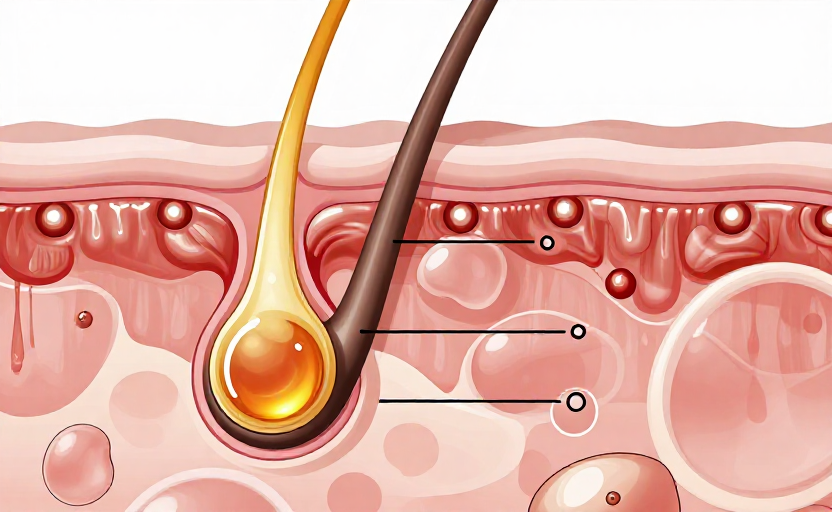
Acne forms in a hair follicle, which is a tiny tube that contains a hair and is connected to an oil gland. Think of it as a small canal. When everything flows smoothly, sebum travels up this canal, reaches the skin’s surface, and spreads out to moisturize. When acne develops, that canal gets blocked.
The process usually follows a few key steps:
- Step 1: The Plug Forms. Excess sebum mixes with sticky, shed skin cells that haven’t properly detached. This mixture creates a soft plug that blocks the follicle’s opening.
- Step 2: Bacteria Join the Mix. A bacteria called Cutibacterium acnes (C. acnes) lives harmlessly on everyone’s skin. It feeds on sebum. Inside the blocked, oil-rich follicle, these bacteria can multiply more than usual.
- Step 3: Inflammation Erupts. As bacteria multiply, they produce substances that irritate the lining of the follicle. Your body’s immune system responds by sending inflammatory cells to the area—resulting in the red, swollen, and often tender bumps we recognize as pimples.
Different Types of Acne Lesions
Not all breakouts look the same, and the type depends on where in the process the blockage occurs.
- Comedones (Blackheads & Whiteheads): These are non-inflammatory blockages. A whitehead is a plugged follicle that is closed at the surface. A blackhead is a plug that is open to the air; the sebum and cells oxidize and darken—it’s not dirt.
- Papules and Pustules: These are inflammatory acne. Papules are small, red, tender bumps. Pustules are papules with a visible center of pus (a mixture of bacteria, white blood cells, and dead skin cells).
- Nodules and Cysts: These are severe forms. They occur when the inflammatory reaction is deep and intense, causing larger, painful lumps beneath the skin. These carry a higher risk of scarring.
Beyond Oil: Other Factors That Influence Teen Acne
While hormones are the primary driver, several other elements can influence the severity and frequency of breakouts.
Genetics: If one or both of your parents had significant acne, you’re more likely to experience it as well. This genetic link often relates to how your skin’s oil glands respond to hormones.
Stress: Stress triggers the release of cortisol, a hormone that can, in turn, stimulate oil production. The cycle of stress about acne potentially leading to more acne is very real.
Skincare and Cosmetics: Using products that are overly harsh can strip the skin, triggering it to produce even more oil. Heavy, oily creams or makeup can also contribute to pore-clogging. Look for terms like “non-comedogenic” or “oil-free.”
Friction and Pressure: Constant rubbing from things like helmet straps, tight collars, or frequently resting your chin on your hand can irritate skin and worsen acne in those areas, sometimes called “acne mechanica.”
What Doesn’t Cause Acne (Common Myths)
It’s just as important to clear up what doesn’t cause acne. Blaming yourself for these factors only adds unnecessary stress.
- Chocolate and Greasy Food: No single food is a proven universal trigger. For some individuals, certain diets (like those high in refined sugars and dairy) might play a minor role in inflammation, but pizza and chocolate are not direct causes.
- Poor Hygiene: Acne is not caused by surface dirt. In fact, aggressive scrubbing can damage the skin’s barrier and worsen inflammation.
- Sexual Activity (or Lack Thereof): This is a persistent myth with no basis in science. Acne is related to hormonal changes of puberty, not sexual behavior.
A Gentle Framework for Managing Teenage Skin
Managing acne is about consistency and gentleness, not attack. The goal is to support your skin’s health while calming the processes that lead to breakouts.
Cleanse Gently: Wash your face no more than twice a day with a mild, non-abrasive cleanser and lukewarm water. Avoid scrubbing with washcloths or gritty scrubs.
Moisturize: It seems counterintuitive, but even oily skin needs hydration. A light, oil-free moisturizer helps maintain a healthy skin barrier and can prevent overproduction of oil.
Use Targeted Treatments: Over-the-counter products with ingredients like salicylic acid (helps unclog pores) or benzoyl peroxide (kills bacteria and reduces inflammation) can be effective for mild acne. Start slowly, applying every other day to see how your skin tolerates it.
Be Patient and Consistent: It takes 4 to 8 weeks of consistent use to see results from a new product. Switching routines too quickly can prevent anything from working and irritate your skin.
Hands Off: As tempting as it is, picking or popping pimples pushes bacteria and inflammation deeper, dramatically increasing the risk of scarring and prolonging healing.
If your acne is causing significant distress, is painful, or if over-the-counter methods aren’t helping after a couple of months, it’s a very good reason to speak with a dermatologist or your doctor. They can provide guidance and, if needed, prescription treatments that target the acne cycle more effectively.
Remember, your skin is changing because you are changing. Acne is a common, temporary chapter in that story for most people. With a bit of knowledge and a lot of patience, you can navigate it with more confidence and less frustration.