After a breakout finally clears, the lingering marks it leaves behind can feel like a final, frustrating insult. These post-inflammatory hyperpigmentation (PIH) spots—the flat, discolored areas that range from pink to red to brown or purple—are a common part of the skin's healing process. While topical treatments and sun protection are your first line of defense, what you eat can play a supportive, nourishing role in helping your skin recover its even tone from the inside out.
We spoke with dietitians to understand which foods offer the specific nutrients that support skin repair and fading. The goal isn't a magical cure, but rather a steady, foundational approach to giving your skin the building blocks it needs to heal itself more efficiently.
How food supports skin healing and fading
Post-acne marks are essentially areas where inflammation has disrupted your skin's melanin production. To help them fade, you need to support two key processes: reducing ongoing inflammation and encouraging healthy skin cell turnover and repair. Certain vitamins, minerals, and antioxidants directly contribute to these processes, acting as internal allies for your skincare routine.
Think of these foods as foundational support for your skin's natural healing intelligence, not as a replacement for topical care.
Foods to incorporate for clearer skin
Focusing on a nutrient-dense, colorful diet is the best strategy. These five food groups are consistently highlighted by nutrition experts for their skin-supportive properties.
Fatty fish like salmon and sardines
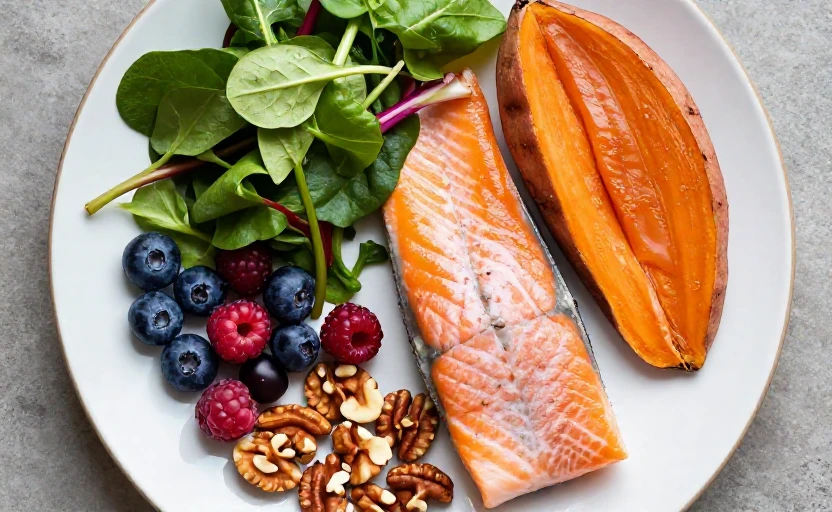
Fatty fish are a premier source of omega-3 fatty acids, specifically EPA and DHA. These are powerful anti-inflammatory agents. Since post-acne marks are, at their core, a sign of past inflammation, consistently eating foods that help manage systemic inflammation can create a more favorable environment for healing. Omega-3s also help maintain the skin's lipid barrier, keeping it hydrated and resilient.
Aim to include a serving of wild-caught salmon, mackerel, sardines, or herring at least twice a week.
Colorful berries and citrus fruits
This category is all about vitamin C and antioxidants. Vitamin C is a critical co-factor for collagen synthesis—the protein that gives skin its structure and plumpness. Supporting collagen production aids in the repair of damaged skin. Perhaps more directly relevant to fading marks, vitamin C is a well-studied tyrosinase inhibitor. Tyrosinase is an enzyme involved in melanin production; gently slowing its activity can help prevent further darkening of existing spots.
Berries (blueberries, strawberries, raspberries) and citrus (oranges, grapefruit, kiwi) are packed with vitamin C and flavonoids, which combat oxidative stress that can worsen inflammation.
Dark leafy greens (spinach, kale, Swiss chard)
Popeye was onto something. Dark leafy greens are a multivitamin for your skin. They are exceptionally rich in vitamin K, folate, and iron, all of which play roles in wound healing and blood vessel health. They're also a good source of vitamin A (as beta-carotene), which supports cell turnover. Faster, healthier turnover means discolored surface skin cells are shed more efficiently, allowing fresher, more evenly toned skin to surface.
Try adding a large handful to smoothies, soups, or scrambles for an easy daily boost.
Nuts and seeds
Sunflower seeds, almonds, and hazelnuts are excellent sources of vitamin E, a fat-soluble antioxidant that works in tandem with vitamin C to protect skin cells from free radical damage. This protective effect supports the overall healing environment. Many nuts and seeds, like pumpkin seeds and cashews, also provide zinc, a mineral crucial for skin regeneration and managing inflammatory responses.
A small handful as a snack or a tablespoon of seeds sprinkled on a salad or yogurt is a perfect portion.
Yellow and orange vegetables
Sweet potatoes, carrots, and red bell peppers owe their vibrant hues to beta-carotene, which your body converts to vitamin A. This vitamin is essential for the growth and differentiation of skin cells. By promoting healthy cell turnover, it helps your skin shed pigmented cells left behind after inflammation. These vegetables also add to your overall antioxidant intake, further calming the inflammatory landscape.
What to limit while your skin heals
Just as some foods support healing, others can subtly undermine it. Dietitians often note that diets high in refined sugars and ultra-processed foods can promote inflammation and cause blood sugar spikes, which may exacerbate skin issues for some people. This doesn't mean you need to eliminate anything completely, but being mindful of balance is wise. Prioritizing the nutrient-rich foods listed above will naturally crowd out less supportive choices.
The essential partner: Sun protection
No discussion about fading dark spots is complete without emphasizing sunscreen. UV exposure is the single biggest driver of increased melanin production. Applying a broad-spectrum SPF 30 or higher every single day, rain or shine, is non-negotiable. It prevents new damage and stops existing post-acne marks from darkening, making the work of your diet and skincare far more effective.
Healing takes time and consistency, both on your plate and on your skin. By feeding your body these targeted nutrients, you're providing the raw materials for repair, complementing your topical routine for a holistic approach to a more even, radiant complexion.