
You’ve laced up your sneakers and you’re ready to move. But there’s one question that often stops a beginner in their tracks: Should I eat before I exercise? The short answer is yes—especially if you’re aiming for steady energy from start to finish. The wrong snack can leave you feeling sluggish or, worse, send your blood sugar on a roller coaster that ends in a crash mid-set.
The key is to choose foods that provide a slow release of glucose and are gentle on your stomach. Here are five beginner-friendly pre-workout snacks that won't cause an energy crash, plus a few practical tips on timing and portion sizes.
Why some snacks cause an energy crash
Simple sugars and refined carbohydrates hit your bloodstream fast. Think of a sugary sports drink or a candy bar right before a workout. You get a quick spike in energy, but your body releases a surge of insulin to bring your blood sugar down. That rapid drop is the crash: you feel tired, shaky, or lightheaded during your workout. The goal of a good pre-workout snack is to keep blood sugar stable, which is why fiber, protein, and healthy fats are your allies.
1. A banana with a small handful of almonds
A banana is a classic pre-workout choice for good reason. It provides easily digestible carbohydrates and potassium, an electrolyte that supports muscle function. Add a small handful of almonds (about 10 to 12 nuts) for a modest dose of protein, fiber, and healthy fats. This combination releases energy gradually, so you get the immediate fuel from the banana plus a sustained release from the almonds. About 30 to 45 minutes before your workout is ideal.
2. Oatmeal with berries
Oatmeal is a whole grain rich in beta-glucan, a type of soluble fiber that slows digestion and keeps blood sugar steady. Top a half-cup serving (dry measure) with a handful of fresh or frozen berries for extra antioxidants and flavor. The fiber in the oats and the natural sugars from the berries provide a steady fuel source for moderate-intensity strength training or a brisk walk. Keep the portion modest—a large bowl can feel heavy during exercise. Stick with plain oats rather than instant packets that often contain added sugar.
Tip: If you’re sensitive to fiber right before exercise, try eating your oats 60 to 90 minutes before your workout rather than 30 minutes out.
3. Greek yogurt with a drizzle of honey
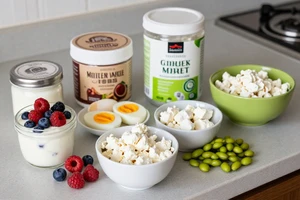
Greek yogurt packs about twice the protein of regular yogurt, and protein helps blunt the rapid rise and fall of blood sugar that simple carbs can cause. Pair a small container (around 150 grams) of plain, unsweetened Greek yogurt with a teaspoon of honey. The honey provides a small, quick carbohydrate source for immediate energy, while the protein and fat from the yogurt sustain that energy. This snack works especially well before strength training, as the protein also supplies amino acids your muscles can start using right away.
4. Whole-grain toast with peanut butter
Whole-grain toast offers complex carbohydrates and fiber. Spread it with a thin layer of natural peanut butter (no added sugar or hydrogenated oils) for protein and healthy fats. This is one of the most portable options—you can prep it quickly and eat it on the way to the gym. The key is balance: too much peanut butter can be heavy on fat, which digests slowly and might cause discomfort. A single tablespoon is usually enough.
5. A small apple with a few walnuts
An apple provides crisp texture, fiber (especially in the skin), and natural sugars. Paired with a few walnut halves (about four to six), you get a solid dose of omega-3 fatty acids and protein. The fiber in the apple slows the absorption of its sugars, and the walnuts add staying power. This is a light, refreshing option that works well for early-morning workouts when you don’t want a full stomach.
A note on timing and portion size
Even the best pre-workout snack can cause problems if you eat too much or too close to your session. Aim to finish your snack 30 to 90 minutes before exercising. A smaller snack (like an apple with walnuts) can be eaten closer to your start time; a larger snack (like oatmeal with berries) is better eaten earlier. Listen to your body: if you feel any digestive discomfort during your warm-up, adjust the timing or portion size next time.
What about caffeine?
A small amount of caffeine, such as a half cup of coffee or black tea, can enhance focus and performance for some people. However, it’s not necessary for a beginner and can cause jitters or an upset stomach if you’re not used to it. If you decide to include caffeine, keep the amount modest and avoid sugary coffee drinks that spike blood sugar.
What to avoid before a workout
Generally, stay away from high-sugar items like candy, pastries, sweetened energy drinks, and fruit juices. Also avoid heavy, fatty foods such as burgers or fried items, which take a long time to digest and can leave you feeling sluggish or nauseous. Sports gels and gummies are designed for endurance athletes, not for a 30-minute strength-training session, so they’re usually overkill (and high in sugar) for a beginner.