
Walking into a weight room for the first time can feel overwhelming. Rows of machines, stacks of dumbbells, and people moving with a confidence that seems miles away from where you are now. But here's the good news: you don't need a complicated split routine or a dozen different exercises to build real, functional strength. The most effective path for a beginner is actually simpler than you think.
Compound exercises—movements that work multiple muscle groups at once—are the foundation of smart, efficient training. Instead of isolating one muscle at a time, these exercises teach your body to work as a coordinated unit, which is exactly how you move in real life. They also give you more strength gains per minute spent, making them ideal for anyone short on time. Below are five beginner-friendly compound exercises that prioritize safety and proper form, so you can build a strong foundation without risking injury.
1. The Goblet Squat
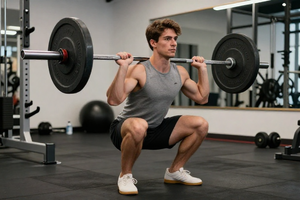
If you only did one lower-body exercise for the rest of your life, the squat would be a strong candidate. But for beginners, a barbell back squat can feel intimidating and place strain on the lower back if form isn't dialed in. Enter the goblet squat.
Holding a single dumbbell or kettlebell at your chest forces your torso to stay upright and your core to engage. This natural counterbalance makes it much easier to hit proper depth—hips below parallel—without rounding your spine.
Form cue: Keep your elbows pointed down throughout the movement. If your elbows flare out, the weight is pulling you forward.
How to start: Stand with feet hip-width apart, hold a dumbbell vertically against your chest with both hands. Push your hips back as if sitting into a low chair, keeping your chest proud. Drive through your heels to stand. Three sets of 8–10 reps, using a weight that makes the last two reps challenging but clean.
2. The Dumbbell Bench Press
Pressing is a fundamental upper-body movement pattern, and dumbbells offer a distinct advantage over a barbell for beginners: they allow each arm to move through its natural range of motion, which reduces shoulder strain and helps correct strength imbalances between sides.
Lying on a flat bench, start with lighter weights than you think you need. The goal is to build the mind-muscle connection in your chest, shoulders, and triceps before loading up.
How to start: Lie on a flat bench with a dumbbell in each hand, held just outside your shoulders, palms facing forward. Press the weights up in a controlled arc until your elbows are nearly straight, but not locked. Lower slowly to about chest height. Three sets of 8–12 reps.
Safety note: If you don't have a spotter, practice the roll-of-shoulders method to safely dump the weights at the end of a failed rep.
3. The Bent-Over Dumbbell Row
Pulling exercises are the counterbalance to pressing, and they're critical for posture, shoulder health, and building a strong back. The bent-over row is a classic, but using dumbbells makes it more accessible for beginners who may struggle with barbell path or grip width.
This exercise works your lats, rhomboids, rear delts, and biceps, while your lower back and core work isometrically to keep you stable.
How to start: Hold a dumbbell in each hand. Hinge at your hips until your torso is nearly parallel to the floor, keeping a flat back. Let the dumbbells hang straight down. Pull them toward your lower ribcage, squeezing your shoulder blades together at the top. Lower with control. Three sets of 10–12 reps.
Quick check: If your lower back starts to round or ache, raise your torso angle slightly. It's better to be a bit more upright than to have a rounded spine.
4. The Dumbbell Overhead Press
Pressing overhead builds shoulder strength, stability, and upper-body power. While a barbell overhead press is effective, dumbbells allow for a more natural hand position and a greater range of motion, making them gentler on the shoulder joint.
This move recruits your deltoids, triceps, and upper chest, with your core working hard to keep your torso stable under load.
How to start: Sit on a bench with back support or stand with feet shoulder-width apart. Hold a dumbbell in each hand at shoulder height, palms facing forward. Press the weights straight overhead until your arms are extended but not locked out. Pause briefly, then lower back to the starting position. Three sets of 8–10 reps. Start lighter than you think—the stability demand is real.
5. The Romanian Deadlift (RDL)
The deadlift pattern is arguably the most important hinge movement for overall strength and back health. The Romanian deadlift is the ideal entry point because it emphasizes the hip hinge without the complexity of pulling from the floor.
Using dumbbells allows you to focus on the movement pattern without the technical demands and spinal loading of a barbell. This exercise targets your hamstrings, glutes, and lower back, while your grip and core get secondary work.
How to start: Stand with feet hip-width apart, holding a dumbbell in each hand in front of your thighs. With a slight bend in your knees, push your hips backward while keeping your back flat. Lower the dumbbells down along your shins until you feel a stretch in your hamstrings (you may not go past your knees at first). Drive your hips forward to return to standing, squeezing your glutes at the top. Three sets of 10–12 reps.
Critical form cue: Imagine you're trying to close a car door with your glutes. This helps you drive through the hips, not the lower back.
Putting It All Together: Your First Full-Body Workout
Here is a simple way to combine these five exercises into a balanced, full-body session. Perform this workout two to three times per week, resting at least one day between sessions.
- Goblet Squat: 3 sets of 8–10 reps
- Dumbbell Bench Press: 3 sets of 8–12 reps
- Bent-Over Dumbbell Row: 3 sets of 10–12 reps
- Dumbbell Overhead Press: 3 sets of 8–10 reps
- Romanian Deadlift: 3 sets of 10–12 reps
Warm up for five minutes with light cardio (jumping jacks or brisk walking) and dynamic stretches like leg swings and arm circles. Rest 60–90 seconds between sets. The weight should be challenging but never compromise your form. If you feel any sharp pain, stop and reassess.
Building strength is a slow, steady process. These five compound exercises give you a safe, effective starting point that will pay dividends for years to come. Stick with them, focus on adding a little weight or an extra rep each week, and you'll be amazed at what your body can do.