You’ve nailed your deadlift setup, you’re grinding through your first real set of barbell rows, and the pump is starting to feel legitimate. But somewhere between the warm-up and your last rep, you realize your mouth is dry, your head feels a little foggy, and your grip is slipping. Chances are, you’ve already made a hydration mistake.
Compound lifts — squats, deadlifts, bench presses, overhead presses, and rows — place extreme demands on your cardiovascular system. They ask your muscles to produce maximal force while your heart pumps blood to working tissue and your brain coordinates complex motor patterns. Water is the medium for all of it. When your fluid balance is off, performance drops fast, and the risk of cramping, dizziness, or injury climbs. Here are four hydration pitfalls new lifters commonly run into during compound sessions, and what to do instead.
Mistake 1: Chugging a giant bottle right before you lift
It seems logical: you’re about to sweat, so you gulp 32 ounces of water in the parking lot. But that sudden volume hits your stomach, triggers a diuretic response, and sends you hunting for the bathroom mid-session. Worse, a sloshing stomach during a heavy squat or bent-over row can cause discomfort, reflux, or even a momentary lapse in brace stability.
Better approach: Spread your fluid intake across the two to three hours before training. Aim for about 16 to 20 ounces (roughly 500 to 600 ml) during that window, sipped steadily. If you’re training in the morning, have a glass with breakfast and another on the way to the gym. Your kidneys will have time to process it, and you’ll arrive already hydrated without the slosh.
Mistake 2: Ignoring sodium and electrolyte balance
Lifters often focus on water alone — but during a compound workout, you lose more than just H₂O. Sweat carries away sodium, potassium, and magnesium in meaningful amounts. If you replace only water, you dilute the sodium still circulating in your blood, which can lead to hyponatremia. This shows up as muscle cramps, confusion, or a sudden drop in strength midway through your session.
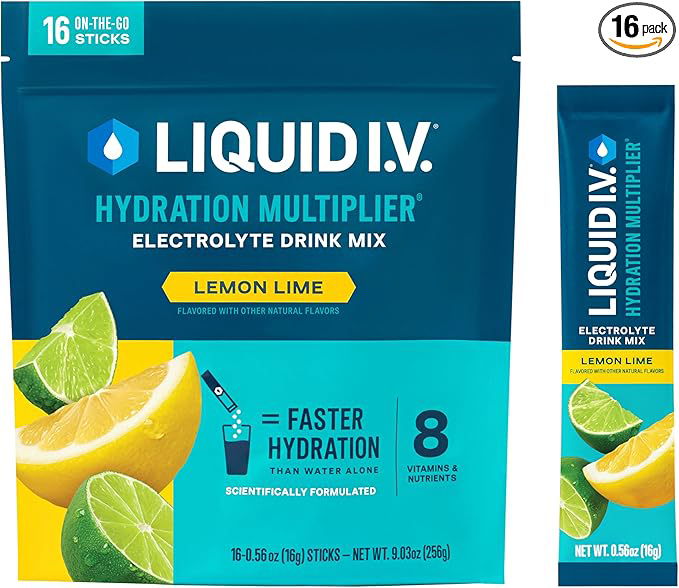
Better approach: If your workout runs past 60 minutes or you’re sweating heavily in a warm gym, add an electrolyte source. A pinch of salt in your water, a sports drink with low added sugar, or an electrolyte tablet can keep your sodium levels stable. This is particularly relevant for lifters who already follow a lower-sodium diet outside the gym. Your muscles need sodium to contract properly — especially during high-threshold compound movements.
Mistake 3: Drinking only when you feel thirsty — and then too little
Thirst is a lagging indicator. By the time you feel parched, you’re likely already dehydrated by 1 to 2 percent of your body weight. For a new lifter, that level of fluid loss can reduce strength output, decrease endurance across multiple sets, and slow your central nervous system’s ability to recruit motor units. In practice, this means your last rep of a set of five on squats feels harder than it should, and your focus drifts between reps.
Better approach: Develop a sipping schedule. Take three to four moderate sips (about 4 to 6 ounces total) between every heavy set. If you rest two to three minutes between sets on a compound lift, that’s a natural cue: finish your set, catch your breath, and then sip, not gulp. This keeps you ahead of thirst without flooding your gut. Over a 60- to 90-minute session, you’ll consume 24 to 36 ounces — roughly what you need to maintain performance without overdoing it.
Mistake 4: Using a pre-workout or caffeine drink as your sole fluid source
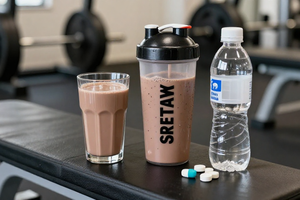
Many new lifters rely on a high-caffeine pre-workout to get fired up for compounds. That’s fine in moderation, but caffeine is a mild diuretic. If your only fluid before and during the session is a concentrated, caffeine-heavy powder mixed with minimal water, you’re starting behind. The stimulant effect might mask early signs of dehydration, and as the session wears on, the diuretic effect can compound the fluid deficit — especially if you’re already under-hydrated from the day before.
Better approach: Use your pre-workout as an adjunct, not your primary water source. Mix it with the recommended amount of water (usually 8 to 12 ounces), but track that as part of your total intake for the session, not the whole thing. Have a separate water bottle with plain water or an electrolyte drink, and sip between sets as described above. If you’re sensitive to caffeine or train in the afternoon or evening, consider a stimulant-free alternative to avoid disrupting sleep, which is critical for recovery from compound lifts.
Hydration for compound lifting isn’t complicated, but it requires a shift from reactive drinking to intentional planning. Start hydrating before you walk in the door, account for electrolytes, sip on a schedule, and don’t let a pre-workout double as your only fluid. Your squat depth, your deadlift lockout, and your ability to chain sets together without fading will thank you.