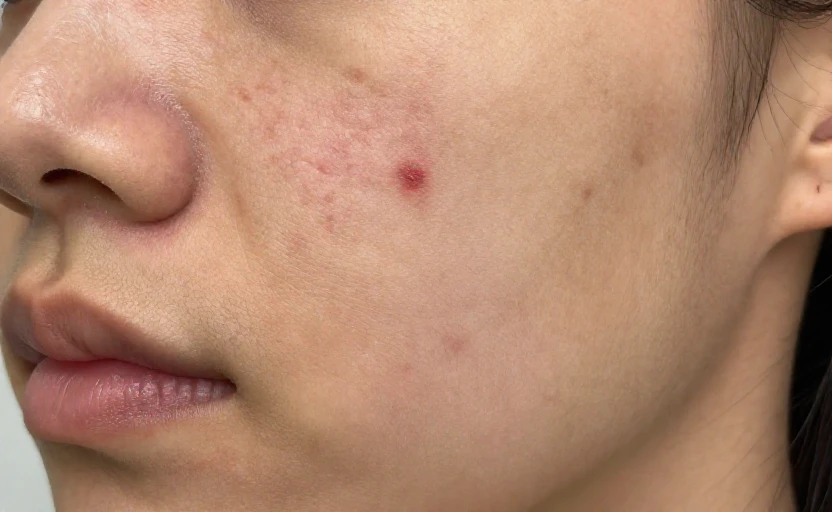
After a breakout finally clears, the relief can be short-lived. In its place, a lingering reminder often stays behind: a flat mark of discoloration on your skin. These post-inflammatory hyperpigmentation (PIH) or erythema (PIE) marks are a common part of the skin's healing process. For many, they fade gradually with consistent, gentle care. But sometimes, they don't. Knowing when your skin needs more than a home routine can save you months of frustration and help you get clearer results, faster.
It's a subtle shift—from patiently waiting for marks to fade to wondering if they ever will. The line between normal healing and a stalled process isn't always clear. Your skin is telling you something through its texture, color, and response. Learning to listen to those signals is the first step toward making an informed decision about seeking professional guidance.
How long is too long for a mark to linger?
Time is one of the most straightforward indicators. While patience is a virtue in skincare, there's a reasonable expectation for progress. Most post-acne marks, given proper sun protection and a basic brightening routine, will show noticeable improvement within three to six months. They may not be gone, but they should be visibly lighter and less distinct.
The warning sign appears when you hit the six-to-eight-month mark with no perceptible change. If you've been diligently using a broad-spectrum sunscreen every single day and incorporating ingredients like vitamin C, azelaic acid, or niacinamide without seeing the mark lighten even a shade, your skin's pigment-producing cells (melanocytes) may be in a state of overdrive. The inflammatory signal from the original acne lesion might have been so strong that it triggered a deep, stubborn deposit of pigment that topical products can't adequately reach or disrupt.
Stagnation is a key signal. If a mark looks exactly the same at month eight as it did at month two, it's likely stuck.
Is the mark changing texture, not just color?
This is a critical distinction. Post-acne marks are typically flat. They are purely a color change—brown, red, or purple—on otherwise smooth skin. A major red flag is when that colored area begins to develop texture.
Feel the mark with your clean fingertip. Does it feel:
- Indented or sunken compared to the surrounding skin?
- Raised, thick, or slightly bumpy?
- Ropey or uneven beneath the surface?
If you answered yes, you're likely no longer dealing with simple hyperpigmentation. An indentation suggests atrophic scarring, where collagen was lost during the inflammatory process. A raised texture points to hypertrophic or keloid scarring, where the skin over-produced collagen as it healed. These are structural changes to the skin's architecture. No amount of topical brightening serum will fill a depression or flatten a raised scar. These conditions require a completely different professional approach, such as laser treatments, microneedling, or specialized injections, to remodel the skin.
Are the marks spreading or darkening despite your care?
Your routine should be helping, or at least maintaining the status quo. A clear warning sign is when things move in the opposite direction. If you notice a mark is actually getting darker, or if the pigmented area seems to be expanding its borders on your skin, it's time to pause and reassess.
This progression can happen for a couple of reasons. First, and most commonly, it indicates insufficient sun protection. UV exposure is the primary driver of hyperpigmentation; it can darken existing marks dramatically, even through windows or on cloudy days. If this is happening despite your sunscreen use, a dermatologist can help you evaluate your protection strategy or identify if another factor is at play.
Second, it could signal that an ingredient in your routine is causing irritation or a phototoxic reaction, inadvertently worsening the pigmentation. A professional can help you parse your product lineup and identify potential culprits.
What a professional can offer that your home routine can't
Consulting a dermatologist or licensed aesthetician for stubborn marks isn't about declaring your skincare a failure. It's about accessing tools and diagnostics that aren't available over the counter. They can accurately diagnose whether you're dealing with PIH, PIE, or early scarring—each has a different treatment path. They also have access to prescription-strength topical agents like higher-concentration retinoids or hydroquinone (used under strict medical supervision), which can disrupt pigment production more effectively.
Most importantly, they offer in-office procedures. Treatments like broadband light (BBL), pulsed dye laser, or specific non-ablative lasers target pigment or blood vessels in the skin with precision that topical products cannot match. For textured scars, modalities like fractional laser or radiofrequency microneedling work to rebuild collagen. A professional creates a targeted plan based on your specific skin type and the exact nature of your marks, minimizing risk and maximizing results.
Taking the next step
If one or more of these warning signs resonate with you, the next step is a consultation. Come prepared: take photos of your marks in consistent lighting over a few weeks to show the lack of progress. Bring a list of all the products you're using. Be ready to discuss your health history and sun habits. This information empowers your provider to give you the best possible guidance, helping you transition from frustrated waiting to active, effective solution-building for your skin.