You’re committed to your strength training, and the squat is a cornerstone of your routine. But lately, a nagging ache in your lower back has become an unwelcome companion during or after your sets. It’s a common frustration, and often, the culprit isn’t the exercise itself, but subtle flaws in how you’re performing it. The squat is a full-body movement that demands harmony between your ankles, knees, hips, and spine. When that harmony is off, your back often ends up bearing the load it shouldn’t.
Listening to your body’s signals is the first step toward a safer, stronger practice. The good news is that specific, observable signs can point you toward the form issues that need attention. By learning to recognize them, you can adjust your technique, alleviate pain, and build a more resilient foundation for your fitness goals.
Sign 1: Your Lower Back Rounds or Arches Excessively
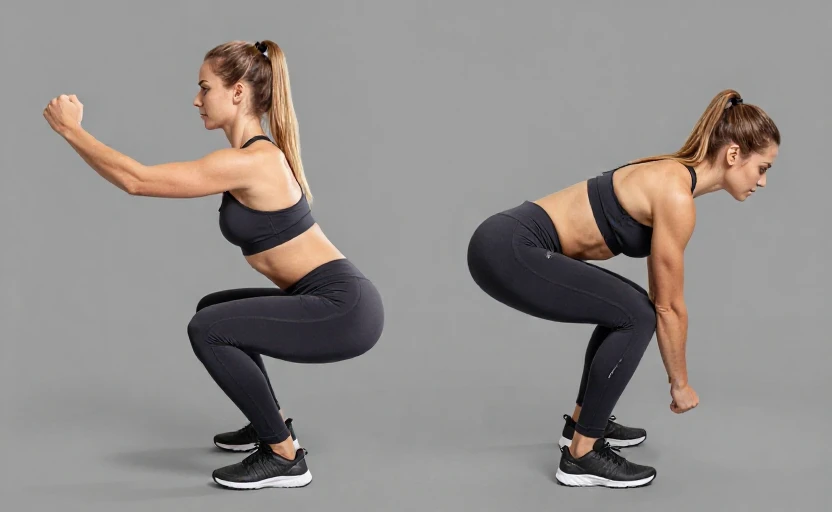
This is perhaps the most direct visual clue. A neutral spine—maintaining its natural slight inward curve in the lower back—is non-negotiable for distributing force safely. Two common deviations occur under load: flexion (rounding, often called “butt wink”) and excessive extension (over-arching).
Rounding typically happens at the bottom of the squat. As you descend, tension in the hips or hamstrings can run out, causing the pelvis to tuck under and the lower spine to curl. This places the vertebral discs and ligaments in a vulnerable, loaded position.
Think of your spine as a stack of blocks. A neutral spine keeps the stack aligned and strong. A rounded back is like tilting the blocks forward—they’re much more likely to slip under pressure.
Conversely, some lifters overcompensate by aggressively arching their back, chest thrust forward, and ribs flared. This often stems from a cue to “keep your chest up,” taken too far. This hyperextension can jam the facet joints in the spine and create compressive stress on the same structures you’re trying to protect.
Sign 2: You Feel the Strain Primarily in Your Back, Not Your Legs
Where you feel an exercise is a powerful indicator of form. A well-executed squat should create a deep, fatiguing sensation in your quadriceps, glutes, and hamstrings. If the dominant “burn” or sharp sensation is centered in your lower back muscles or the spine itself, it’s a sign the movement pattern is off.
This often means your hips aren’t doing their primary job. Instead of initiating the movement by sitting back and down with your hips, you may be leading with your chest, causing the torso to lean forward excessively. This turns the squat into a good morning-like hinge, placing tremendous shear force on the lumbar spine. The back muscles then work overtime to stabilize a lever they weren’t designed to handle alone.
Another related feeling is a sense of “bracing” or stiffness that originates solely from clenching your lower back, rather than from a full 360-degree engagement of your core—your abdominal muscles and diaphragm included.
Sign 3: Your Heels Lift or Weight Shifts to Your Toes
Watch your feet. If your heels peel off the floor as you descend or drive up, or if you feel your weight rock onto the balls of your feet, it disrupts the entire kinetic chain. This usually points to limited ankle mobility or an imbalance in how you’re distributing weight.
When you can’t keep your feet flat, your body must compensate to reach depth. The common compensation is to pull the torso further forward or to collapse the knees inward, both of which can alter spinal alignment. The forward shift also means you’re not effectively using the powerful posterior chain—your glutes and hamstrings—which are key to protecting the back during the ascent.
How to Begin Correcting Your Path
Identifying the sign is the first step; addressing the root cause is the next. The solution is rarely just “try harder.” It’s about refining movement patterns, addressing mobility restrictions, and reinforcing proper motor control.
Revisit the Basics Without Weight
Strip it back. Practice your squat form with just your bodyweight, focusing on the three pillars: a braced, neutral spine from start to finish; driving your knees outward in line with your toes; and keeping your entire foot rooted to the ground. Use a box or chair to practice sitting back and tapping down without losing tension. Record yourself from the side to check for spinal position.
Improve Your Mobility Where It’s Needed
Tightness can be a major driver of poor form. Common areas to address include:
- Ankles: Restricted dorsiflexion can cause the heel lift and forward lean. Calf stretches and ankle mobility drills can help.
- Hips: Tight hip flexors can pull the pelvis into an anterior tilt (arching), while tight glutes or external rotators can contribute to rounding. Incorporate dynamic stretches for the hips into your warm-up.
- Thoracic Spine (Upper Back): A stiff upper back can force the lower spine to over-extend or round to compensate. Work on thoracic extension and rotation.
Strengthen Your Core and Glutes
A strong core isn’t just about abs; it’s about the ability to create intra-abdominal pressure to stabilize the spine like a pressurized cylinder. Practice bracing by taking a breath into your belly and tightening your abs as if preparing for a light punch. Strengthen your glutes with exercises like bridges and hip thrusts so they can powerfully assist in the hip extension of the squat, taking demand off your back.
Form is a practice, not a perfection. It’s better to squat well with less weight than to struggle with a load that forces your form to break down.
Persistent or sharp back pain should always be evaluated by a healthcare professional, such as a physical therapist or sports medicine doctor. They can provide a personalized assessment to rule out underlying issues and give you tailored guidance. For most, however, mindful attention to these three signs can be the key to transforming the squat from a source of pain into a pillar of strength and resilience.