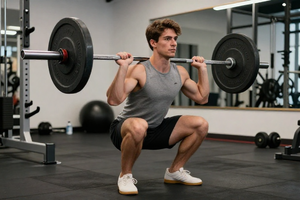

You have been told that squats, deadlifts, and overhead presses are the fast track to real strength. That part is true. But the quickest way to stall your progress—or end up sidelined with an ache that won't quit—is doing those same moves with poor mechanics. As a beginner, your body is still learning the motor pattern. If you practice a flawed pattern, you groove it deeper. Here are three unmistakable signs that your compound movement form needs attention, along with straightforward corrections you can apply at your next session.
1. Your lower back aches the next day—not your legs or glutes
A general soreness after training is normal. Specific, deep lower back pain after squatting or deadlifting is a red flag. It usually means your hips are rising faster than your chest during the concentric phase, turning the lift into a back-dominant good morning instead of a leg-driven squat. This shift puts your erector spinae under a load they were never meant to handle alone.
Fix it: Think about keeping your chest proud and your armpits pulled slightly back throughout the entire rep. At the bottom of a squat, drive your back into the bar rather than letting it roll forward. For deadlifts, pin your shoulders back and down before you even pull the slack out of the bar. If you can watch your chest drop in the mirror halfway up, reset the load. The weight is too heavy for your current technique.
2. Your knees cave inward on the way up
Valgus collapse (knees falling inward) is common during squats, especially when you are pushing close to fatigue. It is a strength imbalance cue: your adductors and quads are overworking to pull your legs together, while your glute medius and external rotators are falling asleep. Over time, this shearing force on your medial collateral ligament and meniscus can become a real problem, not just a cosmetic form fault.
The fix is not just a cue—it requires active intention. Before you descend, externally rotate your feet into the floor (imagine screwing them into the ground) without actually moving your toes. This pre-tensions your hips. As you stand, drive your knees outward against an imaginary band. If you cannot keep your knees tracking over your second toe, drop the weight until you can. It is safer to lift 65 pounds with perfect tracking than to grind through 135 with collapsing knees.
A drill that helps:
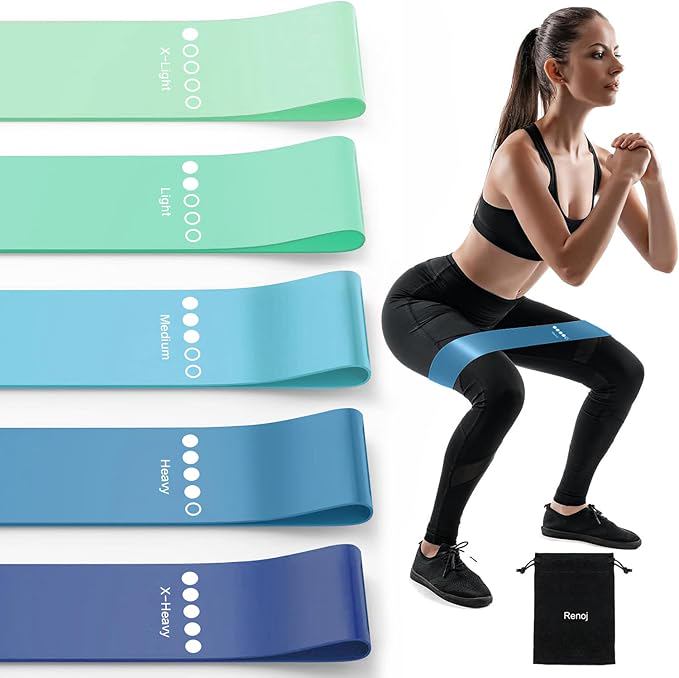
Set a light resistance band just above your knees. Perform goblet squats or bodyweight squats while pushing your knees into the band for every rep. Do this for two warm-up sets of ten reps. It teaches your brain to recruit the glutes before the quads take over.
3. You feel pain or clicking in the front of your shoulder during pressing
An overhead press or bench press that irritates the anterior shoulder is almost always a mobility-mechanics issue. The typical cause is an inability to achieve full overhead extension through your thoracic spine, so your body compensates by flaring your elbows and arching your lower back. This impinges the supraspinatus tendon and the biceps tendon under the acromion. Clicking is not a sign of a good stretch—it is a sign of friction the joint was not designed for.
If you feel a pinch, stop the set immediately. Check your grip width: in the bench press, keep your elbows at a 45-75 degree angle relative to your torso, not flared straight out. For overhead pressing, pull the bar down to your upper chest rather than letting it drift forward in front of your nose. At the bottom of the press, your forearms should be vertical, not angled forward.
Key cue: Imagine you are pressing yourself away from the bar, not pushing the bar away from you. This subtle mental shift helps you engage your lats and keep your shoulders packed.
General reset for beginners
Compound lifts reward consistency, not ego. If any of these three signs sound familiar, take a deliberate step back. Drop the weight by ten to twenty percent for one full session and dial in your setup. Film your sets from the front and side. Compare what you see to a reliable tutorial from a certified strength coach. One session of dedicated form work can prevent six weeks of recovery.